
Secret Albania
The difficult relationship between fishermen and politicians and bureaucrats is well documented. At its heart has been the disagreement over the value and validity of the data on which so many political decisions have been based in the past.
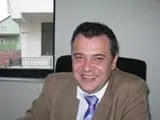
Were the politicians and bureaucrats such as himself listening to the Albanian fisherman and finding a way to get and use their data? I asked Roland. When I heard the Albanian solution I was taken aback – I realised that Albania may have found a simple but effective way of bringing up-to-date fishermen’s data into the system and that the rest of Europe needs to sit up and pay attention.
I probed and asked where the idea had come from and who had made it work and Roland was evasive, shall we say secretive! But I pressed and found that it was his natural, fish scientist’s modesty hiding the fact that he was the originator of the concept.
There is an annoying reticence about the Albanian character – they often do not speak out loud and defend their position when they should. Perhaps it is because this is a country which has had such a tough time in the last 60 or so years and has been invaded from left and right over centuries. There was the mental and physical oppression of the Enver Hoxha regime, now documented in the National Museum and on the other the hand the way they were treated during WWII by the Nazis and the Fascists. Too many Albanians can recall the two young women hanged in public from the oak tree on the high cobbled square of the castled city of Gjirokaster to the south. World Fishing was deeply disturbed when it saw that first in 1983, when Hoxha was still very much in power through his secret police.
After Albania’s post-war partnerships, first with the USSR and then with China, fell apart it went into almost total isolation from the life of modern Europe. When that ended at the start of the 1990s the whole country of some three million went on to be robbed on a massive scale after foreign scamsters peddling the American pyramid-selling schemes which were then shut down by many governments across the EU, turned their attention to Albania and an unsuspecting public. Albanians who had been forced to go all over the world to find work to send a major part of their wages home suddenly found everything had been taken away from them again. But they have put their backs into work again and come back from the brink, rebuilding not only their economic and social lives, but their houses and their agriculture and creating a new seafood industry in restaurants springing up along the coast. The poor country roads, into what is largely a mountainous country fronted by a long coast and fertile plain are under reconstruction into modern link roads and motorways are being driven across and through the mountains. WF has never seen so much plant equipment anywhere as it has seen on the roads in the past 10 days. So, that is a quick bedrock picture to what is now happening and of course the sea and fish are a key part of that renewal.
Water, water
Albania has probably double all the water from rain and snow than the half a dozen countries which surround it. There is water everywhere. This is an inland aquaculture paradise. In the hills and high mountains of the countryside Roland explained there are some 600 reservoirs, most ranging from between 10 to 40 hectares, producing carp (around 2,245t a year) and trout, farmed sea bass and bream (1,400t). That is where the main aquaculture operation is though there are some sea cage operations near Sarande in the south mainly for the bass and bream, as well as a large mussel area at Butrint, near Sarande. The Romans must have enjoyed local speciality Butrint skewered mussels here 2000 years ago.
Retired veterinary doctor and fish expert Barsaiy Mustafa, who had rowed over for a meeting in the Roman ruins of Butrint explained something very important about the whole seafood sector. The 500km or so long coast is still largely unpolluted, due to past isolation. The coastal border guards, who would shoot at tourists daring to swim across the narrow strait between Corfu and Albania, are all gone but Albania certainly has to protect itself from future invaders from land and sea in terms of international tanker traffic and the risk of an explosion in fertilizer use on the high terraces inland which could leach into the massive watershed and its basin and cause local pollution and runoff into the sea.
There is a major debate going on in the southern city of Vlore where work is underway to build a major oil terminal and a linked oil fire power station right on the bay where gas tankers already service the bottled gas and vehicle sector. There is to be a new port above the existing commercial main port of Durres, which will keep ferry traffic while merchant marine operations will shift up. The other harbours down south are small with large protected bays or lagoons (Roland Kristo’s speciality) but perfect for local, seasonal, daily catch landings for the domestic and restaurant sector. This is backed up by local and seasonal daily delivery of fruit and vegetables. If Albania can keep control of expansion of building along the coast, and the planning laws are certainly being flouted, then it could be an almost organic, eco-friendly country. The massive inland lakes and the Drin river system (one of a number) are unpolluted and clean according to scientists such as Professor Petrit Zorba, hydro-engineer Gezim Struga and the agriculture ministry’s Director General Professor, Myslim Osmani. The demand for Albanian fisheries products by the public and exporters is clear. Vet Mustafa said that of 50,000t of mussels some 30% are going to Italy and France. The Durres fishing port is just below the merchant quays and as Durres Bay is Tirana’s sea playground, there are dozens of seafood restaurants serving fish and great store is set by it having come from fresh landings. And while nothing is cheap for many Albanians (they are paying for imported foreign products at often up to one third dearer than London or Paris and their salaries are 10% of Paris and London) local restaurant prices for high quality seafood would make a London restaurant goer whoop with joy.
They are also at risk of foreign operations coming in with money for cold storage and processing so that the value added all goes abroad. Albania has big quantities of sardines which are no longer being exploited. The four sardine canning factories of the communist era fell into disuse in the 1990s but have now been refitted, but the public in Europe does not want sardine. The factories are producing canned and bottled anchovies which are having to be bought in from elsewhere. This sector is now controlled by foreign companies who take a good chunk of the value-added as well as putting their foreign brand name on the product for its sale abroad. One of the companies is turning over perhaps €3m a year at the factory gate and the retail add on price abroad is perhaps two or three times that.
Making a living
Because of pressure from outside over the past three years the Albanian government was obliged to impose a ban on use of small vessels which could be cajoled into serving the international trafficking (people and narcotics) syndicates. That ban is due to end later this year so that should boost artisanal to small vessel fishing operations. There are 104 commercial vessels operating and under Albanian law, Roland told WF they must be Albanian owned and that is a useful protection for the industry. Albania wants to join the EU and Prime Minister Dr Sali Berisha is also pushing for membership of NATO. EU liberalisation of access to waters down the Adriatic could be a major challenge for the Albanian fishermen later. Roland explained that the Albanian Adriatic stock position is very good and domestic consumption is comparatively low at some 3.25kg per annum. He said fish include hake, red mullet, plaice, sole, sardine/herring, monkfish, prawns, eel, sea urchin and squid.
Vessels are mainly one-owner skippered, with one owner having 12 vessels. There are the usual crew catch-share arrangements. Owner Nikolaos at Butrint pointed out his two small boats where crew were cleaning up the nets from the day’s catch. Roland told WF that in fact there is shortage of crew and skippers are bringing in Egyptians who were supreme fishermen and Somalis and Senegalese to help out.
There had been no pressure so far, Roland said, from the EU for the Albanians to start thinking about reducing their fleet. Although it was not totally modern, vessels which they had bought second hand from other countries were now nearly all equipped with good sonar catch equipment etc. They were trying to make sure that safety on these older vessels was positive. As far as stock and catch surveillance is concerned for Illegal Unregulated Unreported operations, by the end of 2008 they were expecting to have monitoring equipment. Their biggest concern has been Italians whipping in and out of Albania’s coastal zone which is believed to have as much as four times the stocks as are available in Italy. “They enter illegally sometimes inside the 12m limit. They come at certain periods for hake,” Roland said. “Sometimes we fine them and the minimum is €180,000 and we take the gear if they do not pay up. There was a 10-month halt in IUU by Italians [in our waters] after a fine in January 2007!” he laughed.
The Pisces Code
And now the real gem which Albania can give to Europe, not just conserving its unpolluted waters and fish. Roland has been fully aware of the difficulties on data for good management of stocks. The problem has been that scientific research looks only at occasional windows. How would it be possible to get real time data, day in and day out? His solution is to guarantee to the fishermen that if they hand over their catch data not only will it be anonymous, it will not be able to be used by the customs or the police or the tax man. Even more important, the fishermen, through their association/union, which is interestingly called the Fisheries Management Organisation, will decide to whom they will give their own data. It can only be someone whom they trust and the fishermen are the ones who choose the person – normally it will be someone from a local ‘monitor’ whom they know. It is almost like the airline pilots’ anonymous system for reporting problems or mistakes, which they would not report if it was not totally anonymous. And the regular process is that data is collected as part of a fishing day – it is not about hiring a boat to do only some special collection. The software which the fishermen use also makes sure the data they input is completely anonymous. This strengthens the directorate because it means it gets good data and that in turn helps the directorate to press for more funds for better data in collaboration with the fishermen, Roland added.
There are already restrictions on the depth at which trawling can take place – it is three metres near the shore and 40 metres further out, and this helps to protect not only the bed but also makes it easier to work with the growing scuba tourism. Ironically it is the large number of wrecks, not just from WWII, but going back to the Romans and before, which attract not just fish but diving tourists.
The Commissioner in Brussels and his DG Fisheries would do well to learn from one of Europe’s smallest countries that the best is not always big or expensive. The Albanians know a thing or two about politics and politicking so if it works for them it should work for everyone.