



Overfishing in Europe must end
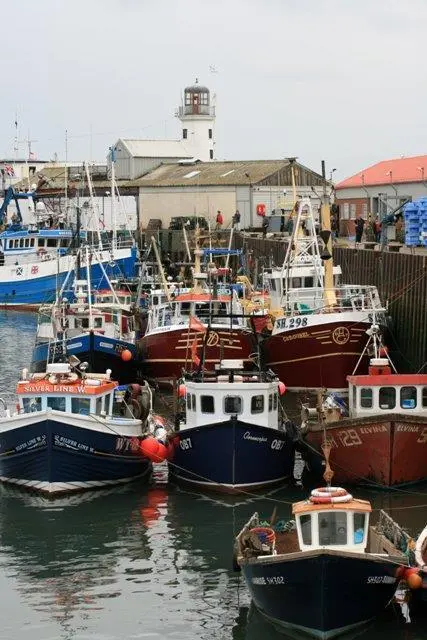
Alongside discards, overfishing ranks as one of the most discussed subjects both in the political arena and industry over the past few years, reports Adrian Tatum.
Overfishing and the failure of the Common Fisheries Policy to manage it have been blamed for many stocks collapsing in European waters and, despite improvements in certain areas and stringent policing and regulations in Europe, overfishing still goes on.
According to a FAO report in 2009, over 25% of the world’s fish stocks are either overexploited or depleted. It says that over 55% of stocks are fully exploited, 20% moderately exploited and 17% are overexploited, meaning 7% are depleted and only 1% recovering.
No cod
The first major global issue was highlighted as long ago as 1992, when the once thriving cod fishing sector came to a halt at the start of the season when no cod appeared. Up to 40,000 people lost their businesses and livelihoods. Those waters have never fully recovered.
In Europe, Dr Paul Connolly, director of fisheries science services at the Marine Institute in Galway has said the cod stocks in the Irish see and the west coast of Scotland have collapsed partly because of overfishing. He said: “Continuous over-fishing has led to a collapse in cod in both these areas. The signs have been there for years and scientists have repeatedly warned quotas must be cut but fisheries ministers have time and time again ignored us. We do not know now whether the stocks will recover.”
He has also accused the governments of not helping the situation by not setting low enough quotas. “The governments concerned say because there is not sufficient scientific evidence available that the stock is going down, then a higher quota should be fixed. Hiding the information is a political ploy to try and get higher quotas,” said Dr Connolly.
Latest figures in Europe that 88% of European stocks are overexploited and 30% in danger of collapse has led the European Commission to make changes to the Common Fisheries Policy.
At the end of last year, quotas for 53 stocks were reduced by the EU – one of the most significant changes ever.
Maria Damanaki, EU fisheries commissioner said that if the EU did not reform the policy and reduce overfishing, only 8% of the 136 fish stocks in EU waters would be at sustainable levels by 2022.
Correct data
The other challenge for the EU is to try and force governments around Europe to supply scientists with the correct data. Even now, Spain and France, two or the biggest fishing nations in Europe, are still failing to provide data on fish landings.
One leading Scottish fishing fleet manager told World Fishing that there was a change in the mentality of most fishermen in understanding the need for a more sustainable approach but “there still exists some businesses who will take all they can get at all costs.”
A team of leading fishery scientists who have studied fishing and the ecosystems in the Mediterranean have recently said that overfishing is the main cause of some now barren areas in the seas that were once healthy ecosystems.
The scientists’ research was designed to measure the impact of marine reserves, and found that the healthiest places were in well-enforced marine reserves; fish biomass there had recovered from overfishing to levels five to 10 times greater than that of fished areas.
However, marine ‘protected’ areas where some types of fishing are allowed did not do better than sites that were completely unprotected.
While the level of protection was the most important factor in determining the biomass of fish, the health of the algal forests that support the fish depended on other factors. The study also provides the first baseline that allows evaluation of the health of any Mediterranean site at the ecosystem level – not only its fish but the entire ecological community.
The report is positive towards marine reserves and their success relating to stock recovery, giving hope to waters beyond the Mediterranean.
Less activity
The Marine Institute of Galway’s The Stock Book also says overfishing does not necessarily mean that a fish stock is at risk of extinction or collapse – it means that more could be caught with less fishing activity. “This means taking each year a proportion of fish in the sea that is the right size to let fish grow and reproduce at their most productive level. Under these conditions the long term catches from fish stocks will be at their maximum sustainable yield (MSY). Fishing too hard means that fish will be caught too soon, too small and using too much fuel,” the report says.
It goes on to say that The Commission has outlined the benefits of MSY parts of European waters. “The move to MSY should bring significant benefits and will mean a change from fishing intensively on scarce resources to fishing lightly on larger stocks. The same or larger quantities of fish should be caught, but with lower impact on the environment,” says the Marine Institute.
In June 2011, the Commission reported that fish stocks in European waters are improving. The proportion of overfished stocks in the Atlantic and nearby seas fell from 32 out of 34 stocks in 2004 to 22 out of 35 stocks in 2010. However, many stocks in the west of Scotland, Irish Sea and Celtic sea are overfished and stock sizes are small.