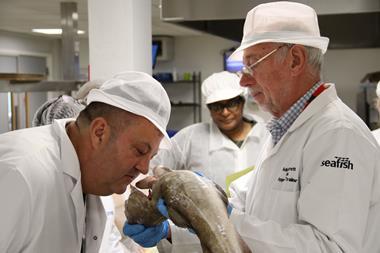




Raymon van Anrooy and Susana Siar from FAO look into fishing vessel insurance.
More than a decade ago, the Food and Agriculture Organization of the United Nations (FAO), the Asia-Pacific Rural and Agricultural Credit Association (APRACA) and the National Federation of Fisheries Co-operative Associations (ZENGYOREN) of Japan organised the Regional Conference on Insurance and Credit for Sustainable Fisheries Development in Asia (Tokyo, November 1996).
One of the findings of that conference was that small-scale marine capture and inland capture fisheries have received very little attention from the insurance sector in the past. A clear need for insurance services was expressed by fisherfolk in the Asian region.
Unfortunately not much has changed since then in many parts of the world.
The 2007 survey on the status of capture fisheries insurance in the world, carried out by FAO with inputs from many insurance industry insiders, showed that only some 500,000 of the estimated four million fishing vessels that sail our seas are covered by marine hull insurance.
In Europe, Oceania and Japan, all types and sizes of fishing vessels can be insured.
In South America, China, India and Africa, and to a lesser extent in the Russian Federation, it is generally more difficult to obtain insurance for small-scale vessels than for larger ones. More than 40% of these can be found in Japan, where basic insurance of fishing vessels is obligatory. In Japan, some 208,000 fishing vessels are insured (basic insurance), which is estimated at between 90-95% of the total number of active vessels. The second largest market for marine insurance in terms of the number of vessels is China, where over 100,000 fishing vessels are insured, equal to some 7% of the total number of motorised fishing vessels in the country. In the United States of America, it is estimated that approximately 79,000 fishing vessels carry marine hull insurance; this number is about 50,000 in Europe.
On the demand side
The number of fisherfolk in the world is estimated at around 30 million, of which the large majority belong to the so-called “small-scale” sector. The fishing industry in Japan, Europe, Russia, North America and Oceania is generally well served by the insurance market. National and international insurers can insure both large- and small-scale operations. Insurance brokers, agents of international insurers and mutual insurance companies make insurance services available to the sector, with very few operations that remain uninsurable.
Nevertheless, some regions and capture fisheries sub-sectors are better served than others. At present, many fishers in Africa, South America and large parts of Asia have no access to fishing vessel insurance services. In most of the countries in these regions, international composite insurers may serve large fishing companies, but as the majority of the fishers are small-scale operators, they are generally of limited interest to the insurance sector. Insuring small-scale fishing operations is often left to public insurers (who are sometimes forced by laws and regulations to supply insurance services to the poorer sections of society) or it is the domain of mutual insurance companies.
On the supply side
The number of worldwide insurance suppliers to capture fisheries is rather limited. While in Europe, North America, Oceania and Latin America, large composite private-sector insurance companies often dominate the capture fisheries insurance market, in Asia public-sector insurance companies are playing a major role. Many international insurers have linkages with the London markets where the Institute Fishing Vessel Clauses are promulgated, and these clauses are widely used throughout the industry. The “all risks” type of policies is the most common, but the “named perils” policies are also frequently used. The type of policy used generally depends on the coverage desired by the individual fishing vessel owner and the costs of the policy coverage offered by insurers.
Lloyd's of London, being a market in itself, together with a few other large reinsurance companies, such as Swiss Re and Munich Re, are playing a major role in fisheries insurance because many modern vessels are valued above the underwriting capacity of most direct insurers; thus reinsurance is essential for providing such vessels the desired coverage.
Coverage possible?
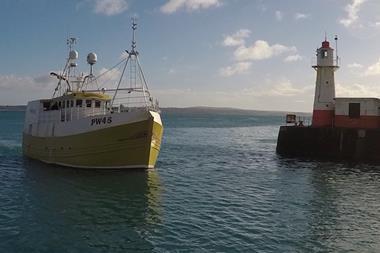
While in Europe, Oceania, and Japan all types and sizes of fishing vessels can be insured, this is not the case in all regions and countries. In Europe, both marine (coastal and offshore) as well as inland fishing vessels can be insured. Types of vessels that are commonly insured include: seiners, purse seiners, trawlers, longliners, tuna vessels, as well as trap-fishing boats. Insurance is available and sometimes obligatory for the larger vessels. Hulls insured can be of steel, glass reinforced plastic (GRP), polyester, wood and concrete; but not all materials are accepted by all insurers. The state of maintenance of the hull is often a key determinant in whether coverage can be offered.
Underwriting experiences in fisheries
Over the last decade, underwriting experiences in the fishing vessel insurance class of business have varied widely, but seem to have improved in Europe and in the Russian Federation.
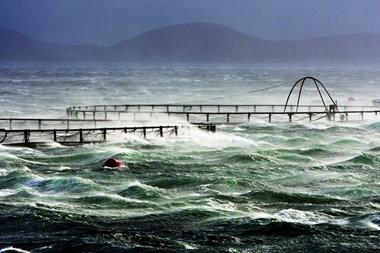
Underwriting experiences were generally good in Oceania and Africa, and generally balanced in China and Japan. In the United States of America underwriting experiences can be considered marginally positive in recent years. In India, underwriting experiences were poor in 2004 and 2005, as a consequence of the December 2004 earthquake, which was followed by a tsunami. In the same year Japan was hit by 10 typhoons, which caused high losses to the Japanese basic fishing insurance scheme. In China, the subsidy provided by the government and the size of the vessels insured are key determinants of the profitability of underwriting practices. Larger subsidies and larger vessels mean profits for Chinese fishing vessels insurers, but because a large part of the fleet consists of small-scale, poorly maintained vessels, the overall business has seldom generated profits in recent years.
While fishing vessel insurance showed diverse results over the last decade, Protection and Indemnity (P&I) and group life and accident insurance schemes showed underwriting results that generally were positive in the regions and countries included in the survey.
A few interesting findings from the Review
Some concluding remarks from the 2007 Review include the following:
• As world fish captures show a stable trend, and as the number of vessels has been relatively stable as well in recent years, the demand side of the fishing vessel insurance market does not seem to change much over time.
• The reduction in fishing fleet sizes and the construction of new fishing vessels in some regions and countries is being compensated for by the increases in fleet sizes and construction efforts in other regions. This results in fishing vessel insurers shifting their attention to these growing markets, while continuing efforts to maintain market shares in the traditional markets.
• Market concentration on the demand side, together with reducing stocks in traditional fishing areas and reduced profit margins in fisheries, make the capture fisheries insurance market less attractive to some insurers than in the past.
• The access of small-scale fishers in developing countries to life and health insurance services appears to be improving rapidly, while access to vessel insurance is only available in a few countries (e.g. China, India, Vietnam) and rising very slowly.
• All fishing vessel insurers have risk assessment and management procedures in place and carry out risk management surveys. Independent marine surveyors are commonly used to determine the conditions of the vessel(s) offered for insurance.
• Low profitability and bad experiences in the 1980s and 1990s in the fishing vessel insurance market have resulted in the establishment of few new fishing vessel insurance facilities in recent years. The fishing vessel insurance sector is competing with other, more profitable, sectors.
• The limited number of people having specialised skills and experience with marine insurance (including fishing vessel insurance) causes insurers to stay away from fisheries underwriting activities.
More detailed information on fisheries insurance can be found in "FAO. 2008, Review of the current state of world capture fisheries insurance". This document was published (and made available on the internet) in November as FAO Fisheries Technical Paper No. 510. The main authors of the Review study are: Van Anrooy, R., Ahmad, I.U., Hart, T., Hotta, M., Ping, Y., Yang, W., Shipton, T., Benoit, C., Ruchismita, R., Upare, S. and Siar, S.V.