



NUFTA calls for fairer quota shares
Bryan Gibson talks to The New Under Ten Fishermen’s Association (NUFTA) about securing fairer quotas for the under 10m fleet.
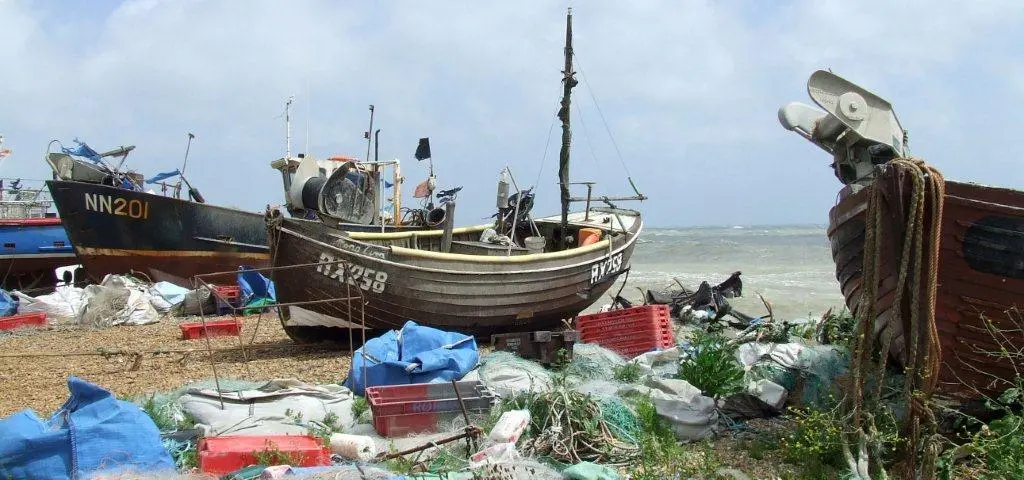
“Put control of a fair and proportionate share of quota back into the hands of the working fishermen who make up at least 76% of the UK fishing fleet with a mere 2% of the quota”, pleads Plymouth based inshore fisherman, Dave Cuthbert, co-chair of NUTFA.
NUTFA’s major objective is to return the under 10m fleet to the position it enjoyed before 2006, rather than facing the unwelcome prospect of becoming squeezed into extinction by flawed science and an unfairly balanced EU fisheries policy, which massively favours the Producer Organisations, (PO’s), who hold huge and varied species quotas and who operate the largest and most environmentally damaging vessels.
NUTFA also says its campaign “is all about management by the fleet for the fleet”, and in terms of total employment supported and vessel numbers actively fishing, the largest and most sustainable sector of the industry is now being controlled by an overly-powerful minority and being seen by small boat fishermen to be upholding the unscrupulous profiteering activities of large, often land-locked businesses, who regard buying and selling fish quota in the same manner as stock exchange futures.
“These ‘slipper skippers’ don’t need to catch a single fish to get rich” bemoaned Paul Joy, “as they are legally ransoming the right to catch our own fish for around £800 per ton to buy the chance to stay in business. The under 10m boats operating around the UK coastline are entirely governed by seasonal fish migration and a new breed of ‘futures’ salesmen are experts in making the quota chase the fish rather than being attached to any specific boat.
“The Producer Organisations have ended up capturing a publicly owned resource and taken it into private ownership, according to the fishermen left scratching for a living, having found themselves commercially hamstrung by uncertainty and an inadequate quota system,” David Cuthbert told World Fishing & Aquaculture. “Maybe the judicial review, about to begin in the High Court and designed to decide who has the right to own fishing quotas, will either rescue or condemn the Under Ten fleet”.
Paul Joy, a dedicated NUTFA founder-member, who has worked off the Hastings Stade as a commercial fisherman for the past 42 years and claims to be able to trace his family’s fishing activities off Hastings storm-racked pebble beach for at least a thousand years says, “We don’t need artificial restrictions, the weather does that for us, thank you very much”.
Fish Fight
Paul has been attracting Europe-wide publicity as a result of his high-profile support for Hugh Fearnley-Whittingstall’s successful campaign, Hugh’s Big Fish Fight, against fish discards, by allowing television cameras to film Paul’s cod by-catch being thrown back into the sea close to the beach, where the Hastings ‘locals’ and holidaymakers could fish it back out again, as his personal protest against the pointless waste of an endangered and valuable resource, due to a completely nonsensical law.
Paul has also been co-ordinating efforts to protect the fishing fleet alongside Hastings Town Council, who strongly acknowledges and appreciates the huge number of tourists and the revenue they bring, as a result of the fishing boats on Hastings beach.
Having raised his head above the parapet, Paul has found himself in court and fined £7,500, including costs for landing more cod than the Marine Management Organisation consider he was entitled to. The MMO claimed that Paul was only supposed to catch 1.4 kilos per day, “which doesn’t even add-up to a complete fish” says Paul, “and my interpretation of a community fishing allowance for cod, meant I was within my rights to continue to catch fish until the common quota had been reached. The MMO considered otherwise, and when their costs had risen to over £140,000 and I was receiving legal aid, I was eventually persuaded to give up my fight and accept a nominal fine with minimal costs. But it’s impossible to avoid huge by-catch. In some areas in the English Channel, boats trawling for plaice and sole now only pull-up fat starfish and decomposing cod. What is truly criminal, is knowing that every time I shoot a net, I’m going to be filmed from a low-flying police helicopter, or boarded by fisheries inspectors. And on my return, my boat can be surrounded by MMO inspectors the moment my bow touches the pebbles”.
The environmental organisation, Greenpeace, also recognises fishing laws are in dire need of fixing, saying: “The Common Fisheries Policy is the set of rules governing the European fishing industry. It was introduced by the European Union in the 1970s to ensure a profitable and sustainable fishing industry. It has utterly failed. The CFP is reformed only once every decade and 2012 is going to be a crucial year for the future of our fish. This will probably be our last big chance to stop the collapse of both European fish populations and the EU fishing sector. It’s that important.”
Government legislators, devoid of any intimate knowledge of the industry they are controlling, are putting thousands of jobs at risk by failing to understand that not every business is a big business. The same mistake was made by politicians when Britain’s small dairy farmers were almost obliterated by ridiculously low milk quotas. Having existed for centuries by generating local micro-economies, they were snuffed-out by a poorly contrived agriculture policy. We must not let this happen to our inshore fishing fleet.
Richard Benyon, UK Fisheries Minister and MP for Newbury, Berkshire, who admits to being a landlubber says, “l live as far away from the sea as you possibly can”. Despite claiming to be a passionate fish eater, Mr Benyon could only identify two fish species. After being lobbied by celebrity chef, Hugh Fearnley-Whittingstall, Hugh’s timely intervention was noticed by EU Fisheries Commissioner, Maria Damanaki, who agreed to end this environmental tragedy. But for some endangered species, good news may have come too late, as legislation is not due to come into full force until 2018.