



Seagrass conservation in Indonesia protects fisheries
Research by Swansea University and partners shows that protecting seagrass meadows throughout Indonesia is critical for national food security and important fisheries exports.
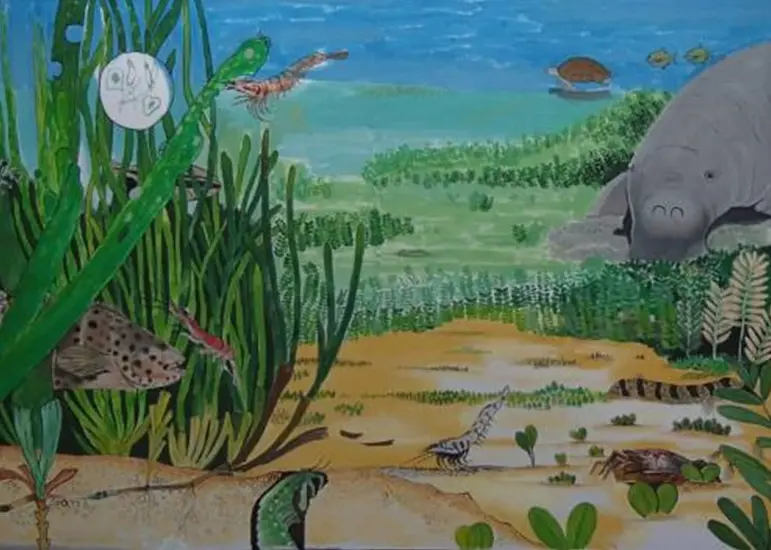
The research by scientists at the Seagrass Ecosystems Research Group at Swansea and Cardiff Universities, and in collaboration with an Indonesian NGO (FORKANI) and the Wildlife Conservation Society, has examined how seagrass meadows that are a globally threatened ecosystem are important for marine fisheries throughout Indonesia.
The recent surveys conducted in the Wakatobi National Park in SE Sulawesi build on previous case studies by the authors in Indonesia and throughout the Indo-Pacific that clearly show how seagrass is both locally threatened as well as being a source of hugely important local food.
The recent studies that included in water fish surveys, fisheries landing surveys and household interviews found that at least 407 species of fish are present in Indonesian seagrass meadows and that in the Wakatobi 68% of fishing activity is in seagrass. Fisheries surveys also revealed that 62% of fish caught use seagrass meadows. Of significance was the favoured status of seagrass fish species such as the White-spotted spinefoot (Siganuscanaliculatus) known locally as ‘Kola’. 60% of people favoured fish species that use seagrass meadows as habitat.
Explaining the significance of the research, Dr Richard Unsworth said: “This case study in the Wakatobi highlights the role of seagrasses in supplying every day food needs to local people. Unfortunately these important seagrass meadows in the Wakatobi and throughout Indonesia are being degraded at an alarming rate from a range of diverse factors including poor water quality, coastal development and destructive fishing practices. Seagrass meadows need to be placed high on the Indonesian conservation agenda, not just to protect biodiversity but to protect national food security and economically important fisheries exports”.
Related Articles
 FISHERIES
 FISHERIES
 FISHERIES