



Molecular Ice Technology™ (nano-ice) from Seattle-based company nanoICE is still in the early stages of rolling out commercially, but the company says that the technology has made a particular impression on its clients so far because of the small footprint and ease of use of the ice.
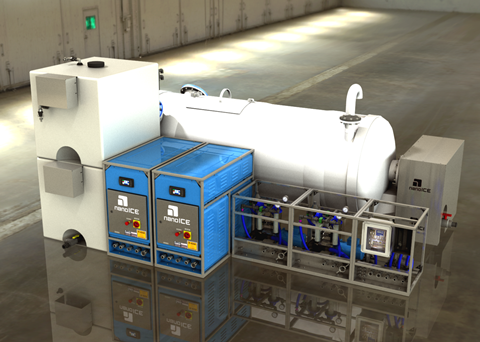
Molecular Ice Technology™ is microscopic ice particles - one billionth of an inch - dispensed in a liquid brine form that chills faster than conventional ice.
The idea behind the technology was the search for an ice type that can chill faster than current ice, or has a larger ability to remove heat from a target product in order to chill down to ideal storage temperature of fresh products – also known as ‘super chilling’.
Because nano-ice has a molecular, gel-like structure, rounded and extremely small particles, the nano-ice contours itself around the product to be chilled, so that the whole product is in contact with the ice. The silken texture also does this with no damage to the product. In addition, the smaller particle sizes also means that the nano-ice has a larger surface totally compared to volume, which again means that it has the ability to absorb more heat than conventional ice in the same amount of time.
Nano-ice enables the first stage of the post-harvest product to retain the great majority of its nutrients, reduce weight loss and protect the product from bacteria, which in turn gives it longer shelf life and a superior food quality. Nano-ice must be used as instructed and products should continue to be well chilled throughout the post-harvest logistics chain for maximum effect for the ultimate consumer. Most importantly the outright price of nano-ice is extremely competitive compared to other conventional ice-chilling methods. Nano-ice also has a longer term better economic return to the user because of its physically smaller footprint.
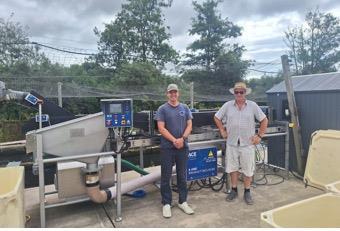
nanoICE’s systems are designed to be scalable and accommodate the preservation needs of both small and large organisations. The company installed its first two systems last summer in Sitka, Alaska, and another with an oyster processor in Japan. nanoICE tells WF&A that it will continue work with these customers in 2015, along with the University of Washington and Oregon State University, in the USA, to further study the properties of the ice and its effects on preservation.
Currently nano-ice is only deployed in cold water environments, but the company anticipates warm water installations to start taking place in 2016.