





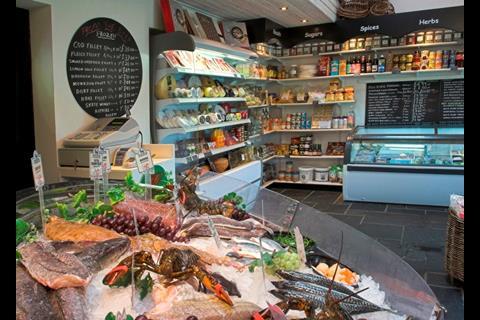
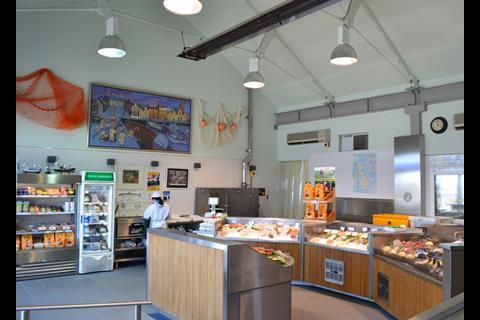
Despite a dramatic decline in their numbers, fishmongers collectively sell more than £250m worth of seafood per year in the UK, which is about 25% of the country’s chilled fish sales.
So, writes Andrew Martin, they obviously have a vital role to play in the British seafood industry.
This was a point reinforced recently by Martyn Boyers, CEO of Grimsby Fish Dock Enterprises. “Fishmongers hold the key to the future of our industry,” he told guests at the UK’s National Federation of Fishmongers 80th Anniversary Luncheon, at Fishmongers’ Hall in London on 25 June. “We need fishmongers and their expertise,” he added.
Like other independent specialist food retailers, fishmongers have been hit hard by the steady growth in the number of multiple retail outlets, particularly supermarkets, up and down the country.
Most UK families now prefer to do all their food shopping under the same roof at the one time and this usually involves a weekly trip to the nearest large supermarket. Not only will this supermarket have a fresh fish counter, but it can also afford to treat fresh fish sales as a loss leader and sell at lower prices than a specialist fishmonger could countenance.
Other reasons apart from the emergence of supermarkets have been put forward for the steep decline in the number of fishmonger outlets. John Adams, a past president of the National Federation of Fishmongers, says that “there are no entrepreneurs left in the UK these days”, a point taken up by another federation official, who added that there was also an unwillingness to work the long hours required.
The impact of legislation on small business has also played a part in fishmongers closing down, for example, European food labelling requirements, food traceability, responsible sourcing, metrication, Environment Agency by-laws, food business registration etc.
There has also been a myriad of employment law changes: minimum wage, annual leave, maternity/paternity leave, sick leave, disability discrimination, stakeholder pensions - the list is endless. As a result, those fishmongers owning freehold properties often took advantage of high property prices and sold up rather than soldiered on.
According to John Adams there were 950 fishmongers in 2011, about a tenth of the number in existence before the Second World War. And unfortunately, the decline in numbers is still continuing while some fishmongers now rely on their wholesale business to keep going.
Added value ranges
However, it is not all doom and gloom. Forward looking businesses are expanding and opening new outlets. And, in order to attract customers, many fishmongers now carry added value product ranges which complement the sale of fish. Some fishmongers offer fish in an easy cook format such as kebabs ready for the barbeque, and cook in bags.
Where fishmongers score most over supermarkets is in their knowledge of what they sell so they can advise customers on what to buy and how to cook it. They can also prepare the fish so that it is ready to cook, something that supermarket staff often just cannot do.
The National Federation of Fishmongers incorporating Poultry Game and Rabbit Traders Ltd, to give it its full name, was founded in June 1932 ‘to protect and further the interests of the fishmonger and associated trades’.
According to current federation president Gary Hooper: “The primary object for the established association was to promote commerce, particularly in relation to wet fish, shellfish, poultry, game and the very important rabbit trades, and bring together interested parties.” Although rabbits hanging above a shop front is no longer the familiar sight that it once was, approximately 50% of UK fishmongers still sell game.
Poultry was also often an integral part of a fishmonger’s business. When the federation was formed there were area and local associations with responsibilities for their own funds and regional activities. There is one branch association continuing to flourish and appropriately it is the London Fish and Poultry Retailers Association.
The National Federation of Fishmongers today represents about 50% of the UK’s independent fishmongers and is their official voice in dealings with government departments and seafood trade organisations such as the Sea Fish Industry Authority (Seafish) concerning the retail sector of the seafood industry.
There have been many legislative concerns, including: the impacts of metrication, waste disposal, fishing quotas, hygiene, fish labelling etc. The federation maintains a legal helpline and mails quarterly newsletters to members informing them of legislation changes and helps with queries on local matters, setting up new fishmonger businesses, supplies, suppliers, and so on.
On a more direct financial note, the federation offers its members £5m public and product liability insurance. This is probably the main reason why mobile fishmongers selling from vans in marketplaces throughout the country join the federation.
There has been a huge change in the mix of species sold by fishmongers during the past 30 years. Cod, once the nation’s favourite fish, now represents a small percentage of sales, while the impact of aquaculture can be seen in the increasing number of farmed fish and shellfish now on offer. In addition to (Atlantic) salmon, which is farmed in substantial quantities in Scotland, these include bass, bream, trout, turbot, halibut, and molluscan shellfish such as mussels and oysters.
The influx of these ‘new’ and unfamiliar species has meant that fishmongers, and particularly new entrants to the trade, have had to acquire new skills in preparing them to suit customers’ requirements. Preparation skills such as filleting, skinning, portioning are highlighted in the federation’s craftsmanship competitions, which have been held for 60 years now.
According to Gary Hooper they have played an important role in promoting fishmongering skills to the public and in acknowledging the country’s many talented fishmongers. “They play such an important role in nurturing raw talent and marketing fish to the consumer.”
The annual British Fish Craft Championships was held at Hay’s Galleria, next to the River Thames in London for many years. However, more recently it received the support of Cardiff Council and the Welsh Assembly Government, and this year marks the fourth time it will have been held in Cardiff Bay in Wales as part of the Cardiff Harbour Festival.
The crowds that come to watch the fish craft championship are probably the most visible indication that fishmongers will continue to play a vital role in the nation’s retail seafood sector.