






Keeping safe at sea
Jeremy Harrison, CEO of McMurdo Group UK, discusses the Search and Rescue (SAR) infrastructure, COSPAS-SARSAT and the importance of carrying safety equipment.
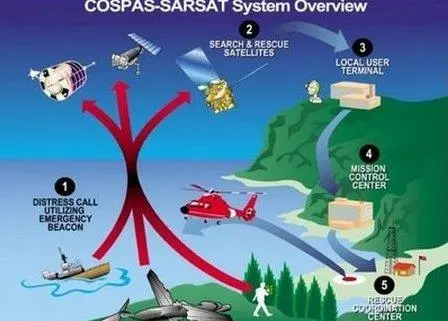
Regardless of a fisherman’s experience, a degree of risk is always inherent when venturing out to sea. Even today, in spite of revolutionary technological advances and increased attention towards educating those on the water, lives are put in danger and tragedies continue to occur. With recent key figures stating that at least 60% of all COSPAS-SARSAT beacon activations come from marine based beacons, it is important to ensure that safety at sea is never underestimated.
With over 20 deaths every year, fishing is one of the UK’s most hazardous industries. The majority of deaths of fisherman at sea are a result of flooding, capsizing or man overboard (MOB). However, more can be done to reduce the number of fatalities and the level of harm caused to those that are injured. Technology is available that means tragedies at sea could – and should – be avoided.
Specifically designed for search and rescue purposes, COSPAS-SARSAT is an international satellite system that launched in 1982. The COSPAS-SARSAT satellite network provides accurate, timely, and reliable distress alerts and location data internationally to enable search and rescue authorities to assist those in distress. The objective of the system is to reduce delays in the process of search and rescue services reaching those in need of assistance, whether on land or at sea. Hundreds of thousands of aviators, mariners and land users worldwide are equipped with COSPAS-SARSAT distress beacons called EPIRBs and Personal Location Beacons (PLBs), which have the ability to transmit life saving distress alerts in emergency situations anywhere in the world.
EPIRBs and PLBs
Designed to alert emergency services in a crisis, EPIRBs are a crucial product when considering the safety of crew members at sea. Traditionally, EPIRBs are mounted on to the vessel, automatically notifying rescue services when immersed in water. EPIRBs can also be activated manually, allowing users to alert distress by simply flicking a switch. When partially submerged in water, their ability to continue floating in the required position means the EPIRBs still transmit all the necessary information.
Ultimately, PLBs carry the same purpose as EPIRBs – a device intended to alert distress to rescue services. That said, there are some noteworthy differences between the two that everyone should be aware of before deciding which one would be best to purchase:
- PLBs are much smaller (sometimes the size of a mobile phone) as they are designed to be carried on the person, as opposed to being attached to the vessel
- As opposed to EPIRBs, PLBs are registered to the user and not to the vessel, allowing for use in many different environments, not just at sea.
The latest devices are designed with an inbuilt GPS receiver, meaning the exact current location is transmitted, dramatically reducing the time taken to locate and rescue those in distress, even in poor visibility. The market leading devices also feature a flashing light to help rescuers pinpoint your precise location in the water.
Beacons
Those in distress can activate both types of beacons manually, and EPIRBs can also be activated automatically when coming into contact with water – a crucial, life-saving feature for when injury prevents the beacon being activated manually. Using the 406 MHz, the information is transmitted by emergency beacons to orbiting satellites. Other communications and interference, such as 121.5 MHz, are not allowed on this frequency as it is designated internationally for use only with distress signals.
The beacon’s transmission is picked up by one or more satellites after the information is transmitted. Providing that the beacon has been registered in the appropriate way, the signal contains information such as the country from which the signal originates and a unique 15 digit identification code (known as the 15-hex ID) which enables the user of the beacon to be located as quickly as possible. The satellite transmits the beacon’s signal to its ground control station where the signal is processed and the data, including an approximate location, is forwarded to a national authority. The national authority forwards the data to a rescuing authority who will then use its own receiving equipment to locate the beacon and make the rescue or recovery. In the United Kingdom, the Mission Control Centre (MCC) is located in Kinloss, Scotland.
Current figures show that the satellite-based COSPAS-SARSAT Search and Rescue solutions are saving five lives per day. Since its inception over 30 years ago, the system has been providing distress alert information which has assisted in the rescue of over 30,000 people in approximately 10,000 distress situations, illustrating how hugely valuable location beacons are and the important role they play in search and rescue scenarios.
EPIRBs, PLBs and AIS MOB systems are must-have items for anyone out at sea, but they are even more critical for those who work at sea. Widely recognised as life-saving products, EPIRBs and PLBs are responsible for the rescue of over 20,000 people so far. When it comes to search and rescue, an improved understanding of the support available is imperative, in order to ensure such disasters are kept to a minimum.
Related Articles
 FISHERIES
 FISHING TECHNOLOGY
 FISHING TECHNOLOGY