



Japanese fisheries: Cataclysms in series
The dramatic news flew in nonstop; first a powerful earthquake, among the strongest recorded worldwide, shook the north-eastern coastal area of Japan on 11 March, writes Menakhem Ben-Yami.
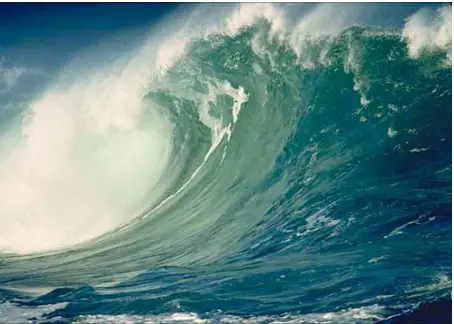
Next came the tsunami. The short spell between warnings by TV, radio and local sirens and the great wave didn’t leave the victims enough time to seek safe shelter.
At the time of writing, the total number of dead and missing can be assessed as close to or over 30,000. Several communities, some industrial, were totally or partly devastated, but it was eastern Japan’s fishing fleets, fish processing industry, fish-workers of every sort and their families that were, relatively and in some places even in absolute terms, the worst affected.
There are fishermen who lost their families and homes, fishermen who lost their boats, families that survived but lost their fishing men, whole fishing communities that were wiped out. There are fish farmers who were left without their marine farms. Some of them lost their lives along with their farms, others are now living in evacuation centres.
Minamisanriku destroyed
Hardly a thing was left of the town of Minamisanriku, hit by a 10m tall wave that carried zillions of tons of debris. How many of its inhabitants survived? A week after the deluge still 10,000 were missing.
While nature’s wrath struck housing, roads, services and industries across seven prefectures, the main impact of the tsunami was on the coast of the Miyagi prefecture, most of it north of Sendai, one of the major Japanese fishing ports and an important seafood processing centre, where large amounts of seafood in cold storage was destroyed.
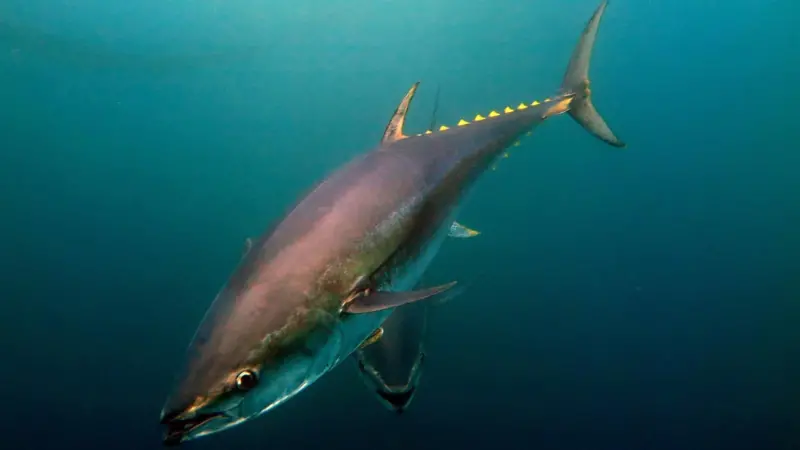
A couple of hundred kilometres to the north, the tsunami devastated the otherwise well-protected fishing port of Kesennuma, situated at the end of a long sound. It lost most of its huge fishing fleets, both that of smaller boats fishing the rich fisheries off the Sanriku coast, and that of ocean-going fishing vessels. The fish market, famous for its variety of tunas, which in 2010 handled close to US$280m worth of fish, used to rank eighth in Japan. Now, it has sunk 10cm and is strewn with smashed boats and cars. Many survivors were rather pessimistic about reconstruction potential, but Shigeru Sugawara, the city’s mayor, said: “Kesennuma will never die as long as it has the ocean.” In the meantime, however, the ocean has had Kesennuma…
Miyagi Prefecture boasts other prominent fishing ports, including Onagawa, Ishinomaki and Shiogama, and had the largest catch of any prefecture on Japan’s main Honshu island before the earthquake. In 2009, the total catch from fishing and fish farms reached over US$960m, the fourth largest in Japan as a whole. Its fisheries processing industry produced in 2007, US$3,440m, ranking second in the country.
Industry paralysed
The cataclysm paralysed the whole fishing industry: catching fish, unloading, processing and delivering products to consumers. According to the World Bank the overall damage caused by the earthquake and tsunami might reach $235bn. The Great Earthquake brought a proud industry to its knees. Miyagi Governor Yoshihiro Murai said the prefecture’s fishermen and fishery companies would have to start again from scratch.
In the central part of the disaster area is the town of Ishinomaki, which coastal area, called Sakanamachi (‘Fish Town’ in Japanese), was devastated by the tsunami waves on its thousands of sea-beach homes, fish plants and shipyards, factories and warehouses. The waves swept away hundreds of cars with escaping inhabitants. Survivors reported that the demolished area was covered in rotting fish, much of it tuna and bonito. Further to the south the tsunami hit the coast, all the way down to Fukushima, and beyond.
Although Japan got almost all of the brunt, the tsunami travelled all the way across the Pacific to hit and damage the fishing harbour of Crescent City, CA and to sink at least eight fishing vessels. Fortunately, following a timely warning, the majority of the commercial fishing boats had sailed to safety at the Eureka harbour.
Radiation calamity
Then, on the top of all this, another calamity has developed: the Fukushima Dai-Ichi power station’s nuclear reactors started getting out of control, spreading radioactivity. A fortnight later they were still dangerously fuming, with incalculable nuclear disaster looming. If the leaking of the radiation is not contained, the reactors or their cooling systems may release long-lasting and perilous forms of contamination and spread throughout the oceanic food chain, from seaweeds to top predators. Already, levels 1,250 times the legal safety limit were measured. Japanese workers and firemen, risking exposure to radioactive contamination have been fighting heroically to prevent major disaster.
The radiation from the seaside nuclear plant hurts the region’s affluent fisheries – a considerable chunk of the Japanese mammoth fishing industry. They supplied tuna, oysters, shark, squid and seaweed to local and national consumers and exported them throughout the world. The detection of radioactivity near the stricken nuclear plant is already hurting fish sales on national markets, and Japanese fish and other commodities are being checked worldwide in the ports of call of ships carrying them.
Although Japan is an extremely well organised country, support for the hundreds of thousands of displaced inhabitants of the affected area hasn’t come soon enough. According to the Asahi Shimbun daily, fishermen in the area were living in shelters, without transportation to the Tokyo fish market and without ice to keep fish fresh.Even, while I’m writing this, the needs are tremendous, while international assistance is flowing in.
For the Japanese and world fisheries this is a drama of historical dimensions. But talking about history, do we still remember the 2004 South Asia tsunami that killed over 230,000 in Indonesia, Thailand, India, Sri Lanka, and some other countries?