



Japan: Its more than a whaling issue
Some of the anti-whaling nations and other organisations might say rightly so. There has been a cloud of suspicion hanging over the country and its whaling activities since a world wide moratorium banned commercial whaling back in 1985.
Many have accused Japan of carrying on whaling despite the ban with rumours of £30 million a year being made from its activities even though it insists it is only killing whales for scientific research.
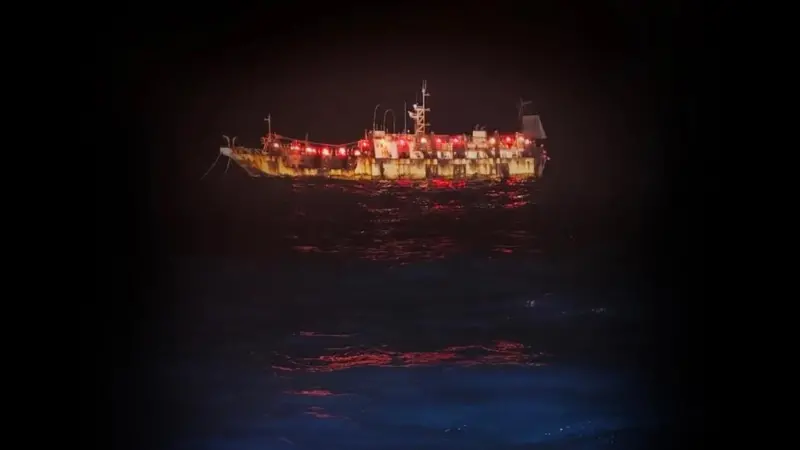
Last month a Japanese whaling fleet left for Antarctica for six months to hunt up to 400 minke whales. The fleet of five ships includes a 7,575 ton vessel.
Japan says it hunts whales to provide information on whale feeding habits and migration patterns but critics have said the programme is a cover for supplying whale meet directly into Japan.
The country has already conducted ‘research’ in the northwest Pacific last May and June.
Japan believes that the increase in whale populations is having an serious affect on the world fish stocks. It claims that whales eat nearly four times the world total fish catch.
According to Japanese research whales can eat up to about 4% of their own body weight every day.
The country has put its catch decline from 12 million to around six million tonnes partly down to the whale population doubling in the last 10 years.
The Tokyo-based Institute of Cetacean Research said recently that four times the amount of whales that are presently killed could be caught every year for the next decade and whales would even then not be threatened with extinction.
According to its research a quota of 2,000 whales could be caught for a l00 years without an impact on the population.
Some organisations have said that Japan’s theory that the collapse of fisheries world-wide is the result of whales is ‘absurd’.
They say that it has always been the case that complicated ecosystems supported large populations of both whales and fish and that the decline in fish stocks around the world is down to overfishing and bad management in the past.
Meanwhile, critics have also said Japan has allegedly been offering overseas aid grants to bribe some countries to vote against an international ban on commercial whaling in the future.
Joji Morishita, deputy director of the Far Seas Fisheries Division of the Japanese Fisheries Agency is mystified by this kind of continued reaction and categorically denies any involvement with any sort of corruption such as offering bribes.
“This has become much more than a whaling issue. It is an issue against Japan.”
Joji Morishita says Japan is often singled out by anti-whaling nations and other organisations in the western part of the world.
He says ‘Japan bashing’ over whaling issues has even become ‘fashionable.’
America is one of Japan’s greatest critics and Joji Morishita says that could partly be because Japan is a threat economically to the US. The US has threatened sanctions if Japan does not stop its whale research.
But Japan says sanctions against a legal program would be a violation of international trade rules. Joji Morishita thinks there is much more behind America’s attacks of Japans whaling activities.
“They have been the number one superpower in terms of their ecomomy in the world and Japan is number two, perhaps they see us a threat.”
Ridiculous as it may seem, Joji Morishita may have a point. Although it is more than likely that the criticism of Japan comes from the general unease surrounding the killing and eating of whales.
He says that whale eating is seen as ‘strange’ and ‘unacceptable’ in many countries in the western world where as in Japan it is seen as perfectly normal just like eating beef or lamb would be in Europe.
But the real issue for Joji Morishita is a return to commercial whaling and he is calling for a sensible approach in the future.
He says what is needed is an efficient whale management scheme so that if and when there is a return to whaling it is done in a sustainable manner.
“There is still a lot of work to do to convince anti-whaling nations that it can be done sustainably and under tight control,” he says.
So far any attempt at a whale management scheme has failed to be agreed by the International Whaling Commission (IWC), putting the organisation’s credibility under the spotlight once again.
Anti whaling nations want to see a strict monitoring program including observing the research programs and a DNA monitoring program.
They also want to see environmental and animal welfare issues to be included in any management scheme.
Joji Morishita says issues like this and the fact that anti-whaling nations want to put the costs of these programs onto whaling nations.
But he also believes a return to commercial whaling could be ‘immenent’ as each year the IWC debates the issue there have been more votes in favour of some sort of return.
Some nations however have said the past that they will never sanction a return to commercial whaling.
But despite whaling issues being a huge weight on Japan’s shoulders, its commercial fishing industry is still managing to survive.
Despite the catch falling by half in the last ten years and imports of seafood and fish reaching almost 65%, Japan has tried hard to keep the industry in tact.
The most promising sector for Japan is aquaculture. “Its in very good shape at the moment,” says Joji Morishita.
Aquaculture in Japan in backed up by a usually strong shrimp industry which has been stalled by low prices for shrimp all around the world in the second half of 2001.
At the beginning of last year the European Union (EU) called for Japan to scrap its quotas on fish imports.
But Japan see the system, which sets limits on annual imports of 17 kinds of fish, as a necessity to preserve and manage resources in the waters surrounding the country.
“Right now its important to try and rise the level of self-sufficiency, but to balance that with all our other commercial fishing activities,” says Joji Morishita.
While Japan has always been seen as a strong fishing nation, there are signs that there is a need for change in a industry which is starting to show signs of under-capacity.
Like many countries in Europe Japan is taking a closer look at its fish stocks and a recovery, according to Joji Morishita, is not going to happen quickly.
Salmon at the moment is very abundant and the Japanese Agency is looking to develop the salmon sector in the near future.
He also thinks the situation in Europe is a difficult one to solve with a need to balance the fleet , reduce fishing effort and continue to be profitable. “On one hand if you reduce effort than may European companies may start fishing outside of European waters reducing stocks elsewhere, that is not really the answer.”
“What Europe are doing with the CFP is a noble cause and it seems to me they are trying very hard to gradually put things right,” he adds.