

Sludge – the next fish feed ingredient?
In late 2023, the Scottish Association for Marine Science (SAMS) announced a new chemical-free approach to treating aquaculture waste. With funding support from the Sustainable Aquaculture Innovation Centre (SAIC), Scottish Sea Farms, water technology supplier Power and Water and waste services company Tradebe, the goal of the approach is to enable seafood producers to deal with waste in a more circular way by returning by-products to the sector to fuel the growth of ocean life such as marine worms and seaweed.
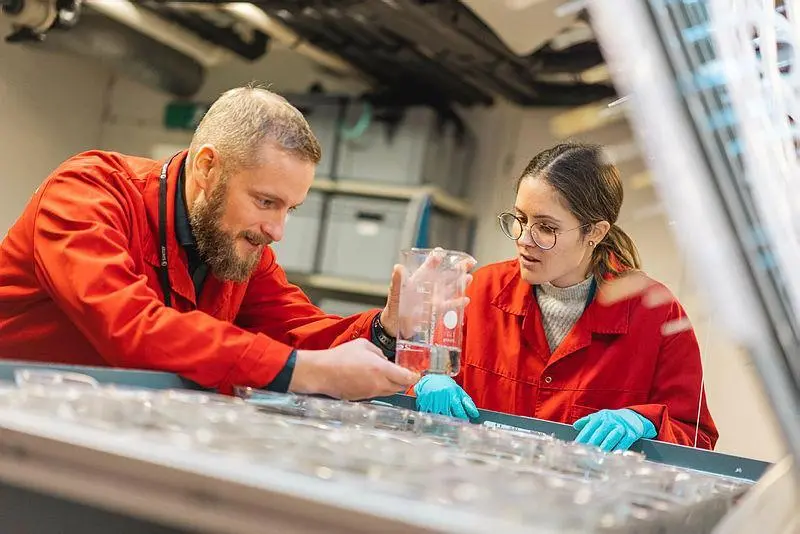
Using an electrochemical process and ultrasound technology, the approach involves extracting excess water from waste matter and feeding the remaining nutrient-rich material to polychaetes to boost their growth.
With hopes high that waste matter could be repurposed within the farmed salmon sector as feed, the polychaetes’ nutritional profile would then be assessed to gauge their suitability as a feed ingredient. SAMS plans to bring the circular concept to the market under a spinout called N-ovatio-N early next year.
“Aquaculture waste is not typically considered as valuable as co-products from other sectors, but there are a range of opportunities to be explored that could change that attitude,” Dr Georgina Robinson, lead researcher and UKRI Future Leaders Fellow at SAMS, said in a press release. “By taking a circular approach, we can use the co-products to aid the growth of other organisms that will, in turn, benefit the sector as a sustainable feed ingredient. The results of this project could show huge potential for it to be adopted more widely.”
Filling knowledge gaps
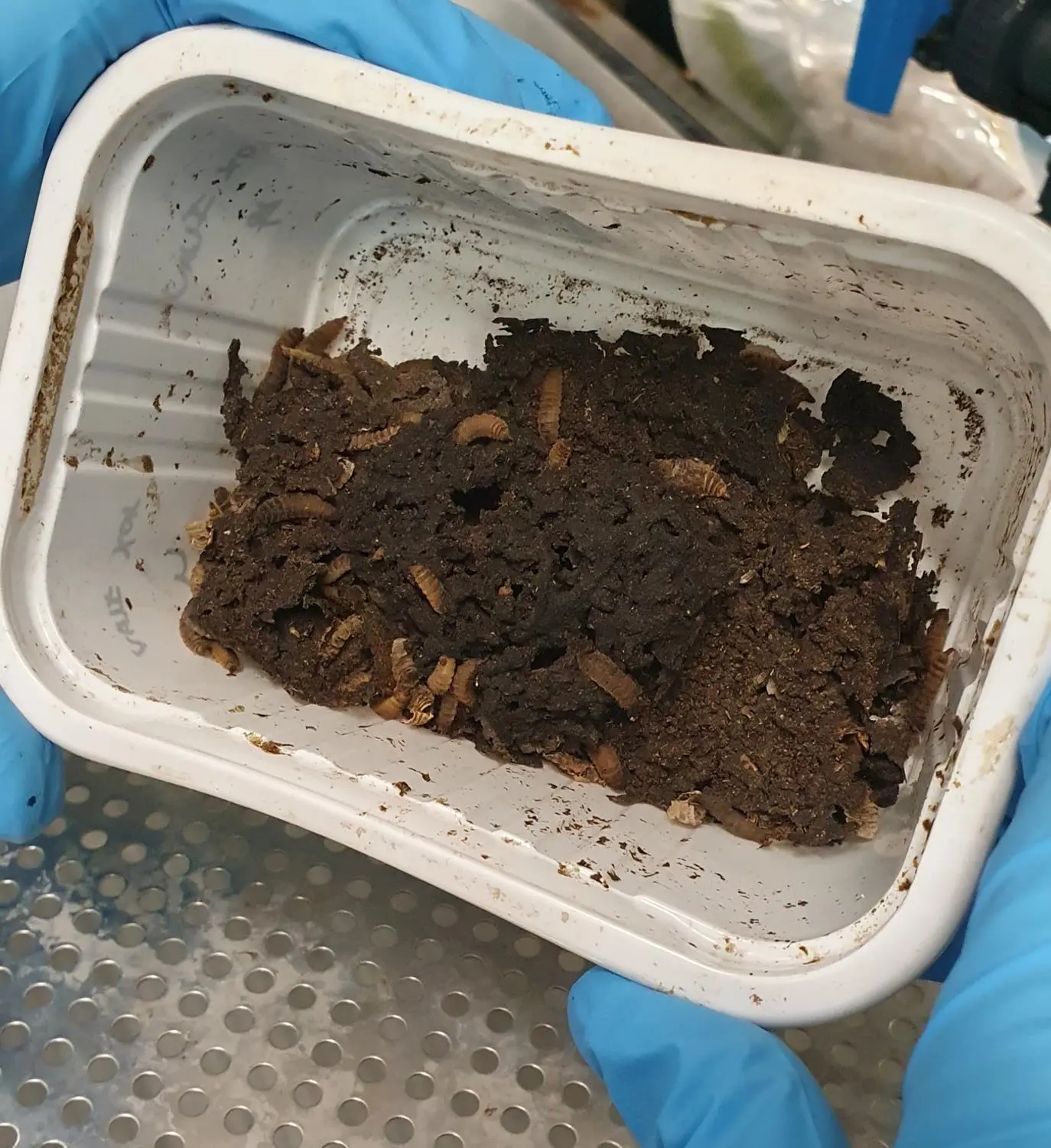
Similar initiatives are drawing attention elsewhere. In Norway, researchers at SINTEF Ocean are studying the possibility of using sludge – fish faeces and uneaten feed – as a feed for animals such as black soldier fly, gammarids and polychaetes.
The upcycling of nutrients in the sludge by detritivores to produce novel ingredients for aquafeeds can make huge impacts on how well we utilise today’s resources, if we can re-introduce these into the value chain, according to Andreas Hagemann, senior research scientist at SINTEF Ocean. However, this circular approach is not allowed according to current EU legislations by precautionary principles, because there isn’t enough knowledge about the risks involved in such a value chain.
The SecureFeed project, financed by FHF – Norwegian Seafood Research Fund (#901732) – aims to address these knowledge gaps. Researchers from SINTEF Ocean, the Institute of Marine Research and the Veterinary Institute are mapping state-of-the-art knowledge on biosecurity risks related to the use of fish sludge as feed for invertebrates in the food chain. The focus is on the potential for transmission and/or accumulation of chemical (i.e. heavy metals, environmental pollutants) and biological (i.e. viruses, prions and bacteria) hazards from the sludge to the final raw material, and measures that can be taken to reduce any identified risks.
“Low-trophic organisms like polychaetes and black soldier fly larvae use sludge as a growth medium and convert it into animal protein and lipids, which can then be used for fish and animal feed,” Hagemann told WF. “There are still some gaps in our knowledge about these organisms’ ability to pass on risk factors like infectious agents and unwanted elements. However, large amounts of sludge are generated from aquaculture in Norway, and it’s crucial to learn more about this to continue towards a more circular economy.
“Uncovering risk factors is a key step towards the future, and we believe that this type of waste material may soon become a resource that future biomarine businesses will be pleased to purchase.”
From cost to revenue stream
The SecureFeed project’s main goal is to provide information on the degree of biosafety when producing feed raw materials for terrestrial and marine organisms using organic material from salmon farms.
The first step was to document what sludge comprises. Following a systematic collection of information through literature reviews, 47 samples from fresh and seawater aquaculture facilities in Norway were analysed for dry matter content, energy, fat, protein, ash, minerals, heavy metals and medicinal residues. Samples were then checked for any relevant viruses and bacteria before experiments were conducted using black soldier fly larvae and polychaetes. The animals were fed sludge containing two different viruses or bacteria, in either high or low doses, and scrapie prions. The work is currently being prepared for peer-reviewed publications.
Waste material like sludge is currently used as compost, agricultural fertilisers and for biogas production, but paying for it to be removed from hatcheries and fish farms is a major expenditure. Nevertheless, Hagemann and his colleagues believe it may soon be seen as a source of revenue, in light of the forecasted “feed squeeze” that is hindering Norway’s goal of increasing its future salmon production by four-to five-fold.
“Two-thirds of Norway’s salmon feed raw materials currently come from south of the equator, including soy from Brazil and fish oil and fishmeal from anchoveta fisheries outside Peru,” said Hagemann. “Norway imports 92% of its feed raw materials. However, because of global insecurity issues, any growth ambitions that the salmon sector may have cannot be based on access to feed that relies on such over-extended supply chains. Furthermore, the EU taxonomy requires that we use the most eco-friendly feed available and this is where waste material such as sludge comes in. It’s rich in nutrients and can be fed to organisms such as black soldier fly or polychaetes, representing a potential alternative to existing salmon feed ingredients.”
Circular credentials
“Right now, we cannot rear extractive species using sludge because we don’t know enough about whether they can transfer unwanted components from the sludge they eat into the food chain,” Hagemann continued. “However, if future research provides the knowledge that is needed for agencies like The European Food Safety Authority (EFSA) to re-evaluate or re-assess today’s regulatory framework, and the outcome is that sludge can be used in such circular value chains, we believe that this may become a huge industry in Norway.”
Hagemann said there are other options in addition to sludge, such as water effluents from RAS facilities that can be used to produce microorganisms and plant species.
Nutrient salts from the wastewater can be used to cultivate microalgae, which also offers a possible source of proteins and lipids that are key to aquafeed ingredients. Microalgae can also provide minerals and phytochemicals such as antioxidants and pigments with significant commercial value. But the reuse of sludge will make a key contribution towards consolidating the circular bioeconomy in Norway, which will be entirely in line with the government’s social responsibility initiative that was launched in spring 2023.
“Also, in the case of polychaetes, if all the sludge from existing Norwegian salmon production was collected, we could rear enough polychaetes to reach 80,000 and 30,000 tonnes of proteins and lipids, respectively, on an annual basis,” said Hagemann. “This is equivalent to about 12 percent of the protein and four percent of the lipids that the Norwegian farmed salmon sector is currently consuming. We use approximately 2 million tonnes of feed to produce 1.4 to 1.5 million tonnes of salmon today.”
“The key to our ability to exploit sludge generated by the farmed salmon sector is more knowledge,” Hagemann continued. “If our research demonstrates that the sludge can safely be exploited for feed production, we will have taken an important first step along the road towards a circular bioeconomy in Norway.”
Related Articles
 SEAFOOD
 AQUACULTURE
 BUSINESS & FINANCE