
Is it time for the fishing industry to re-calibrate its moral compass?
Bryan Gibson writes on the issue of food waste and asks if we should be making more of the resources we have.
Optimistically, as far as taking a general snapshot of the health of our oceans is concerned, UK’s BBC Breakfast News reported on 10 January 2013, that a huge pod of up to 500 dolphins had been filmed chasing a massive herring shoal between Southern Ireland and South Wales.
A few moments later the news reader then poured icy seawater over ‘the above’ by announcing that the Institution of Mechanical Engineers claims that almost half the world’s food production is being wasted due to crop failures, inefficient farming and distribution methods, water shortages and that supermarket obsession, the buy-one-get-one-free (bogof) offer.
It is estimated that Britain wastes about 6.7 million tonnes of food each year and USA manages to squander 40 million metric tons. Apparently that’s more than enough to feed the one billion undernourished people living a hungry existence upon our fragile planet.
10% of rich countries’ greenhouse gas emissions come from growing food that is never eaten and it takes 10 times more resources to produce one kilogram of meat compared with growing the same quantity of vegetables such as rice, beans and maize. 4,600 kilocalories per day is harvested for every person on earth, but only 2,000 end up eaten.
We have also been told that by 2050 fish will be 20% smaller due to ocean warming caused by the polar ice caps melting. Fresh water is heavier than salt and as it sinks to the sea floor fish metabolism will increase and they will be burning energy they would have used for weight-gain to swim further in their search for food. Dark expanses of ocean are expected to replace millions of square miles of heat reflecting white snow and ice. Scientists are hoping a catastrophic chain of events will not be put into motion, but where the future is concerned, things don’t look too good for nature!
Considering the situation from mankind’s perspective, efficiency of boat size may be put into reverse. Fishing vessels will effectively become 20% larger. Like the fish they are catching, they’ll be consuming more fuel and wearing out more equipment to land the same weight of fish, resulting in extra days at sea just to stand still. Feeding a hungry crew for an extra day or two per voyage will also have a massive impact upon profits and wages.
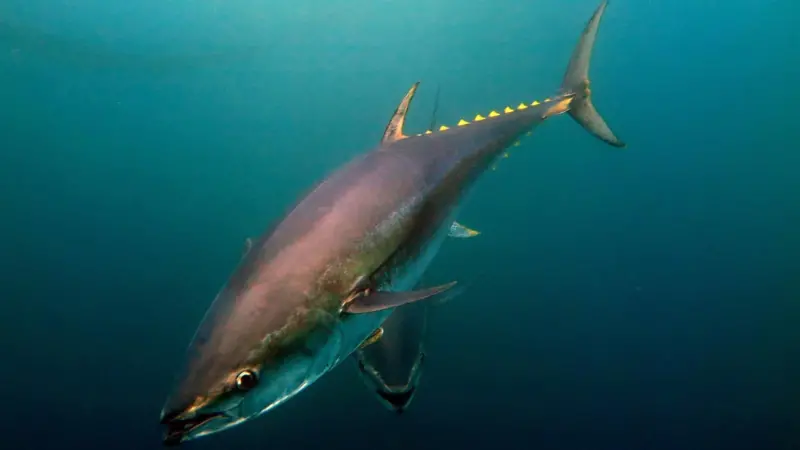
A highly endangered Atlantic bluefin tuna weighing 222kg (489lbs) recently sold at Tokyo’s Tsukiji fish market for 155m yen ($1.7m; £1.05m), tripling the record price set last year. That’s about $7,600 per kg ($3,500/lb). As long as the rewards for catching the rarest species remain high, the more threatened they’ll become.
Japan consumes more than half the world’s bluefin tuna, and last season’s catch confirms a continuous decline despite mature breeding females being capable of producing 30 million eggs when spawning. However, price achieved at market does not reflect quality, size or nutritional value, but linked more towards corporate publicity and setting a positive tone for the forthcoming new Japanese business year.
Shark fins
China sells over 8,000 tons of shark fin soup, which is without any taste or nutritional value. One bowl costs between $50US and $400, but 100% of the creature’s nutritious flesh is discarded at sea whilst the animal still lives. The dry land parallel, is for farmers to raise millions of bullocks to maturity and then cut off their hoofs and tails and to throw the carcasses away. Little wonder sharks are on the brink of extinction while entire communities continue to starve.
Fishermen struggling to feed their own families on tiny, unproductive tropical islands, working from vessels not much larger than canoes, are unable to profit from such powerful market forces like China and Japan. They cannot venture into the open sea where the largest and most nourishing fish are caught, but they are discovering ways to fight back.
Realising, that by co-operating with their own tourism and scuba diving industry, they are helping to sustain the value of their own local sea life. By turning away from hunter/gathering to the point of extinction, the Fiji islanders have recognised there’s an alternative choice, by developing sustainable rearing methods to be harvested in the future for the benefit of man, fish and mollusc, alike.
Dive Tropex, on Fiji’s Mamanuca Islands, with the help of the Fiji Ministry of Fisheries, is supporting the Tokoriki Island Giant Clam Regeneration Project. This species is being re-introduced to Western Fiji, having become locally extinct due to excess human consumption.
This much loved icon of the South Pacific can live up to 200 years and grow to the size of a bathtub. Alongside another seriously endangered species, tridacna derasa (smooth clam) also being targeted for rescue, both are being re-introduced from Australia’s Great Barrier Reef in a joint venture between the Fijian and Australian Fisheries Project. Tourists who visit Fiji to dive and snorkel are now helping to re-plant juvenile clams in controlled environments such as boats, recently sunk to provide sanctuary against predators.
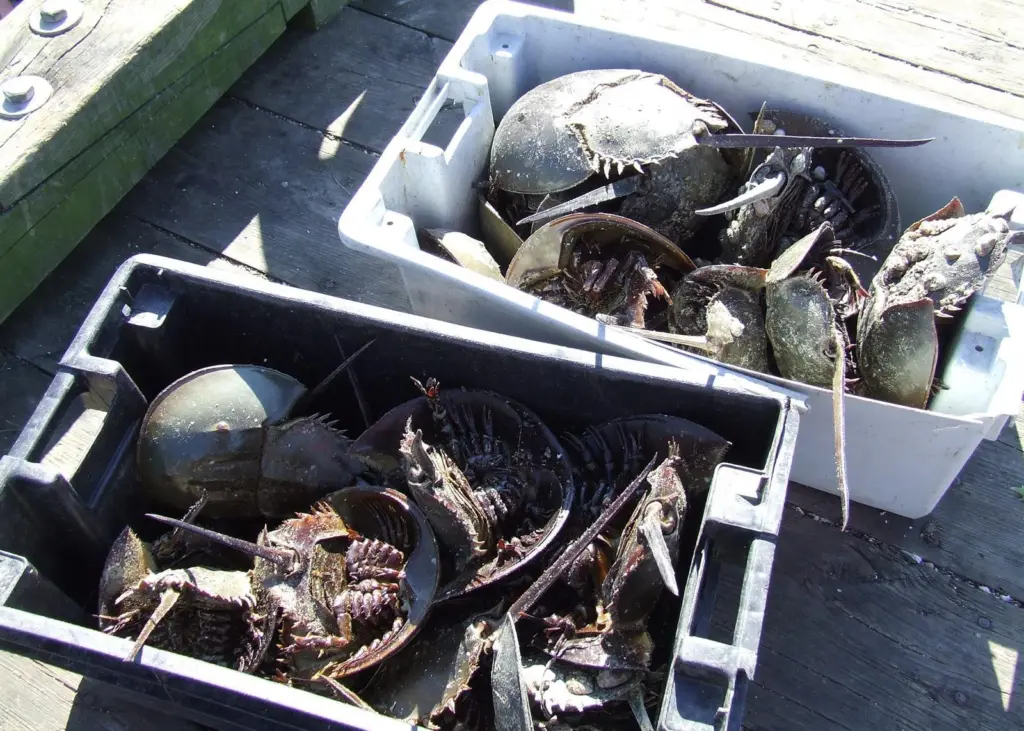
On the other side of the world, Falmouth Massachusets small boat fishermen are catching the American horseshoe crab (Limulus Polyphemus), which takes 10 to 13 years to reach sexual maturity and can live for over 20 years. This living fossil has existed for over 440 million years and is playing a vital role in immunological research at Boston University’s Woods Hole Marine Institute. The crabs are milked for 50 milliletres of their blood and returned to the sea, unharmed, having performed a vital role in scientific research.
Woods Hole’s Dr Norman Wainright is working to understand molecular defense mechanisms in response to invasion by bacteria, fungi, and viruses. Proteins found in the horseshoe’s blood display properties that contribute to antimicrobial defense. He is also working on the Endosafe®-PTS (Portable Test System), a machine no bigger than a calculator, which can use the Amoebocyte Lysate (LAL) test to discover the existence of microbes on spacecraft, and eventually, Mars.
Maybe we should now be prepared to take less from the sea and make much more of what we already have?