


Ireland’s biggest fish resource is difficult to process
Ireland is the leading EU quota holder of boarfish (Capros aper) at 56,666 tonnes.
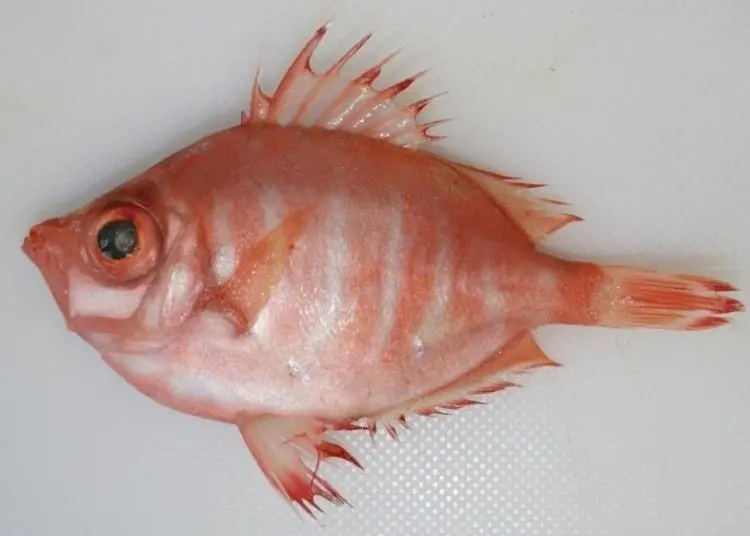
A small pelagic species which shoals in mid water off the west coast of the country, boarfish is currently being prosecuted as an industrial fishery but is undergoing trials to assess its suitability for direct human consumption.
However, the extremely small size of the fish makes it very difficult to process using conventional equipment. “It is small (12-14cm total length and weighing 40-50g) and spiny, and therefore traditional machines cannot be used,” says Michael Gallagher, regional business development officer of Bord Iascaigh Mhara (BIM), the Irish Sea Fisheries Board.
During the past two years BIM has worked closely with industry to fast track human consumption opportunities for this novel species. Says Dr Gallagher: “We have been doing some work at the [BIM’s] Seafood Development Centre and also the Letterkenny Institute of Technology particularly at their school in Killybegs where they have innovative chefs who are looking at product format options.
“In terms of product development we have tried a range of options. Headed and gutted (H&G) format is an option, but it is labour intensive to remove the spines and skin which has strong scales. However the positive thing is that the flesh is firm and tastes good.”
Dr Gallagher thinks it is likely that machines will be evolved to allow H&G and from this minced options can be considered. In the meantime BIM has sent samples of boarfish to China where processors are used to dealing with small fish, but according to Dr Gallagher the processing costs for handling boarfish compared to Alaskan pollock makes it unattractive for re-processing and selling back to Europe.
“However,” he says, “the domestic Chinese market is expressing interest in the fish in its whole form, as they do not seem to mind cooking and eating off the bone and they find the colour attractive.”
Canning
BIM has tried canning boarfish and Dr Gallagher says there was also some interest in this in China. “But our trials in Ireland showed that the scales and spines present some problems as they do not break down during cooking/canning. A positive is that the oil content can be over 9% and the flesh suits canning.”
Containers of boarfish have also been sent to Africa for the whole market and BIM is waiting for specific feedback.
Summarising the development work done so far, Dr Gallagher says that boarfish whole in China is a positive (wild caught, healthy stock, good flesh, nice colour), there is possible potential in Africa and, as the technology evolves, headed and gutted with the possibility of selling minced product.
“Boarfish offers an environmental and sustainable alternative to some of the major species for seafood consumers and Ireland’s opportunity as the leading EU quota holder positions it as a global seafood supplier of this unique resource.”
Boarfish is widely distributed along the Northeast Atlantic continental shelf and is found from Norway to Senegal, the Mediterranean Sea and the offshore islands of the Azores, Madeira and Canaries. In recent years, the species has experienced a dramatic boom in abundance in the Bay of Biscay and Celtic Sea.