




Intelligent packaging will tell when fish spoils
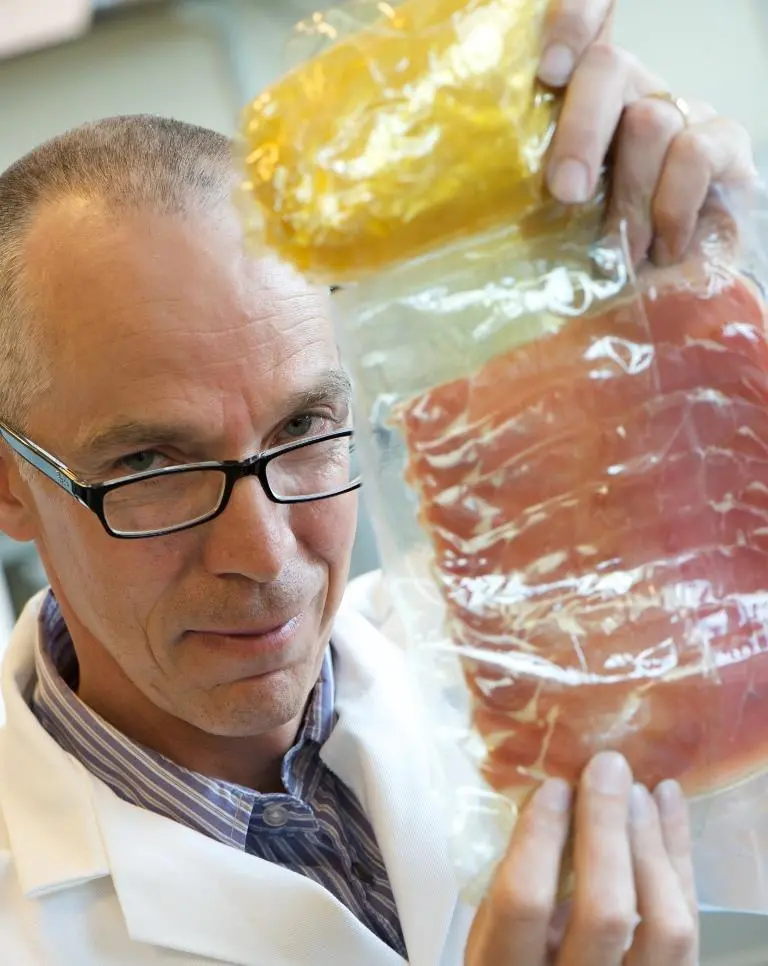
Packaging that alerts consumers when food is becoming unfit to eat is being developed by researchers at Strathclyde University in Scotland.
It is hoped that it will have a direct and positive impact on the seafood industry.
An integral indicator is to be used as part of a form of food packaging known as modified atmosphere packaging (MAP), which keeps food in specially created conditions that prolong its shelf-life. MAP, where the air inside a pack is replaced by a controlled mixture of gases, is being increasingly used in the seafood industry to reduce the growth of spoilage micro organisms. The gas mixture is typically oxygen, carbon dioxide and nitrogen, although the oxygen is usually omitted for oily fish.
Current freshness indicators typically take the form of labels inserted in a package, but these come at a significant cost. The Strathclyde researchers are looking to create a new type of indicator which is an integral part of the packaging, and so is far less expensive.
The indicator will be made of ‘intelligent plastics’ which change colour when food is about to lose its freshness because it has broken or damaged packaging, has exceeded its ‘best before’ date, or has been poorly refrigerated.
According to the research team, the new food wrapping could be on store shelves in as little as two years.The Strathclyde project aims to improve food safety and cut unnecessary food waste. An estimated 8.3 million tonnes of household food – most of which could have been eaten – are wasted in the UK each year. Also one million cases of food poisoning occur in the UK each year.
Professor Andrew Mills, of the Department of Pure and Applied Chemistry, who is leading the Strathclyde project, said: “At the moment, we throw out far too much food, which is environmentally and economically damaging.
“Modified atmosphere packaging is being used increasingly to contain the growth of organisms which spoil food, but the costs of the labels currently used with it are substantial. We are aiming to eliminate this cost with new plastics for the packaging industry.
“We hope that this will reduce the risk of people eating food which is no longer fit for consumption and help prevent unnecessary waste of food. We also hope it will have a direct and positive impact on the meat and seafood industries.”
By giving a clear and unambiguous sign that food is beginning to perish, the indicators being developed at Strathclyde could resolve potential confusion about the different significances of ‘best before’ dates and ‘sell-by’ dates. They could also help to highlight the need for food to be stored in refrigerators which are properly sealed.
The project has received GBP325,000 in support from the Scottish Enterprise Proof of Concept Programme. Lisa Branter, acting head of the programme, said: “Through the Proof of Concept Programme, we are creating the opportunities to build high value, commercially viable spin-out companies from ground-breaking research ideas.
“What we want to achieve are more companies of scale created as a result of the Programme, and this project is a great example of an idea which offers real business opportunities.”
Related Articles
 PROCESSING & REFRIGERATION
 SEAFOOD
 SEAFOOD