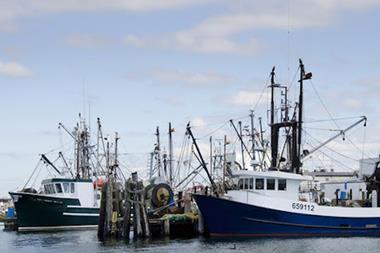




Globalisation of fisheries is characterised by fishermen fishing not only in their own national waters, but also on the high seas and in the waters of other countries, and by an unprecedented growth in the number of fishermen from developing countries on board fishing vessels of industrialised countries.
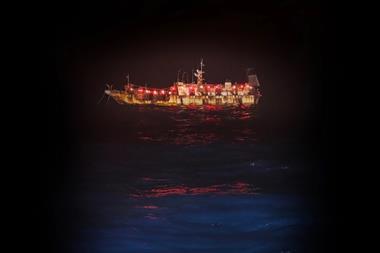
Rusty buckets crewed by semi-slave labour are chasing fish all over the world, many of them taking excessive unreported catches and others simply poaching. Operators of many of such fishing vessels do not follow either national fishing laws or international management agreements and hardly respect labour laws and fish workers' rights. On many occasions criminal treatment of the crews of ocean going fishing vessels has been brought to public knowledge.
Three years ago, I wrote here about fish labelling: ”one shouldn't forget that the MSC label indicates good practices only with respect to fish, but not with respect to fishing people“ and that…fish labelled safe, “green”, sustainable fished, etc., (should be considered inadequate if awarded) …to catches of vessels where decent employment conditions are not practised”. The international standards prescribed for larger-scale vessels, have been hardly observed in most of the world's fisheries. When it comes to small-scale and medium-scale fisheries such standards had not existed.
Recently, however, 'The Work in Fishing Convention, 2007', adopted in Geneva at the 96th ILO (International Labour Organization) Conference (ILC) prescribed new standards and updated old ones for living and working conditions on board fishing vessels, such as: reasonable accommodation and food, including repatriation, recruitment, medical care at sea, occupational safety and health, social security protection, and compliance and enforcement. The Convention is hoped to protect fishers against inhumane working and living conditions.
Fishworker's guidebook
The Convention's provisions would apply to: (a) fishing vessels of length 24m and above; (b) fishing vessels that normally remain at sea for more than seven days; or (c) fishing vessels that undertake distant-water fishing operations. There's a spark of hope also for the smaller-scale fisheries, because national authorities may also apply most of the provisions to other fishing vessels and those employed on board such vessels. This is, however, not directly prescribed by the Convention, so that it may or may not happen.
The International Collective in Support of Fishworkers (ICSF) was quick to publish a 49 page Guidebook meant to aid fishworkers and their organisations understand the possible benefits and implications of the Convention for artisanal and small-scale fisheries in developing countries. It represents a quick overview of the 2007 Convention, and is intended mainly to help those unfamiliar with the Convention and the working of the ILO and the ILC, to gain some understanding of the possible benefits and implications of the Convention for fish workers in developing countries. The booklet can be downloaded for free at www.icsf.net/SU/Bk/EN/5
This well-edited little guidebook, richly illustrated with comics, is rather scanty on the practical details of the Convention. Thus, although the readers can read that the Convention provides for ''new standards of living on board' etc., they won't learn about the character of such specified standards, as for example, the minimum floor room per person in a sleeping room, or that everybody on board should be ensured with 10 hours rest in each 24 hours, or 77 hours of rest per week, etc.
Some of the language used seems to be too formal for most fishworkers, as for example: “These articles related to, among other things, the quantum of provisions to be supplied to the fisher on a fishing voyage, the mode and quantum of remuneration, and the conditions for termination of the agreement”.
It is hard to believe that the Convention's rules would be widely applied, unless supported and monitored by fishermen's organisations and professional unions. This may lead to joint actions by fishermen's organisations and industry representatives to adjust the rules wisely and gradually to each separate fishery and its particular conditions of operation. So far, international conventions have failed to promote the welfare of fishermen many of whom still suffer great physical hardship and pain, and make do with lousy food, little remuneration and little social justice, if any.
'Human-rights-safe' fish
Thus, the core of the problem would remain compliance and enforcement both depending on whether and how fishermen, skippers and owners would be informed on its ruling, and on whether they'd be allowed and motivated to comply, and how. In the meantime, owners in countries with lax labour laws and enforcement would keep employing 'cheap' crews from low-income countries, presently prepared or forced to work under conditions banned by the ILO Convention.
Therefore, unless future trade agreements and fish labelling include protection also for worker rights, fishing jobs in industrialised countries will continue to be lost to nations with lax law enforcement and lower production costs. This is because owners forced to observe costly labour regulations are facing unfair competition wherever labour conditions are hardly regulated and international conventions' regulation unheard of, or disregarded. Here, no doubt, as an instrument of information distribution, a popular booklet like the ICSF Guide may play a role, if widely distributed and translated to national languages, in particular, those spoken by large fishing populations.
All this brings me back to fish labelling. Sensitive consumers should not be satisfied with 'environment-safe' fish. There's an urgent need for a label telling the consumers that the fish they're eating are 'human-rights-safe'. This is in view of the recurring reports on endangered fish workers and on fishing boats which could well be slave galleys, fishermen forced to work long hours with very short rest periods, absence of adequate protective clothes and safety equipment to cope with often extreme weather conditions, bunks for sleeping that are too short for grown men, beatings, abuse, and humiliation, not to speak that apart from being underpaid, some fishermen have been simply not paid at all, paid partly or only after delays and external intervention. Would the Convention help?