



You can’t get up to much in Cornwall, without somebody quickly noticing what you are doing and publicly expressing plenty of reasons why you should stop.
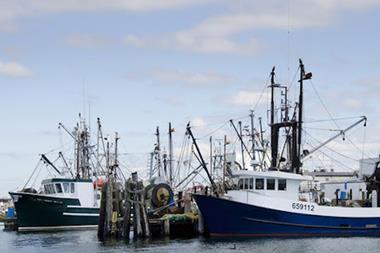
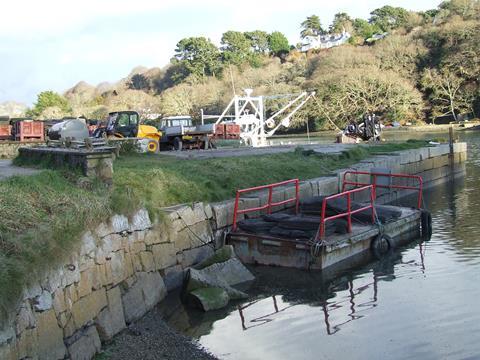
Now it’s the Helford fishermen’s turn to suffer, somewhat unreasonably perhaps. The planning permission allowing them to construct a new landing quay with road access to the village has been overturned after Judicial Revue.
The project had been sunk when a handful of retired lawyers and ex ‘captains of industry’, along with a few local residents, banded together to oppose all commercial progress within spitting distance of what they have claimed as THEIR environmentally precious Helford River.
Ted Venn, purporting to represent The Council for the Protection of Rural England, reckons Helford’s fishermen ought to motor their small boats across the bay to Falmouth to land their catch. Maybe they should do just that. Perhaps they’ll decide to keep their vessels there permanently. Then maybe they’ll discover the drive home is too arduous after a hard day at sea and they’ll move to Falmouth.
Oyster farming
The newly appointed operators of Duchy Oyster Farm at Port Navas, which had fallen into dereliction, were granted a lease to resume dredging and rearing wild and cultivated oysters from The Duchy of Cornwall in 2005, but four years on, Wright Brothers are still sailing stormy waters as they attempt to re-establish profitable oyster farming on The Helford.
Ben Wright and his brother-in-law partner have found themselves perpetually at odds with the surrounding community, including their fishermen colleagues, who have again expressed concerns, that Mr Wright has been ripping up the river bed with his dredger within a Voluntary Marine Conservation Area, and the spawning-ground for much of the mature fish stocks the fishermen will eventually catch.
Mr Wright has had his wrists slapped by Natural England for leaving a mess on Port Navas Quay and dropping sacks containing immature oyster spat in areas where he has no permission to operate. He has received a letter from the enforcement department of Cornwall Council, telling him to apply for retrospective planning permission, or to remove the floodlights he has erected on the quay.
In 1960 Port Navas was designated an Area of Outstanding Natural Beauty. Businesses were paid compensation to cancel their plans for all commercial development on the quay and I don’t see very much has changed to alter the situation since then.
Some sympathy must be accorded to Ben, who is bravely trying to dispel the fears of many armchair biologists who have not yet worked out the difference between diploid and triploid oysters.
Diploid and triploid
Natural England’s repeated assurances, that non-native triploid Pacific oysters are harmless to the environment, was not good enough for local businessman and self-styled conservationist, Michael Bruton, so he launched a high court case against The Duchy of Cornwall, claiming they had breached conservation legislation by allowing the Wright Brothers to farm non-native oysters, which he claimed, could damage the environment, but the judge ruled the case out of time, as the oyster farm’s intentions had become common knowledge several years before the case finally reached court.
Mr Bruton was ordered to pay over £7000 towards The Duchy’s legal fees, however the judge granted him another chance to set the cat amongst the pigeons, if he fancies making another legal challenge, this time against Natural England, by setting a cap on potential costs if he loses.
So what’s the difference between a diploid and a triploid oyster? Diploids are ordinary breeding oysters, whether they are the seriously endangered European variety or the more prolific Pacific genus. Triploids have been genetically modified with an extra set of chromosomes added to their genes. Triploid spat (baby oysters) can only be acquired from a handful of specialist breeders.
I raised the question with a Natural England marine biologist spokesperson from Truro, and he told me, “The European oyster dies for a pastime and is very difficult to breed commercially. Its Pacific cousin does not succumb to disease quite so readily and therefore is more suitable for commercial production”.
As I discovered, there are thriving stocks of Pacific oysters up every creek and swatchway on the Devon coastline it can only be a matter of time before Pacifics spread to Cornwall with the European variety doomed to probable extinction. Pacific oysters have a clever method of communal living known as bio concretion. They glue themselves together to form oyster reefs. When they have achieved reef status, not much can get in their way where successful reproduction is concerned, and whether The Wright Brothers oyster business stands or falls, the Pacific oyster is well on its way to a muddy estuary near you, right now.
When I left my car at the sailing club, intending to obtain proof-positive of ‘iffy goings-on’ in the Cornish oyster rearing industry, I saw hardly anything upon which to report or photograph.
On my way home, I spotted lots of rubbish dumped in the grass on top of a Cornish hedge. I’d bet that this was not the work of holiday visitors to this Area of Outstanding Beauty, and I found myself wondering, “Who are these people hell-bent upon having their quay saved, and why are they so very much bothered?” The local population doesn’t seem to give a damn about the environment, right up to the time someone comes along with the desire to do something positive in it.
Wake up Cornwall! For many a decade I’ve reckoned it would be a good idea to charge people to enter the county over the Tamar Bridge instead of being fined a quid to leave. Give the toll collectors a pair of Mickey Mouse ears and declare Cornwall a national amusement park. Disney World in plastic bubbles covering the clay pits? Sport fishing trips out of every creek and harbour? Tractor rides through buttercup-yellow hay meadows? Now we’re talking!
I’m considering forming a pressure group to lobby parliament with my idea. Does anyone fancy joining me?