



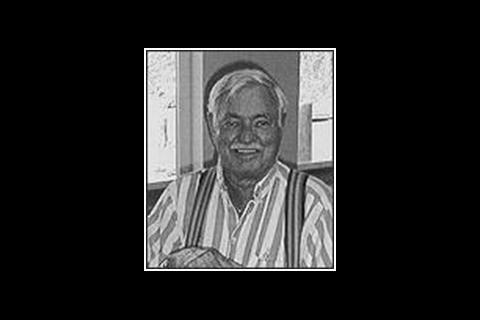
A native of Gloucester, Massachusetts, Captain R Barry Fisher (1928-2001) had been to me a sort of an overseas ‘alter ego’.
Although half of the world apart, during more than half of the 20th century our lives ran on parallel lines. We never met in person, but from time to time corresponded. While writing his war-time memoirs, my late friend Professor Alexander Fridman, one of Russia’s top fishing technologists, sought Barry’s input about American Liberty ships that had carried military aid for the embattled Soviet army during WW2. The following is from Barry’s answer, he sent Fridman in the autumn of 2000:
"In my fifteenth year I was a well-grown boy, but too young to join up in the military service. At this time, the new "Liberty" ships of the commercial fleet which needed crews badly, were built quickly; and so they took me. I made many trips to Western Europe, the Mediterranean, the Near East, Africa, and South America. But, the most perilous maritime route went to the northern Soviet ports of Murmansk and Archangelsk. On my second trip to Russia going to Murmansk our ship was torpedoed by a German submarine and sank."
War experiences
Barry’s war experiences hadn’t ended just then. During the Korean War, he did two tours of combat duty as an infantry man to return from his second spell highly decorated and seriously wounded. There might’ve been more fighting for Barry even before the Korean War; he wrote about it in one of his letters to me:
"In 1947 and 1948 [Israel’s Independence War – MB-Y] there were people openly recruiting fighters for the various factions in Israel. On a whim I tried to enlist and was pointedly asked three questions. "Do you speak Yiddish? Do you speak Hebrew? What do you know about explosives, mortars and machine guns?" I answered: "Negative." They said, "Close the door on your way out."
Barry died of cancer in 2001, bereaving Carol, his beloved wife for 45 years, two sons and three grandchildren. Upon his departure, he was a Professor of Fisheries at Oregon State University and Chairman of its Coastal Oregon Marine Experiment Station.
Following a spell of fishing onboard schooners on Atlantic banks, Barry settled in Oregon, where he became a fishing skipper and an offshore trawling boat owner. His main area of operation stretched from Oregon to Alaska. His best known undertaking was a joint venture, based on fishing for Soviet factory ships.
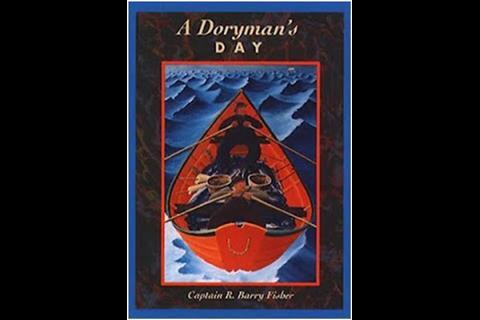
A Doryman’s Day
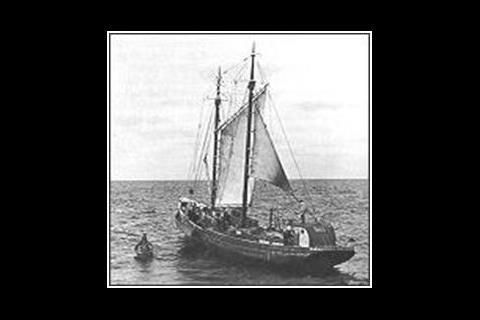
Barry described his experiences during the Gloucester period in three stories, published soon after his demise in the form of a book entitled: A Doryman’s Day (Tilbury House Publishers). He started his career as a ‘wharf rat’ in the Port of Gloucester, peddling fish and doing errands for fishermen. At the age of 15 he joined the Merchant Marine and, at the end of WW2 went dory fishing with one of the only remaining schooners, where the skipper gave him advice, which he dearly remembered throughout his life, and quoted in his book:
"Face storm and the shoals of adversity square on. Remember, one hand for the vessel first, always first, and then one hand for yourself. When, as they sometimes will, danger and death loom over the horizon and stand down upon you, don't panic. Meet them with your dorymate and shipmates; stand well braced and fend them off…"
"Go joyously into the dory; whatever job of work there be, give it the finest and the best that is in you. Be good to your dorymate and your shipmates. Speak no ill of them…"
And: "If life gives you more baitings than most, share some of these extra rations with your dorymate and shipmates and them who have not been so lucky as you. Remember, life is a grand dance; pay the Old Fiddler as you enjoy it and find a good partner to dance with and to love".
Exploits
In the first story, A Wharf Rat’s Tale, Barry wrote of his teenager’s exploits on Gloucester waterfront, where he and his pals would hang around, each with a wheeled ‘soap-box’ to cart and peddle uptown fish, earned while ‘junkin’ scrap metal’ and doing shore work for schooners. It’s then and there that they were exposed to fishermen’s life and to grief after those lost at sea. Then days had come when they’d be given an ancient dory, patch up and outfit her for fishing at the sewer outfall – the best fishing spot in the harbour.
The second part of the book, entitled A Doryman’s Day, is about Barry’s experience as a dory fisherman and later skipper onboard schooners fishing for cod, haddock and pollock. It’s about life and work onboard the by then motorised schooners and the dories they carried, their rigging, fishing gear and methods.
The final chapter Barry named Mysterious Ways of the Lord or how Captain Jack Brant of the Swordfishing Schooner LORNA B Found God in a Split Second and then Achieved Salvation on the Northern Edge of George’s Bank.
It tells about how Barry fished for swordfish with a foul-mouthed skipper and a colourful crew, and returned with a record catch. Although he wrote it after 50 years, he described so vividly the various characters onboard that the reader could believe that he parted with them only yesterday.
This, in spite that during those 50 years Barry fought two wars, earned a university degree, and fished in four oceans and four seas, with canoe fishermen in SW Pacific, with dory and swordfish fishermen, dragged for scallops, purse seined herring, fished pots and traps, caught large pelagics with live bait and pole-and-line and with troll lines, and trawled along the US and Canada Pacific coast, up to the Bering Sea, with midwater and bottom gear.
A great piece of fishing lore, written by a great fisherman, second to none.