





A recent report by the UK’s Marine Accident Investigation Branch (MAIB) into the loss of a trawler has again highlighted the problem of fatigue amongst fishermen
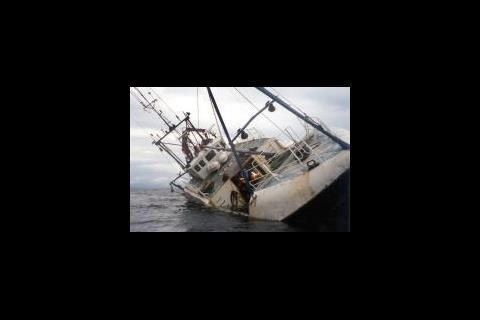
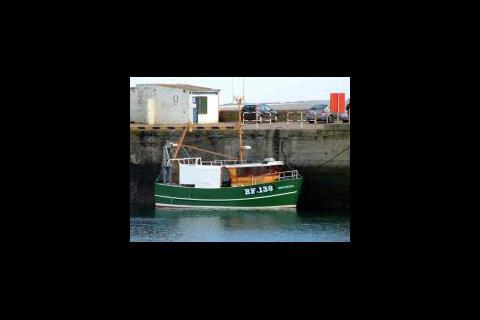
The Banff registered stern trawler “Brothers”, BF138, sailed from Gairloch in Scotland with a two-man crew at about 02:25 on the morning of 1 June 2006. At about 05:20 the vessel grounded and then sank off Eilean Trodday, a small uninhabited island off the north coast of Skye. No “Mayday” message was broadcast. The skipper’s father called the emergency services, reporting the vessel overdue that evening after the families were unable to contact either the skipper or crewman by telephone.
Over the next 36 hours an extensive air and sea search was carried out. Just before midday on 3 June a local fishing boat reported that the missing boat had been found on the seabed just off Eilean Trodday. A short while later they reported that a quick search of the wreck by a local diver had failed to find any sign of the trawler’s crew. The search for the missing crew was continued during that day and the following day. It was called off four days after the boat had sailed from Gairloch. The body of the crew member was found on the north-west coast of the Scottish mainland on 18 June, 17 days after the vessel had sunk. However the skipper was still missing at the time of writing the MAIB report (January 2007).
It is believed the vessel probably grounded due to one of the crew falling asleep in the wheelhouse, which allowed the vessel to sail past her intended fishing grounds and onto the shore at Eilean Trodday. Both crew would have been suffering the effects of fatigue brought on by a number of long days at work, with only short, broken sleep periods. Both crew had also drunk some alcohol before the vessel left the harbour.
Work rules
Merchant Shipping Notice (MSN) 1786 (F), the Application of the Fishing Vessels (Working Time: Sea-fishermen) Regulations 2004, contains detailed mandatory work time requirements for many fishing vessels. The purpose of the regulations is to apply common standards of working time throughout the fishing industry so as to ensure that the crews of fishing vessels receive adequate rest, thereby minimising the risk to health and safety arising from fatigue. They do not apply to self employed fishermen like the crew of “Brothers”, but self employed fishermen are advised to regard the regulations limiting working hours as useful benchmarks to avoid working excessive hours and the dangers of fatigue.
Prawn fishing is carried out during daylight hours. In Gairloch, on 1 June, the sun rose at 03:50 and set 17.5 hours later at 21:20. It takes two hours to motor to and from the fishing grounds, and the fishermen usually wish to use as much daylight as possible. It is customary for boats to sail from Gairloch at about 02:30 and not to return until after 22:00.
The normal procedure on board “Brothers” was for either the skipper or crewman to steer the boat out of the port while the other man rested below for a couple of hours. The nets would be shot on arrival at the fishing grounds, after which the roles would be reversed and the rested person would stand watch in the wheelhouse, while the other gained some sleep.
“Brothers” usually towed for about four hours. The work of hauling the nets, landing the catch and shooting the nets away again usually took about 30 minutes. The catch would then be processed and stowed below during the next tow, and on completion the roles would, once again be reversed as the other crewman got some rest before the nets were hauled again.
In this way, the skipper and crewman would receive broken rest periods of two or three hours at a time, normally not totalling more than about six hours a day while the vessel was at sea.
When in harbour, it was not uncommon for the crew of “Brothers”, and those of other vessels in the fleet, to visit a pub in Gairloch after landing the catch and before sailing for the next day’s fishing.
The prawn fishermen that are based in Gairloch do not generally fish when the weather is poor. The season is short and for this reason there is added incentive to make the most of fine weather and to work excessive hours. It had been fine weather in the period preceding the accident.
“Brothers” had been out fishing for long days on the Monday and Tuesday, but had encountered problems and the catch had been poor. On the Wednesday they tried again, but there was no improvement in the catch so they returned to port to change the trawl doors and nets. They completed this at about midnight and, because of the disruption to their normal routine, they had probably received even less sleep than usual.
They then went to a pub, and came back on board at about 02:00 to ready the vessel for departure. They were known to have drunk some alcohol but it was not thought to have been an excessive quantity. However, any alcohol would have added to the lack of good quality sleep during the previous day and earlier in the week, to have left them both suffering from the effects of fatigue. In these circumstances, it is not surprising that one or other of them fell asleep on watch and failed to be alerted to the danger by the watch alarm.
Risk assessments must be undertaken by owners/skippers of all under 12m fishing vessels under the provisions of the Merchant Shipping and Fishing Vessels (Health and Safety at Work) Regulations SI 1997 No 2962 and the Fishing Vessels (Code of Practice for the Safety of Small Fishing Vessels) Regulations SI 2001 No 0009.
There is no evidence indicating whether the skipper of “Brothers” had conducted risk assessments but, in MAIB’s experience, very few under 12m fishing boats have done so. On a vessel like “Brothers”, bearing in mind the onerous nature of seasonal prawn fishing, fatigue should have been identified as a risk and appropriate control measures should have been considered. Suitable control measures might have included the limitation of the hours worked and the fitting of a watch alarm incorporating a unit that sounded a warning below in the crew cabin.
A parallel MAIB investigation into an injury that was sustained by a crew member on the fishing vessel “Danielle” discusses the practical assistance currently provided to fishermen regarding safety matters and the conduct of risk assessments by the MCA Fishing Liaison Inspector/Surveyor in the MCA’s Aberdeen Marine Office. The “Danielle” report highlights the positive aspects of this scheme, and the need for the MCA to consider the possibility of extending it to other marine offices and regions.
Previous incidents
There have been a number of similar fishing vessel grounding accidents in recent years which have been caused by watchkeepers suffering from fatigue brought on by the very long working days. Some of the most notable are precised below.
“Our Nicholas”
“Our Nicholas” was grounded and was lost near the entrance to Stornoway Harbour 24 July 2001. The vessel had arrived in port and the crew had worked to discharge the catch and then taken the chance to go to the pub for an hour just before the vessel set sail at 23:00. After sailing, the skipper went to bed and left two deckhands in the wheelhouse. They both fell asleep and the vessel grounded on rocks. The skipper’s first reaction on reaching the wheelhouse was to pull the vessel off. This hastened the sinking of the vessel. Fortunately other fishing vessels had witnessed the incident and were on hand to rescue the crew.
“Betty James”
“Betty James” was grounded and was lost on the Isle of Rhum, 10 July 2000. The vessel had landed her catch in Mallaig in the evening and the three crew members went to the pub for between one and two hours. They returned to the vessel and sailed almost immediately at 00:15. The watchkeeper fell asleep at about 01:40 and the watch alarm, although working, failed to wake him. The vessel grounded at 02:30. The skipper tried to pull the vessel astern off the rocks but was unable to do so. A liferaft was launched and the crew had enough time to successfully abandon the vessel. Nobody was hurt.
“Primrose”
“Primrose” was grounded on the Isle of Rhum on 15 June 2001. The vessel arrived in Mallaig to land her catch at 21:00. The crew later went to the pub for about an hour before returning to the vessel shortly after midnight and sailing almost immediately. At about 02:30, the watchkeeper fell asleep and the vessel grounded at about 03:20. The vessel was hard aground about 50 metres from the shore. The crew prepared the vessel’s liferafts and donned survival suits but, eventually, were able to stay on board until the Mallaig lifeboat arrived on scene. Nobody had been hurt.
“Lomur”
“Lomur” was grounded in the approaches to Scalloway, Shetland Islands on 14 June 2001. The vessel grounded on approaching the harbour when the skipper fell asleep. He had only slept for seven hours in the preceding three days and he was alone in the wheelhouse. The watch alarm was not effective in averting the accident.
Other notable recent accidents which share some common factors include:
“Crimond II”
“Crimond II” capsized and foundered on 24 April 2001. The two crew found themselves in seawater of temperature 8oC to 9oC, clinging on to various items of wreckage, including two lifebuoys and a gas bottle. More than an hour later they were rescued by helicopter, after the coastguard had received a signal from the vessel’s EPIRB. Both men were taken to hospital, suffering from hypothermia, but both made a full recovery.
“Auriga”
“Auriga” capsized and foundered on 30 June 2005. This small GRP trawler capsized and sank while trying to recover her net which had a heavy object in the cod end. Fortunately the rescue services were alerted to the incident by the automatic activation of the vessel’s EPIRB. The crew of two were rescued unharmed from their liferaft by a passing container ship about an hour after the sinking.
“Jann Denise II”
“Jann Denise II” flooded and was lost with both her crew on 17 November 2004. This 9.7m long fishing vessel flooded rapidly and sank while returning to port. The coastguard was unaware of the accident until another fishing vessel reported “Jann Denise II” as being overdue in harbour. Both crew were lost with the vessel and she did not carry either a liferaft or an EPIRB.
“Greenhill”
“Greenhill” was grounded and then flooded and was lost on 19 January 2006. The 20.04m long vessel grounded because her wheelhouse had been left unattended. She was then manoeuvred off the rocks, which allowed the vessel to flood rapidly and sink. Two of her three-man crew died.