



Satlink’s Project Recon lands in Mozambique
Project ReCon, the circular economy initiative driven by the Spanish technology company Satlink to give a second life to echosounder buoys used in tropical tuna fishing, has arrived in Mozambique through new local partner, the Bazaruto Center for Scientific Studies (BCSS).
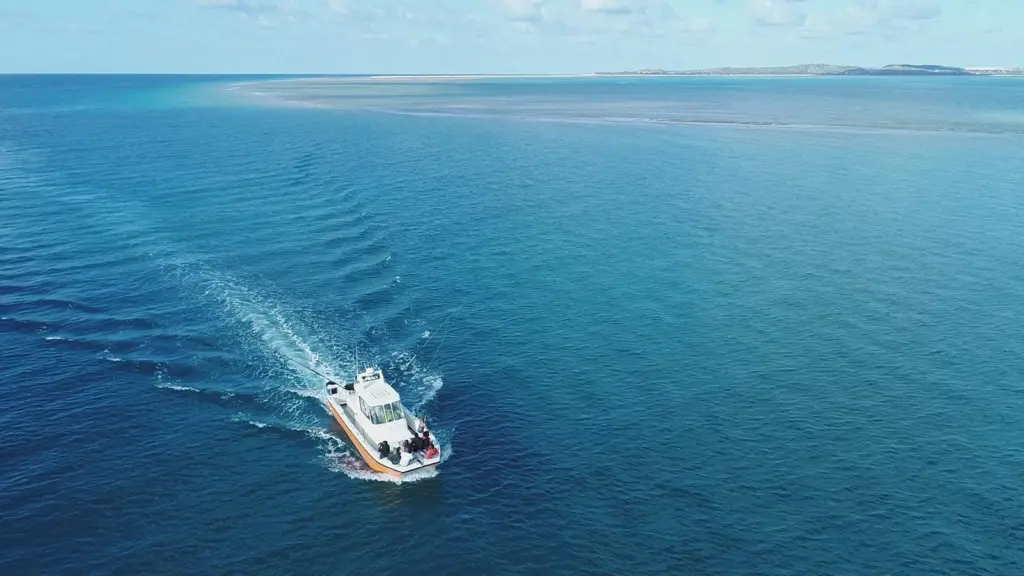
The agreement signed between the two organisations will allow ReCon to extend its reach in the Indian Ocean and increase the project’s coverage by additional 2,700 km. It will prevent smart buoys in the area from becoming technological waste due to sea currents or adverse weather factors.
BCSS will use the recovered and reconditioned buoys and sensors to enrich the oceanographic data collection of its Ocean Observatoryinfrastructure in Mozambique, with the aim of understanding and facilitating scientific data to protect the Western Indian Ocean (WIO) region marine habitats.
Specifically, the Ocean Observatory will use these devices to enrich its time-series observational oceanography studies on ocean temperature, and seawater chemistry variables (e.g. to track ocean acidification), with time-series of marine life biomass measurements in the water column to analyse its evolution and the impact of different environmental factors.
Following this agreement with BCSS, Project ReCon, founded by Satlink in partnership with the Australian NGO Tangaroa Blue Foundation, is now present in more than 10 countries and in the Pacific, Indian and Atlantic Oceans.
In addition to Tangaroa Blue Foundation, ReCon works with other leading environmental organisations such as The Nature Conservancy (TNC), The Pacific Community (SPC), Project Biodiversity and now BCSS.
On the fishing industry side, more than 150 vessels from 25 companies and organisations are involved in the project, including Albacora, Echebastar, Inpesca, OPAGAC/AGAC, Sapmer, Bolton Food Group, Cape Fisheries, Caroline Fisheries Corporation, Trimarine, Oakcity Tuna Fishing Corporation, Hartswater, US Pacific Tuna Group, Fairwell, Frabelle or FungKuo.
In addition to the waters and coasts of Mozambique, ReCon has a presence in Australia, Papua New Guinea, Micronesia, US (Palmyra), Marshall Islands, Cook Islands, Wallis and Futuna, New Caledonia and Cape Verde, giving this project a global reach for the recovery, reconditioning and reuse of these buoys for scientific and environmental purposes.
The buoys included in the project are equipped not only with echosounders to detect the amount of marine life biomass underneath, making them ideal for reuse in small-scale scientific studies, but also with GPS technology, extending their usefulness to marking and tracking marine debris, monitoring artisanal fishing vessels, monitoring of sharks or improving forecasting and warning systems for maritime safety.
Dr Mario Lebrato, Chief Scientist at the BCSS Ocean Observatory, said: “This agreement will allow us to incorporate the cutting-edge technology included in the intelligent high-tech buoys into our observation and scientific research projects, while at the same time contributing to eliminate potential environmental waste.”
Since its launch in December 2022, Tangaroa Blue Foundation has been able to collect more than six tonnes of waste off the coast of Australia using ReCon buoys, thus reducing the impact of ghost gear.
Kathryn Gavira, Satlink’s Head of Science and Sustainability, said: “It is particularly satisfying for Satlink to welcome BCSS to Project ReCon. This agreement represents the essence of ReCon: to give fishing buoys a second life beyond their original use, for scientific and environmental uses. Moreover, in this case, with a purpose fully aligned with our goal of contributing to the knowledge of the oceans.”
Related Articles
 FISHING TECHNOLOGY
 FISHING TECHNOLOGY
 COMMENT