

Ebola and fish market – curse, blessing or both?
Menakhem Ben-Yami looks at how the Ebola scare is affecting West African fisheries.
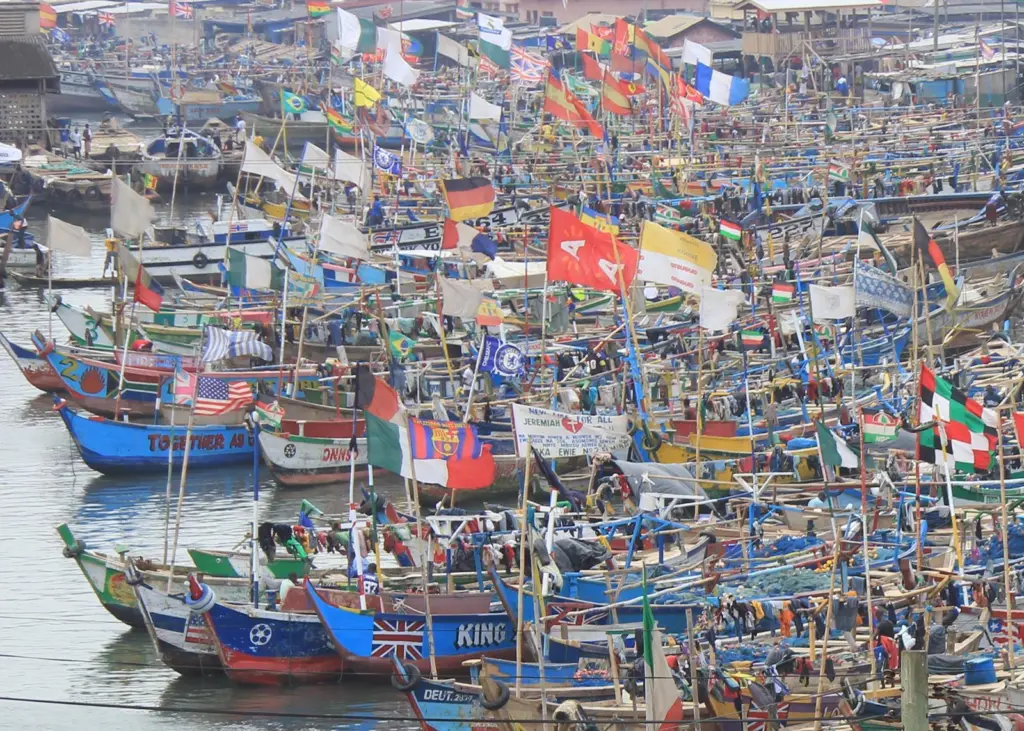
About a year and a half ago I wrote here how market women offer sex to fishermen to get fish – a practice known as joboya, which contributes to AIDS profusion on some Lake Victoria islands. Now, the outbreak of the Ebola virus in West African countries is putting AIDS in the shadows. Obviously, my readers would say: okay, but what has jungle-born Ebola got to do with fishing people? Well, it appears that it does.
In Nigeria, it started with the red alert over the Ebola killer-virus that scared people away from consuming bush meat. That’s why, across the country, fish sellers and fish farmers evidently are having their day. It appears that the Nigerians are indeed withdrawing from eating meat, hence, the demand for fish has been growing to such degree that, at some markets, sellers doubled their business.
Bush meat traders were not the only ones affected by the situation – catfish sellers who stay close to the bush meat sellers also complained that the Ebola scare had affected them too, as many of their customers also think that the virus could be contracted by consumption and preparation of fish. Anyway, those were only bush meat sellers who had deserted the markets, while the fish and crayfish sellers were well patronised. Also most restaurants and bar operators that had been exclusively serving bush meat before the outbreak of the virus, resorted to selling only goat meat and fish as alternatives.
According to an article posted on the website of the U.S. Fish and Wildlife Service, Ebola, tuberculosis, rabies, influenza (H5N1, H1N1), foot-and-mouth disease and Brucellosis are just a few diseases that are having a devastating impact on wildlife populations. The anonymous author is also throwing climate change, human development, deforestation, logging, mining, road construction and agriculture into the Ebola scare disaster soup. It looks as if some conservationist was trying to take a piggy-back ride on the Ebola epidemic to make an anti-development point. On the top of it came a statement by Estelle Raballand, director of the Chimpanzee Center, who said that “while the Ebola virus may be protecting some monkeys and apes that were hunted for food before the latest outbreak, the virus is now threatening fish in the Niger River.” Has anybody anywhere came up with a fish that carries the human Ebola virus? All this in Nigeria.
While fish traders in Nigeria appear quite happy – not with the Ebola scare, but with its fish marketing consequences – it’s not so in Kenya, on the shores of Lake Turkana. There, the fishing people have been losing business, because authorities of the Democratic Republic of Congo (DRC, or Congo-Kinshasa) closed their markets for Lake Turkana fish, allegedly to control the spreading of Ebola, which reportedly appeared in the northwestern DRC with tens of people affected. Buyers from DRC pulled out, due to stringent health restrictions. All this negatively impacted the Kenyan suppliers, who were thus blocked from their main external market. This was a big blow, since, according to trade reports, on average, DRC had been importing 89,000 tonnes of fish annually, most of which from Lake Turkana. The fish sales from the Lake have been, hence, focusing on local markets in South Sudan, Nairobi and Kisumu, with local traders taking advantage of primary fishmongers through depressing prices paid to them.
Sensationalist
A new problem developed when some sensationalist pressmen started using the word ‘Ebola’ not only as a name of a deadly virus but also as a sort of logo for any bad disease. It started three years ago when New Scientist of 14 April 2011 reported that: “Fish ‘Ebola’ caused mass death in Milwaukee” whena “Virus likened to the human Ebola virus, because it makes fish bleed to death, has been identified as the mystery agent that caused thousands of dead fish to clog up Milwaukee harbour last month.” The very use of the name Ebola in connection with aquatic food is most certainly bound to create confusion and even panic.
Be in no doubt, soon enough the fish Ebola scare has become fashionable indeed. It restarted when an infectious viral disease, ISA that afflicts Atlantic salmon (Salmo salar), became a ‘salmon Ebola’. Since, China’s intention to stop importing Norwegian salmon, for its own fish-farming reasons, was publicised as: “Fish ‘Ebola’ threaten aquatic China…(which) stopped importing the whole Norwegian Salmon”. This, because: “Ebola outbreak in West Africa, has claimed thousands of lives, and salmon will be infected (!) with a virus similar to Ebola.” Scary enough to stop eating salmon isn’t it?
The source of it was allegedly a Chinese news website, which headlined a report saying: “Fish Ebola threat aquaculture…” The story linking the ban to Ebola had spread through numerous media in China and Hong Kong, “resulting in an impression that Norwegian salmon is not safe to eat” and retailers were removing marketing material and planning to remove Norwegian salmon from stores. All this in spite the fact that the influenza-like virus that causes ISA only affects some fish and is not transferred to humans.
Ghana got also involved, not because there was an Ebola outbreak there, but because some Ghanaian fishermen returned home from fishing trips that brought them to Ebola inflicted countries. They were quarantined by security personnel. No doubt, fishermen fishing and trading along the West African coast should be very careful not to come in any sort of contact with the people there, which may expose them to their body fluids.
Another connection between fish and Ebola is Dr Eleanor FISH, an immunologist and senior scientist at the University Health Network, who’s offering a drug already tried in humans. A synthetic version of interferon, a molecule the body makes to fight viruses, it still has to be used against the Ebola virus. Dr Fish says that the drug might help reduce the amount of virus in a patient’s system, which could help that person successfully fight off the infection.