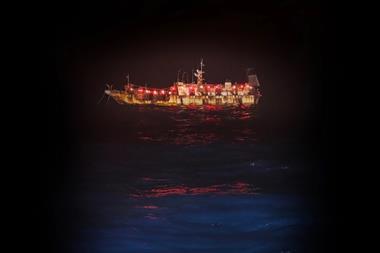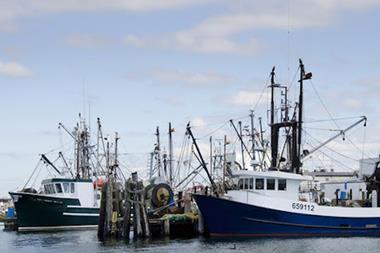



DPI&F senior fisheries biologist Neil Gribble said the vessel, which has been in service since 1984, has been fitted with a Kortz nozzle and a state-of-the-art propeller that would improve the vessel’s towing capabilities and fuel consumption.
“The improvements to the research vessel include a redesigned back deck to allow space for multiple functions and improve safety for the crew,” Dr Gribble said. “The installation of a new sonar, colour sounder, radar and two different forms of chart and bottom plotting systems gives the “Gwendoline May” the leading-edge technology for scientists and researchers on-board.
“The vessel can not only be used in the prawn fishery, but in all facets of research that would benefit from this technology.”
“Gwendoline May”, with its crew of three and potential to carry up to five research personnel, is a familiar sight on the waters of the Great Barrier Reef and the Torres Strait.
Scientists, crew and staff at the DPI&F's Northern Fisheries Centre (NFC) in Cairns are especially proud of the boat because of its ability to navigate through uncharted areas and reach sites that would be difficult for other vessels to access.
Northern regional fisheries manager Anne Clarke is extremely excited about the potential of the “Gwendoline May” and the crew on-board.
“We are very lucky to have a well maintained and appointed vessel as well as an incredibly experienced skipper and crew,” she said.
“This team can work through some pretty tough conditions while quietly supporting our scientists in their research work.”
The vessel is an important research tool used in the annual northern prawn trawl Long-Term Monitoring Program surveys as well as in a number of joint research projects with industry and other government organisations.
The “Gwendoline May” master, Barry Ehrke, was this year awarded the Medal of the Order of Australia (OAM) for service to the fishing industry through his contribution to developing and managing fisheries, stocks and promoting industry sustainability.