

Danish fishing industry faces new challenges
The Danish fishing industry is made up of various groups, all facing their own problems and challenges and with their own agendas for the future. However one common challenge for most of them is how to adapt the way they conduct business to cope with the rapid, radical and profound changes in operating conditions which is now taking place. The willingness and ability to meet these changes are decisive for their survival.
The chairman of The Danish Fishing Industry and Export Association (DFE), Peter Bamberger, foresees neither a massive decline nor a collapse of the Danish fishing industry in the near future. But he does not underestimate the seriousness of the present situation. If challenges are not met in a firm, creative and adequate manner then pushing the fish barrel up today’s mountain may become too difficult and lead to a standstill or even a reversal and recession.
The true cost of salmon
Bamberger is scarily realistic: “Speaking of salmon, the industry has been through a long period of uncertainty, as the major part of [Danish processing] production is based on salmon imported from Norway. An EU initiated ‘punishment tax’ was later replaced by a minimum price, causing the market to calm down a little, but [it did no more] than leave the market price way above the minimum price”, he says.
He emphasises the fact that many players in the industry have not been able to pass on this extra cost to their customers. They have therefore lost and still lose, a lot of money, forcing the weaker companies closer to the edge and leaving the stronger ones in a much stronger position in terms of market control.
He sees this new scenario reacting to rising costs, not just caused by what the Danes see as EU interference in the market, but also by the impact of worldwide variations in wage rates which are a clear characteristic of increasing globalisation.
“These surviving players will most certainly, more than today, spread their activities to countries where wages are low and place production there”, he says, referring in the first instance and primarily to neighbouring countries such as Poland and Lithuania.
Consequently, the value of the present Danish export of processed salmon, worth billions of Danish Krone each year, could be won by these countries. Danish producers will then have to face either keeping going by investing in such countries, or staying at home to wither and maybe die, unless they manage to find a profitable niche production.
“Another effect of the minimum price system,” Peter Bamberger adds, “is that it encourages Norwegian producers to process salmon themselves rather than export the fish for processing in Denmark.”
It also means that Danish producers are looking to purchase non-Norwegian raw material salmon elsewhere, because Norway is the only country confronted with the EU minimum price control. Chile is not, so, according to Peter Bamberger, salmons imports to Denmark from Chile are growing rapidly. This change in purchasing pattern also generates a change in the entire industry.
“Talking about salmon from Norway, a neighbouring country, we talk about high-quality, round fish. When it comes to salmon from Chile, however, we are talking about frozen fillets of a relatively poorer quality. This will favour large, global pro-ducers at the cost of small, regional producers, and lower the overall quality standard of the industry,” Peter Bamberg says.
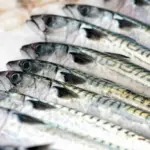
Herring and mackerel
When it comes to pelagic fisheries, Bamberger points out problems con-cerning herring in particular. “Negotiations between the EU and Norway, to define upcoming quotas, are still going on, and we can witness how Norway is trying to increase its part of the stock at the cost of countries such as Iceland.”
To make a political (and maybe commercial) point about its position, Norway has decided not to land herring in Denmark, causing huge difficulties in a number of fishing industries in the northern part of Jutland which have traditionally specialised in processing Norwegian NVG-herring.
One of these companies, Unifisk A/S in Skagen, is in real trouble due to this step.
“Both the fact that Norwegian producers are increasingly processing herring themselves, forming a growing competition to Danish producers, and that Norwegian herring is exported to eastern European counties, especially Russia and Ukraine, and not to Denmark, is a huge problem.” There are also problems when it comes to mackerel. Last year’s season was very poor in terms of catch, forcing up prices. “So, the pelagic industry is generally having a real hard time,” he said.
White fish
He believes the future of the Danish white fish industry, especially that based on cod, does not look promising either. As for the Baltic Sea, the stock recommendations from the International Council for the Exploration of the Sea (ICES) are quite cautious and, in certain areas, even aimed at halting catches.
“Fortunately a light of hope was lit during negotiations this spring concerning sole in the Kattegat. Instead of adhering rigidly to ICES statistics, cooperation with the fishermen has been initiated leading to a concept of the actual stock varying a little from that of ICES. This may lead to positive changes in quotas,” he says.
“Apart from that there isn’t much positive to be said,” Peter Bamberger adds. A process of restoring stocks is in progress, making supermarkets very focused on not running into problems selling fish that are not ‘clean’ beyond any doubt. This is part of their overall consumer policy. If, therefore, sufficient proof of the origin of the fish from within the EU cannot be presented, the supermarkets tend to abandon fish pro-ducts in their stores.
Continued on page 14
“This may even imply that if less restrictive ICES recommendations should lead to widened access to catch fish, the largest players in the retail market may still reject buying the fish,” and he adds “the seriousness of this problem grows when accusations of fishermen breaking the rules are spoken out [loud], irrespective of the substance of such accusations.”
As a consequence of this reluctance to purchase fish caught by EU fishermen, Peter Bamberger points out, many fishing industries are short of raw materials for their production. To cope with this problem they are forced to increase the import of frozen fish from third countries, and thus bringing a variety of new species into production.
Such imports are not without their problems, he says. “While EU fish is presented with veterinary hurdles on its way to the market, the veterinary problem is no less relevant for these imported fish from third countries. We witness that in Denmark due to strict national controls. [But] these other fish often enter the EU through ports in other nations [then] to be transported on to Denmark.” He suggests that there is also some ‘trafficking’ going on, something not previously seen and [which] constitutes a threat to the traditional high standard of Danish fishing industry products formerly based on fresh fish.”
Moving to China — and Vietnam?
Rather than fighting the overall problem in Denmark, Peter Bamberger foresees that all major players in the Danish processing and linked fishing industry will eventually move production, in part or whole, to the very same low wage countries which today serve as subcontractors to Denmark.
Among the countries in question, China is by far the most interesting and hence the one that attracts Peter Bamberger’s interest. Denmark will retain a smaller part of the industry, quantity-wise, and the traditional high-quality value-added production based on fresh fish.
Bamberger says there is another incentive for the industry to move production to these countries. “Today China still plays the subcontractors’ role — but for how long? It is most likely that some day China will obtain the adequate know-how and start taking over production themselves making more profit than they do now. When they do, it is important for the Danish fishing industry to play an active role, he says, adding that the best way to get into position for this trend is by taking part in initiating it.”
For Peter Bamberger the question is not “if,” but “when?” this trend will start to gain high speed — started it has, already. “Ignoring this fact will be fatal,” he says. “Denmark is the eighth largest nation worldwide when it comes to its fishing industry. This position can only be maintained by showing better craftsmanship than our competitors, existing ones as well as those to come. To do so we must focus on visionary, strategic thinking to secure Danish producers access to the raw material necessary.”
And while China may be the country of particular interest for the Danish fishing industry, that may not be the case forever. In a globalised world nothing is static with countries such as Vietnam in the Far East and Romania nearer home, next in line.