






Crayfish tails keep in shape
Crawfresh Import SA of Luxembourg, one of Europe’s largest importers of frozen cooked and peeled crayfish tails from China, has developed a method of packaging which preserves the shape and visual appeal of the small freshwater crustacean.
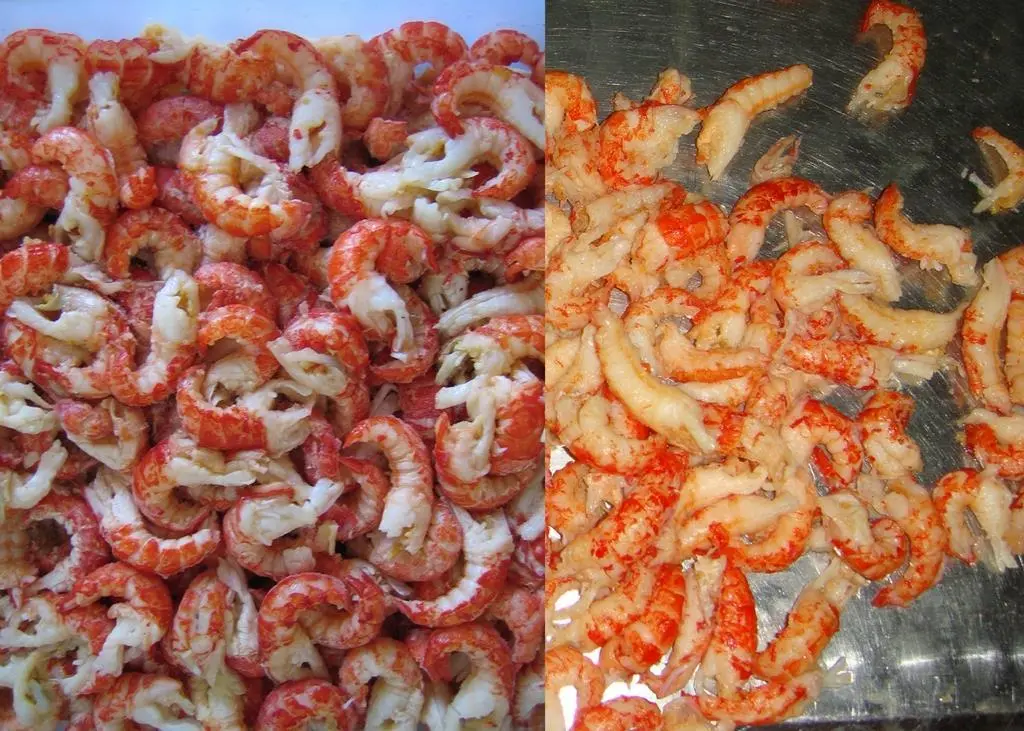
This innovation has been brought about because the average size of the tails being exported to Europe is becoming smaller due to the growing popularity of the shellfish in China itself, plus increasing demand from other Asian countries.
“Twenty years ago, about 80% of the tails constituted the size U100,” says Virginie Tang, from Crawfresh Import’s quality department. “Today, only 1-5% of the production represents the size U100, whereas the size 200-300, that did not exist at the time, represents about 30% of the production.” (U100 is less than 100 per lb and 200-300 is the number per lb.)
Crayfish are considered a delicacy; they are often described as ‘mini lobsters’ because of their appearance and colour. In Europe, peeled crayfish tails are mainly served in salads and appetizers, and in seafood dishes.
The crayfish imported into Europe from China is the red swamp crayfish, Procambarius clarkii. After peeling, the tails are frozen into blocks which are thawed out by European companies and the tails re-packed, usually in plastic containers with brine. They are sold in supermarkets, catering outlets, by wholesalers, or in specialised grocery outlets.
During the peeling process, which is carried out by hand in Chinese factories, the gut of the crayfish is removed. At this stage the tail could be damaged and opened when the white meat, or ‘backmeat’, becomes visible.
Visual appeal
Tails with backmeat lose some of their red colour and this affects the visual appeal. The tails are often used to decorate dishes therefore their appearance is very important to both chefs and consumers. The smaller the crayfish, the more difficult they are to peel the without damage.
Other defects which affect the visual appeal of the tails can occur during packaging prior to freezing. The tails could be flattened or distorted, or left straight rather than curved.
Traditionally cooked and peeled crayfish tails are vacuum-packed in a polybag, which is then shaped and flattened to obtain a rectangular block.
This year, Crawfresh Import SA finally found a new packaging method that preserves the quality of the tails. This method also meets customers’ requirements regarding the shape and size of the packaging, according to Virginie Tang.
“Once the crayfish tails are peeled, they are distributed in a container and then the container is frozen,” she says. “The crayfish frozen block is removed from the container and vacuum-packed in a polybag. Thanks to this new packaging method, the crayfish tails have less backmeat and keep their original curved shape.”
There are also less broken pieces. Says Virginie Tang: “The smaller the crayfish, the higher the amount of broken pieces, because they are more fragile. However, the amount of broken pieces is considerably decreased with the new packaging method compared to the known one, even for the small sizes.”
As well as preserving the quality of the tails, “this new packaging method provides crayfish blocks of uniform thickness,” she says. “This eases the process of thawing at their destination.”
Related Articles
 PROCESSING & REFRIGERATION
 SEAFOOD
 SEAFOOD