
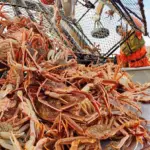



Controversial krill
Bryan Gibson reports on the topic of krill fishing and asks if krill can be sustainably fished…or if stocks should just be left alone.

Unless the consumer is directly involved in the production and supply chain of a seafood product, he or she may pay little attention to where it came from, or to any environmental damage caused during its journey from sea to the supermarket shelf.
And when it comes to the current rash of aggressively advertised, cleverly merchandised fish oil products currently being pushed during peak television viewing times, it’s also easy to lose sight of the fact that the contents of all those bright red boxes extolling the virtues of Omega 3’s ever had any connection to living sea creatures.
Maybe headline references to real fish (and/or crustaceans) have been purposely under-emphasised by the marketers by promoting the health benefits of fish products to a predominantly fish-averse western society. However, where the current explosion in retail awareness of krill products is concerned, some scientists think there’s great cause for concern, whereas others believe krill will remain at healthy levels.
The current annual catch only represents one per cent of the total resource, according to organisations such as Friend of the Sea, the Marine Stewardship Council and the Commission for the Conservation of Antarctic Marine Living Resources (CCAMLR), representing 24 countries as well as the entire European Union – but mankind doesn’t have a good track-record for keeping its promises.
In the late sixties the Antarctic fishery was badly damaged by the Soviet Union taking up to 400,000 tons of marbled Notothenids and icefish each year and their numbers still have not fully recovered four decades later.
The world must also remain vigilant towards the rapid reduction of Antarctic sea ice due to global warming, which is gradually increasing fishing areas and leaving the krill fewer places to hide.
According to the British Antarctic Survey; Antarctic Krill Conservation Project:
- Krill live in all the world’s oceans, but Antarctic krill are the most numerous, with an estimated population of up to 500 million tonnes
- Antarctic krill grow to 6cm. If they were all put together they could fill Wembley football stadium 1,500 times
- Krill eat algae and plankton and are eaten by predators such as whales. One whale can eat four tonnes of krill a day
- Krill are thought to ‘sequester’ carbon equivalent to the emissions of 35 million cars a year
- Average Antarctic Peninsula temperatures have risen 2.5C in the last 50 years
The direct cost of transportation, plus the additional carbon footprint imposed upon the environment in the process of moving a very basic oil product from the southern extremity of the planet to its most northerly point, almost, is perhaps an environmental extravagance Earth cannot realistically afford, and why should it need to?
In similar vein, it was thought that the immense herds of American bison roaming the plains of 1800’s USA would exist forever, but they were almost totally wiped out by man within 25 years. A century later, the seemingly impossible to overfish (but now sadly gone) shoals of mackerel in 1970’s South West UK waters were also an important part of nature’s delicate balance and food chain.
Although the Spanish factory ships brought a short-lived fishing bonanza to a few local West Country and Scottish fishermen, they rapidly sailed away from Falmouth when the mackerel were gone.
Pressure
The biggest danger to migrating wildlife is placing too much pressure upon a small area, but the Marine Stewardship Council (MSC) strongly believes this cannot happen. But it’s a very brave scientist who attempts to set quotas for an area which may or may not remain iced-over during a fishing season, while also taking into close consideration the needs of thousands of whales and millions of migrating penguins, swimming across a vast and desolate southern ocean to consume the same shoal of krill, or starve.
Consumption of Antarctic krill by an average-sized sexually mature minke whale during its 90-day stay in Antarctica is estimated to be 37.2 tons. A similar mature female during her 120-day visit is estimated to scoop up at least 56.2 tons of krill. Estimates of total summer consumption during 120 days amounts to around 355,000 metric tonnes.
Before the break-up of the Soviet Union, Russia was catching a similar quantity of Antarctic krill (400,000 metric tons) as the total consumption of just one large whale species, the minke.
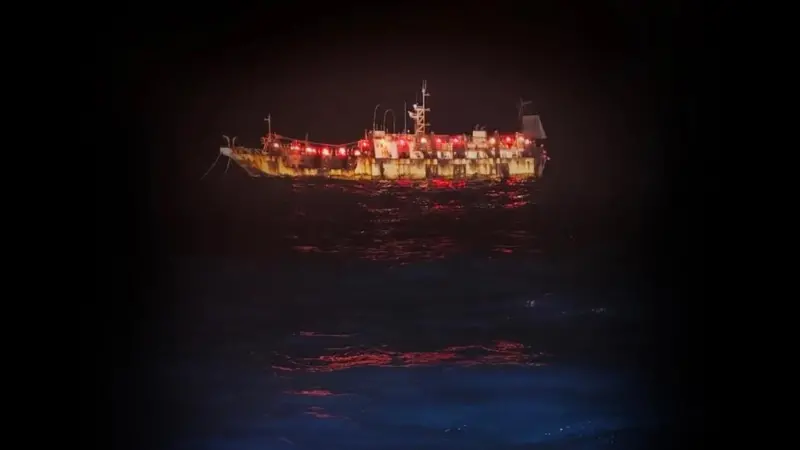
Krill are small and delicate and congregate in huge numbers. If the economics of moving ocean-going vessels down to the cold and stormy Antarctic Ocean can be overcome, then a net of krill is largely a net of damaged krill. They may look like the more robust shrimp, but krill are planktonic and begin to self-digest immediately after death and the catch quickly becomes useless for commercial food production within 1-3 hours. Krill is usually frozen immediately for use as fish food, or boiled and frozen for human consumption.
The six centimetre long shrimp-like krill has been consuming single-celled vegetation (phytoplankton) at the penultimate link of the marine food chain for many millions of years.
We stopped burning whale oil in our lamps, lubricating machinery and feeding whale meat to our dogs about 50 years ago, and in 1983 a worldwide ban was placed upon commercial whaling, but as their numbers gradually increase, so will their legitimate demand for more krill.
There are naturalists who believe it would be a wise move for fishing to agree to leave just one apparently untapped resource entirely alone, especially when one of its principal uses is ground and pelleted meal for farmed fish.
How much net profit can krill fishing guarantee to return in comparison to all the effort and costly specialist equipment it takes to catch, process and deliver to market, when balanced against more simply produced alternatives?