There are big changes afoot in Vietnam’s seafood processing industry.

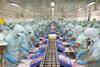
Processing in a Vietnamese seafood factory

Processing in a Vietnamese seafood factory

Many, mainly already big, seafood processing companies are strengthening their position by acquiring other, smaller, companies, while the small companies themselves are seeking both domestic and foreign partners.

Although as a communist country – it is officially called the Socialist Republic of Vietnam – all seafood processing companies were originally owned by the state. However, the Vietnamese government has allowed private investors, usually the people who run them, to buy into these companies which are then known as joint stock enterprises.

The situation has progressed further and some joint stock enterprises have become fully privatised companies (with the government retaining a small stake) listed on the stock exchange in Ho Chi Minh City or Hanoi. Foreign firms can buy shares or even take them over as long as there is Vietnamese participation.

The state is fully behind these moves. In fact, the Vietnamese government is aiming to sell off the seafood processing companies where it still owns a majority stake by the end of 2020. It also seems to be encouraging foreign investment into the industry.

Foreign investment
Foreign firms, particularly feed producers, have invested on their own in Vietnam, although, of course, the government will still be involved.

Overseas owners usually install their own management and management systems, which is generally considered to be beneficial, but will retain or appoint a Vietnamese director and obviously employ Vietnamese workers.

Thai companies are becoming involved in the Vietnamese seafood industry. CP, Thailand’s biggest animal feed and chicken producer, has invested heavily in the country where it produces feed for fish and shrimp, pigs and poultry, which it sells in other countries as well as Vietnam.

It also runs shrimp farms near Hue in central Vietnam and pangasius farms and processing plants on the island of Ben Tre near Ho Chi Minh City in the south.

Seafood processor Go Dang Seafood (Godaco) is partly owned by a Thai-British conglomerate and plans to build a third factory to concentrate on value-added products in 2016.

The ‘survival of the fittest’ is reaching its peak among Vietnamese pangasius companies according to Bruce Sato, Godaco’s product R&D senior advisor. “There are simply a lot less players in the market then before and the survivors have tended to get bigger,” he says. “I do believe it’s a good thing as more professional management has allowed for the survivors to better manage the industry.”

Established in 1998 in the Mekong Delta region, Godaco’s mission is to become one of the top five pangasius and clams exporters in Vietnam.

Jerzy Malek, the founder and former CEO of Polish seafood processor, Morpol, has also invested in Vietnam by buying the former Marine Farms’ cobia producer close to Nha Trang. It is reported that he plans to build a major hatchery for cobia juveniles to supply to other farmers around the coast.

According to the Vietnam Association of Seafood Exporters and Producers (VASEP), the process of merger and acquisition of seafood processing companies will be strong this year. “The weak businesses will find it difficult to survive in tough competition so this is an opportunity for ones with financial strength,” says a spokesman.