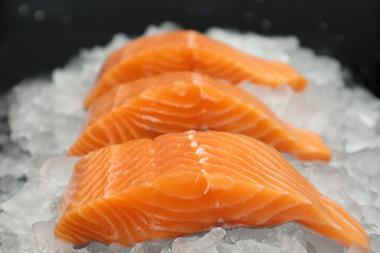





Salmon and trout exports in January reached US$352m, the largest monthly dispatch and 51% greater than the same figure for 2010. This increase occurred in spite of the fact that production levels are lower than the 650,000t produced in 2005 and 2006.
Carlos Odebret, CEO of the Chilean Salmon Growers Association (SalmonChile) – which congregates around 76% of the country's salmon production – explained the reason for this increase in prices, which escalated towards the end of 2010.
“The last increase of prices happened in December 2010, when Atlantic salmon revenued 33% and rainbow trout prices increased 25%. This was also influenced by the coho salmon's seasonal production factor,” Mr Odebret explained.
The Chilean salmon industry's CEO explained that prices have been influenced by the decrease in local production – especially Atlantic salmon – and the increase in worldwide demand.
“Chile's great increase in salmon exports to Brazil has greatly increased the size of our foreign markets. In 2010 Brazil became our second salmon buyer, which enlarged our market and helped stabilise prices,” he told World Fishing & Aquaculture.
“In 2010, Chile's salmon industry reached 287,500t, close to 100,000t less than in 2009 (369,000t), but in spite of this, salmon shipments were similar to those in 2009, thanks to the increase in prices obtained,” he said.
SalmonChile informed that between January and December 2010, prices of Atlantic salmon which are shipped to the US increased by 28%, those shipped to Latin America increased by 39%, while the value of trout shipped to Japan increased by 18% and coho salmon also increased by 8%.
Promising future
The future of Chile's salmon exports is looking promising. In terms of production, the industry feels that volumes could increase to 310,000t, mainly thanks to the recovery of Atlantic salmon production which was hard hit by the ISA virus crisis.
Towards the end of 2010, Atlantic salmon covered 30% of Chile's total salmon production (by far much lower that historic figures), rainbow trout was 41% and coho salmon 29%. Nevertheless, there is uncertainty regarding what will happen with salmon prices in 2011: “We still haven't figures for Norway's production figures for Atlantic salmon – their main product – so we cannot speculate on this issue,” Mr Odebret explained.
Mr Odebret was optimistic on the issue of health in the country's salmon farms, which he said was “optimal” and by far much better than in the last months of 2010. “The average weight of the fish we are harvesting now is 5.5kg, far superior to the 3.5kg average weight we had in 2010. Also, mortality has dropped to marginal figures, increasing the profitability of salmon growing companies. However, this has affected profit margins, because in order to achieve optimal sanitary levels we have had to invest more, which obviously has increased production costs by 30%,” he said.
As part of the sector's recovery, Mr Odebret highlighted the fact that the sector is awaiting the publication of the Government's Sanitary Regulations for Aquaculture (RESA) which, at the time of writing, is due to happen shortly.
Chile can produce three times more salmon
The recovery of the country's salmon industry could be larger than previously thought, because the country's production potential could reach one million tonnes a year, according to fishing, salmon and mussel producer Pesquera Camanchaca.
“This means that the current rhythm which moves the sector would increase threefold and this would mean that Chile would be the world's major salmon provider,” Francisco Ciguentes, the company's CEO commented. “The only salmon producing country which surpasses Chile is Norway and this country has already almost reached its maximum production capacity with 900,000t a year. In other countries, such as Canada, Ireland and Scotland, they have already reached their ceiling of 400,000t.”
As for markets, the European demand for salmon increases daily, in spite of the price increase, which should drop towards the end of the year. In the United States, Chile has surpassed Norway as the main salmon provider.
New markets for Chile's salmon exports are Russia, Brazil and the rest of South America, who are increasing their demand for Chilean salmon.
Pesquera Camanchaca commented that in 2010 the country produced 385,000t of salmon and in 2011 will produce 440,000t. In 2012, the country will produce 490,000t of salmon, and will produce 540,000t in 2013, 590,000t in 2014, and will reach a production of 650,000t in 2015 – surpassing the 600,000 tonnes the industry produced before the ISA virus crisis.
Salmon industry optimistic
The Chilean salmon industry is quite optimistic – a great number of companies hope to go public and the results of 2010 indicate that the local salmon industry's takeoff has begun.
Invertec Mares de Chiloé certainly recovered and registered US$14m in earnings during 2010. Multiexport reduced its 2009 losses of US$45m, and its accumulated losses of US$74m have dropped to US$58m, which will drop to almost zero this year.
Mr Odebret told WF that salmon growing companies evidenced positive results last year and are aware that this year they will have to pay their debts, added to the fact that they are investing heavily in improving their structures and efficiency.