


WF recently spent three days in Brussels with a group of EU journalists, invited under the European Journalism Centre, to grill Eurocrats and parliamentarians on aid and climate issues. Walter Kennes and Doerte Bosse, from the new Directorate-General for Development and Cooperation – EuropeAid (DEVCO) told WF that about half of aid money from the European Commission (EC) and European Development Fund is focused on African, Caribbean and Pacific (ACP) states. These have some of the world’s poorest people and many small island states are worried by the threat of rising sea levels.
Mangrove and solar power
Mangroves are not only a store of biodiversity but prime breeding grounds for sea life. They form a natural barrier to hinder tsunamis and high tide floods, as well as acting as an important CO2 store. Walter Kennes explained that Guyana had lost most of its mangroves. “We are now supporting the country to restore these mangrove forests, to organise planting of seeds and campaigns for the population to protect [them].”
Mangroves can produce big quantities of flowers for marketing, he added. Nigeria has had EU mangrove renewal support since 2009 and this work can be repeated in many countries.
Reducing dependence on petroleum fuels and increasing clean, sustainable energy, particularly solar and wind power, for refrigeration and processing raw materials is an EU priority to help the poor break out of poverty. Tackling damage from increased bad weather in recent years (e.g. hurricane damage in the Caribbean, or floods in Africa alternating with drought) also attracts EU funding. In turn that will help mobilise more money from big lenders such as the European Investment Bank for long term projects. These include not only secure buildings and port defences, but water conservation which in turn reduces waterborne diseases.
DEVCO is also supporting insurance schemes. Locals with lost nets, damaged boats etc., from a hurricane over a certain speed are paid out within a week. There are plans for drought insurance schemes which could help inland fish farmers.
Feed the people
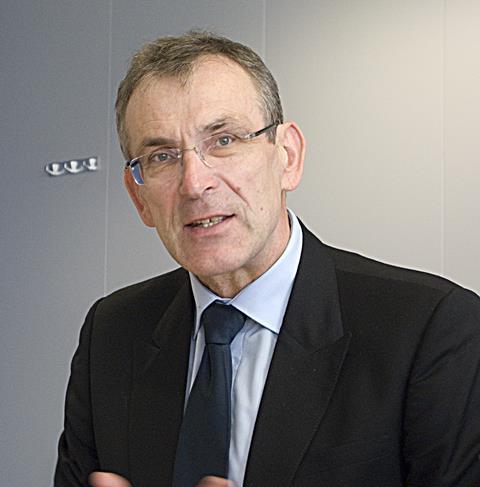
Development Commissioner Andris Piebalgs, once a Latvian head teacher, then national politician, won plaudits after he was appointed energy Commissioner in 2004. He took over the development portfolio in February 2010 and the expanded DEVCO was rolled out in January 2011.
He said his job is to improve aid coordination and better spending by the 27 EU Member States. Their bilateral aid plus the Commission’s own €7.9bn, makes them number one donor in the world with nearly €54bn. He is determined that that EU reforms on fisheries, agriculture, trade etc. do not harm programmes with developing countries. While he helps clean up nuclear legacy problems, he is pressing on with DEVCO’s successful rural solar and wind power projects for fish storage, processing and health centres and is open to collaboration with DG Mare and Fish.
“Development should stay very focused and never be in grey areas that are not completely clean…. Let’s really concentrate on foodstuffs… and that’s what we are trying to do on the marketing issues, and… storage. There is a huge need in these countries… Let’s focus on food security issues and nutrition,” he said.
Prosperity brings peace and reduces conflict, he believes. Commissioner Piebalgs says he wants real partnerships, and he is clearly open to lobbying by the poor.
Europarl support
The same goes for the EP which is flexing its new Lisbon Treaty powers (in force since Dec 2009) so that developing countries get better deals when allowing European vessels into their waters. Once, such deals were just a big cash payment for licences. Then a decade ago Morocco got more local landings, Moroccan officers onboard, and money for training, storage and processing plants. One example today is the renewal of The Comoros €1.5 million fishing agreement for (canning) with training, more local landings and more monitoring.
Sandra Parthie is eco adviser to MEP Jo Leinen. Mr Leinen is social-democrat Chair of the EP’s Environment Committee and liaises with ACP parliaments. Ms Parthie told WF the EP wants to make sure EU fishing fleets do not overfish third country waters under EU deals “…leaving us with lots of [local] fishermen who do not have any income any more”. It is determined to stop EU industries dumping electronic and toxic waste abroad – all too often in port areas causing illness and marine pollution. Her message is that the EP is ready and willing to support the underdog and able, under ‘Lisbon’, to fight the European Commission and national politicians in the Council of Ministers.
She told WF that there had been a “big change” in EP power over fisheries and agriculture. WF raised aquaculture worries about genetically modified foods (GMOs) getting into fishmeal. The EP, basically unhappy with GMOs, would be a useful ally for countries wanting to avoid them.
The EP is also pushing for a disputes procedure with Morocco and Med countries who have been using tricks to block payment settlements with the European business partners. Animal welfare, processing and hygiene standards are high on the EP’s agenda as well as wanting EU aid to take into account action against organised crime on illegal fishing. It also wants deals with EU neighbour countries such as the Ukraine to cover fish exports to the EU as well as Black Sea issues.
The MEPs reflect people issues at home, so fish farmers may look for emergency support from the EP which backs the €1bn “Solidarity Fund”, set up to cope with floods which are a recurring threat for Poland, Slovakia, Hungary, the Czech Republic, Croatia and Romania.
One caveat in all this - EU funding applications are very time-consuming. Where possible WF suggests cooperatives or fishing partnerships group together to reduce the risk of project rejection.
Mangrove resources: www.ncl.ac.uk/tcmweb/tcm/mglinks.htm