


There are two major issues regarding Svalbard and fishing. One is the problems with illegal fishing around the archipelago. The other is Norwegian jurisdiction in the same area. When the Norwegian Coast Guard arrests a Russian or Spanish trawler, accusing them for illegal fishing, both questions have to be dealt with.
The heritage of Versailles
The Svalbard archipelago is situated about midway between Norway and the North Pole. The three main islands and the rest of the group cover an area, which is a little smaller than Ireland, but the population is less than 2,800 people – 60% Norwegian, 40% Russian and Ukrainian. The combined Norwegian-Russian coexistence and struggle is a key to understanding Svalbard and the sea around. Actually the fish swimming around it are regarded as part of the Arctic stocks that Norway and Russia manage together.
On the other hand the sea and the fishery activities around Svalbard are under unilateral Norwegian jurisdiction. The unparalleled Norwegian fishery zone around Svalbard was established in 1977, but the Treaty of Versailles in 1920 formed the basis. Soviet Russia didn’t have access to the post-war treaties, and the rest of international diplomacy recognized Norwegian sovereignty with some limitations.
When exclusive economical zones of 200 nautical miles were established around the world in 1977, Norway didn’t dare to take the whole step for Svalbard. The fishery zone was established both to promote Norwegian interests and to ensure that someone actually was responsible for the fish and the environment in the area. Within the zone, Norway distributes quotas according to historic fisheries, giving vessels from Norway, Russia, the EU and the Faeroe Isles access to catch cod. Still the codfish belong to the stock that Norway and Russia govern together.
Shots and kidnapping
On the 5th of August 1994 the Norwegian Coast Guard fired warning shots against an Icelandic trawler fishing in the Svalbard Zone. Iceland doesn’t have historic rights in the zone, and the Icelanders dispute the Norwegian right to control the area and to arrest foreign vessels. Russian boats have access to the zone, but Norway’s coast guard expect them to follow Norwegians regulations. When the trawler Chernigov was apprehended in April 2001 for violations of Norwegian mesh size regulations, the head of the Russian State Committee for Fisheries declared that the Russian Northern Fleet would be called in next time.
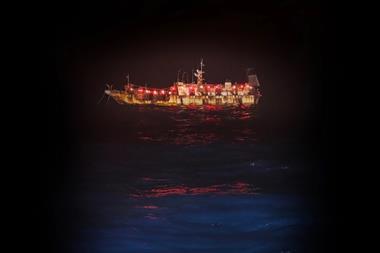
The next time came in 2005, but the Russian fleet stayed in port. Still 2005 has been the most eventful year in the region. First the Russian trawler Electron actually kidnapped the Norwegian inspectors prior to a dramatic escape from the Norwegian Coast Guard. This was in October. One months later the two Spanish trawlers Garoya Segundo and Monte Meixueiro were caught during illegal fishing of Greenland halibut, a species which is protected in the area. The guilt was obvious, but Spain disputed Norway’s right to investigate and fine.
Both Iceland and Spain have warned that they may take the question of Norwegian sovereignty in the region to the International Tribunal in The Hague. But the warning has led to little action, maybe because the challengers might get the worse of it.
There have been a few conflicts in the Svalbard region during the last decade, but not real chaos and no war. The Russians reactions were weaker in 2005 than in 2001. Actually the controversial operations of Norway can be seen as steps to establish an order. Forcing Norway out might lead to a vacuum that no one – and certainly not the fish stocks – would want. There are also Norwegians who want to bring the controversy to The Hague, and others who want to establish a full economic zone around the archipelago, but the Norwegian government sticks to the established policy.
100,000 tonnes?
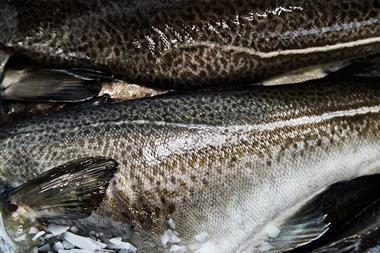
According to Norwegian authorities the Russian trawler, Elektron had caught 200 tonnes of cod and haddock illegally – in addition to using illegal nets, covering the registration number etc. The Spanish trawlers Garoya Segunda and Monte Meixueiro were caught with 176 tonnes and 150 tonnes respectively of illegal and preserved Greenland halibut. These volumes alone could feed an average fish lover for a lifetime, but the arrested vessels are, of course, the tip of the iceberg. Actually, the illegal fishing around Svalbard is only a part of the problem in the Arctic. Over fishing happens in all of the Barents Sea. Whatever you think about the jurisdiction in the Svalbard area, it is not the cause of the over exploitation in the Arctic. Any codfish or haddock caught illegally in the region will weaken the resources and reduce the legal quotas accordingly.
According to the Norwegian authorities, Russian illegal fishing is the main problem and this has also been highlighted in the surveys made by the Norwegian Fisheries Directorate. The last report is from May 2005 - this is the conclusion:
“Based on estimated quantity compared with documented quantity, we estimate Russian cod fishing in 2004 to be between 292,000 tonnes and 320,000 tonnes of cod round weight. This constitutes an estimated excess of roughly 80,000 – 107,000 tonnes in 2004.Based on the same method over the past two years, the analysis indicates a slight decline in excess fishing from 2003 to 2004.”
If this is correct, we’re talking about a huge amount of valuable fish – E100-200 million in terms of normal landing price in the EU. Russian authorities accept neither the Norwegian figures nor the Norwegian innocence, but they admit the problem and have accepted Norwegian proof in individual cases. The fishing boats land some of the illegal fish from the Barents Sea directly in Russia. But today it is more common that the catch is landed in EU ports, either by the trawlers themselves or via dedicated freezer ships. This is a way to avoid inspection and quota control in Russia or Norway.
According to Russian and Norwegian law, it is illegal to transfer fish at sea to third party transport vessels. Still
vessels registered in Panama, Belize, Georgia or even Cambodia bring the Northern fish to the markets. According to the report mentioned, there is a clear predominance of vessels sailing in the direction of the Channel. From here, vessels can sail to Great Britain, Holland, Germany, Spain and Portugal. If the vessels sail in the South West direction, it is also possible for them to sail to Great Britain, but also to Iceland,
the Faeroe Islands and, in some instances, to Canada.
Signatures and banners
On the 21st of February the Portuguese and Norwegian ministers of fisheries agreed that all kinds of vessel coming from the Barents sea to Portugal should be controlled and checked against legal quotas. The Norwegian minister, Helga Pedersen, also visited her colleagues in EU/Brussel, Moscow, Stockholm and Madrid. She didn’t manage to make them sign on the spot, as in Lisbon, but according to Pedersen important steps have been taken to strengthen the port state control in the EU. The same month the Cambodian-flagged freezer ship, Ice Bay was observed unloading around 1,500 tonnes of cod, in Agadir, Morocco.
The problems are complex, but the focus is set. Loads of illegally caught cod and haddock will of course influence the market price. But buying and selling cheap, illegally-caught fish may hit back. On the 19th of January Greenpeace activists climbed up the façade of the head office of Findus in Sweden. 'Stolen fish - empty seas' was written on the banner that was hung in front of the building. The consumers don’t want their fishmeal to be a strain on the environment, and companies like Findus and the big retail chains certainly don’t want Greenpeace climbing around. In fact Findus broke off their contracts with Kangamiut, the Danish company that had delivered the dubious fish.
Right direction
Illegal fish from the Arctic seas is a complicated issue. Disagreement about the Svalbard region makes inspection and enforcement in this area more difficult. Cooperation between Norway and Russia is a necessity, and the Svalbard issue will influence this collaboration. So will the Norwegian-Russian dispute about the so-called “grey zone” between the two economic zones Unemployment in the fish processing industry in Murmansk and even the strategic steps taken prior to the oil age in the area should also be taken into consideration. Another challenge is to control the transfer ships and the ports and to develop sufficient traceability. The good thing is that improvements are being made in all these fields.
The Norwegians regularly provide their Russian colleagues with information on the catches taken by Russian trawlers outside their own national waters – data that the Russians can check against the vessels’ reports. The two countries also collaborate on satellite tracking in the Barents Sea area. The port controls are already strengthened, and TV programs and activist actions have made both the industry and customers more aware of the issue. There are many optimistic signs, unless you have got used to buying cheap, unidentified cod for dinner.