


Back to slavery
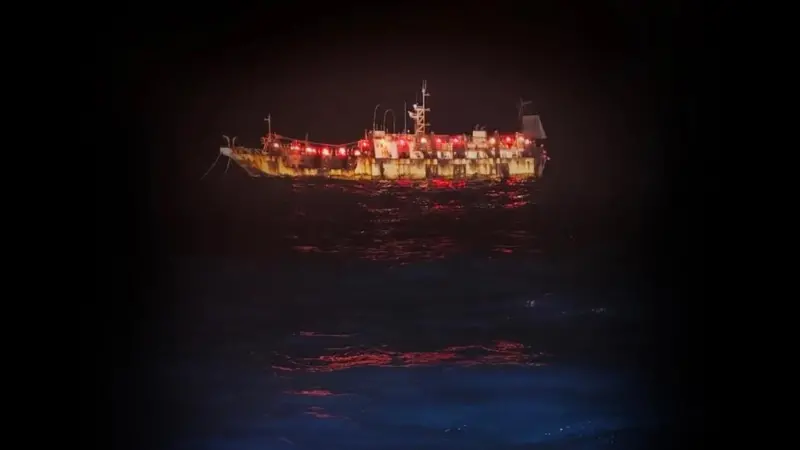
Things are going from bad to worse. Over six years ago (WF June 2005) I wrote here about low-paid and badly treated foreigners onboard large, distant-water fishing vessels, some of which flying FOC (flag-of-convenience) and some IUU (Illegal, unreported and unregulated).
South and East Asian crews have been exploited, maltreated, poorly accommodated, and in some cases even beaten and cheated out of their wages. Which brought me to write here about MSC fish labelling: “…one shouldn’t forget that the MSC label indicates good practices only with respect to fish, but not with respect to fishing people” and that these labels should be considered inadequate if awarded “…to catches of vessels where decent employment conditions are not practiced”.
In 2007 the ILO (International Labour Organization) adopted standards designed to protect fishermen against inhumane working and living conditions. Although obligatory to ocean-going vessels, as well as to vessels 24m long and above, they may nationally apply to conditions onboard smaller vessels, which happens or not. Evidently, it doesn’t.Also the ILO standards have yet to become a rule throughout ocean-going fishing fleets. InJuly2009, I wrote here on the abuse of Vietnamese and Indonesian crews onboard oceanic fishing vessels that, according to the International Transport Workers’ Federation (ITF), were on the rise, and on fishing boats which could well enroll as slave galleys.
But, according to reports, the international standards prescribed for larger-scale vessels were not observed in many of the world’s fisheries and hardly ever in small-scale and medium-scale fisheries. Over several years, reports and stories in the media highlighted human trafficking and exploitation of labour by mafia-style networks, among them those smuggling thousands of deceived Burmese workers for the Thai fishing industry. Upon arrival in Thailand, these Burmese are sold to brokers who sell them on to fishing boat owners, who force them to work 15 to 20 hours a day.
According to the International Organization for Migration (IOM), widespread people trafficking feeding Thailand’s mammoth fishing industry developed following natural disasters that caused Thai crews to suffer major losses, leaving boat owners in desperate need of labour. For years, Burmese, Cambodian, some Laotian and other migrant workers have been recruited in various lawless ways by criminal brokers to man Thai fishing vessels.
Enslaved
The BBC’s Alastair Leithead once told the story of a 26-year-old Burmese worker named Zaw Zaw enslaved on a Thai fishing boat. He was one of thousands of young men trafficked into Thailand’s fishing industry. He had been promised a job in a local market or factory, and then smuggled with some others through the jungle into Thailand. On the way, two of the Burmese women were raped by the Thai broker and the rest of them beaten. Passed from broker to broker and locked up in between they found themselves on a fishing boat. “If the men became sick they were beaten, they were never allowed more than a few hours sleep at a time, and were living under threat of violence or even death”. During three months onboard he saw the captain lace their drinking water with drugs (amphetamine energy tablets) and was forced to work around the clock.
“Three of the men tried to escape. They grabbed fishing net floats and jumped in the sea, but it was very rough and two drowned. The other was caught when he got to shore. They brought him back to the boat – his face swollen from torture and beating. They called us all on deck and the Thai captain said this is what happens if you try to escape. The man was tortured with electric shocks and was then shot in front of us all and thrown overboard.” Afterwards he escaped himself and managed to survive.
Zaw Zaw’s story is characteristic of a widespreadsituationoftrafficking, beatings, mistreatment and killings.According to an IOM report, with the catch transshipped for landing to fish-carrier vessels (called Reua Mae or Reau Tour), some workers were kept on fishing boats for months and even years without seeing the shore. Since they owed the boat owners what those paid to the brokers, they may have to work for many months, and some for years, before they see any earnings. “Fishermen who do not perform according to the expectations of the boat captain may face severe beatings or other forms of physical maltreatment, denial of medical care and, in the worst cases, maiming or killing…” wrote IOM.
Illegal workers are also trafficked to packing and processing plants. Thai fishing boats manned by such foreign crews are operated with a Thai skipper and engineer, and illegal Burmese workers making up most of the crew. According to IOM, boats fishing for longer periods offshore abound in labour supplied by traffickers. One report told of six fishing trawlers with a crew of 100, which had sailed several years ago to fish offshore and returned to Thailand with only about 40 crew members onboard.
The Human Rights and Development Foundation has urged the Thai government to enact legislation to protect exploited workers in the fishing industry with a standard at least equivalent to those in other industries. The group also urged the government to prevent and suppress the quasi-slavery in the industry and to set up a database to monitor boats employing foreign labour, and called the National Human Rights Commission of Thailand to ensure effective monitoring. Other measures should raise awareness of job seekers of the danger involved.
This misery is happening in an era of globalisation, privatisation, and flow of job-seekers from the poorer to the more affluent countries. Employers enjoy cheap manpower and the governments actually prefer to default, as long as businesses operate and pay taxes. Even labour unions, who should be mobilising against enslaving people, mostly gave up. It seems that during the last decade this has been going on. Changes for the better? Hardly any, but, hope to be found wrong.