
Aqua Sur 2010: The Southern Hemisphere’s great exhibition
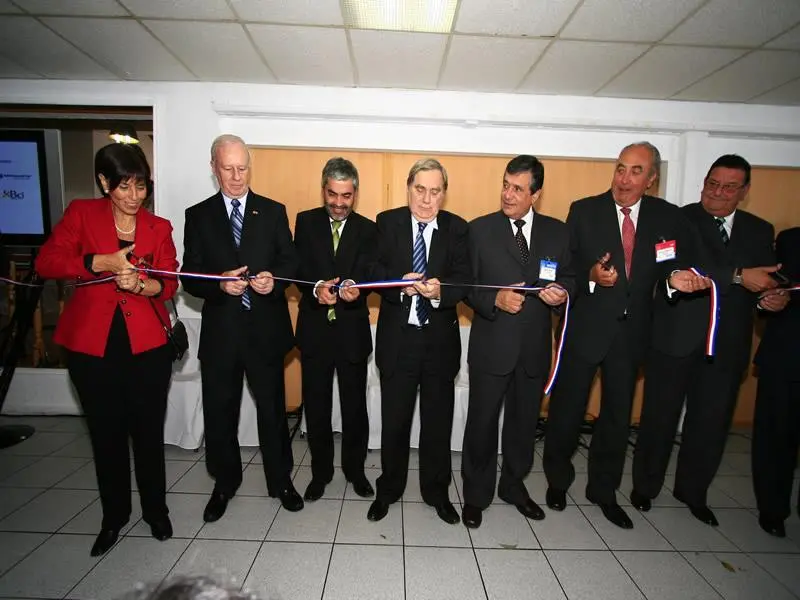
Aqua Sur is, without doubt, the Southern Hemisphere’s most important aquaculture exhibition and is being held in Puerto Montt, Chile, from 24-27 March 2010, reports Peter J. Neilson.
Considering that a progressive recovery of the sector is expected from 2010 onwards, this event is the ideal place for discovering new business opportunities, as businessmen, investors, authorities, financial entities, executives, professionals and technicians who recommend or decide acquisitions all gather here.
Spread over 8,000m2, suppliers of machinery, equipment or solutions for the sector will exhibit the latest technical improvements which have been developed since the previous version of Aqua Sur which took place in 2008, where over 1,000 companies from 40 countries took part.
What is Aqua Sur?
It is the meeting place for the aquaculture and fishing community which takes place every two years in Puerto Montt, the neuralgic centre of Chile’s aquaculture industry.
Due to the development of this activity, Aqua Sur gathers representatives from all five continents in order to allow them to become informed, share experiences, detect and do business.
Since its creation in 2002, Aqua Sur has become the Southern Hemisphere’s most important aquaculture exhibition and is attended by around 19,000 visitors who meet here to discover new technology, equipment and services for the development of this important sector.
From this year the exhibition will take place in a 55,000m2 location just five kilometres from Puerto Montt on Route 5.
The exhibition is also an opportunity for the exchange of experiences, knowledge and trends, thanks to the large amount of other activities which will take place during the event.
Four successful former versions
“Between 2002 and 2008 we have produced four successful versions of this exhibition, hosting the local and international aquaculture community,” Margarita Vergara, general manager of Aqua Sur organiser Technopres commented.
“As from this year, we will produce this exhibition in a new location, because in the four previous versions it has doubled its size, amount of visitors and countries which take part.
“Businessmen, investors, authorities, banks, executives, professionals, foreign delegates, researchers, scholars, and the press will gather in order to share experiences, detect new business opportunities and discover the latest information on equipment, services and technology developed for this important economic sector.
“With a record 19,000 visitors, close to 300 booths and exhibitors from over 40 countries, the fourth version of Aqua Sur took place in 2008. The exhibition is one of the largest and most important events in Chile, offering innovation, services and products related to the national aquaculture industry, Chile’s second largest export activity,” Ms Vergara concluded.
Nevertheless, in spite of the organisers’ enthusiasm, many large former exhibitors – such as Marco Industrial, Abastible and Gasco – have decided not to exhibit in this coming version because the crisis has greatly reduced budgets for promotion and Aqua Sur is just far too expensive for the time being.
Aqua Sur is organised by Technopress, belonging to Fundación Chile and Editec, created for supporting the development and growth of the country’s fishing, aquaculture and forestry sectors through actions and products created for this.
Chile’s aquaculture history
Chilean aquaculture began as far back as the end of the XIX Century, but began commercially in the 1960’s with scallop and mussel farming in Southern Chile.By the end of the 1980’s the country’s salmon farming took off and up until now has been so successful that Chile is currently the world’s second largest salmon producer, after Norway.
Southern Chile’s bountiful offering is reflected by a great stretch of coastal water with ideal temperatures and a great many islands, fjords, and protected inlets, and has allowed aquaculture – especially salmon farming – to become one of the country’s most important and relevant economic activities.
This success is closely associated with the so-called “salmon belt” which stretches over 1,700km between Puerto Montt and Punta Arenas with perfect conditions for fish farming.
Meanwhile, the Third and Fourth regions, with their famous natural conditions for shellfish farming – mainly scallops and abalone – have also become an important aquaculture area.