

An inspector calls
Peter O’Neill finds the inspectors may be more friend than foe for fishermen and processors.
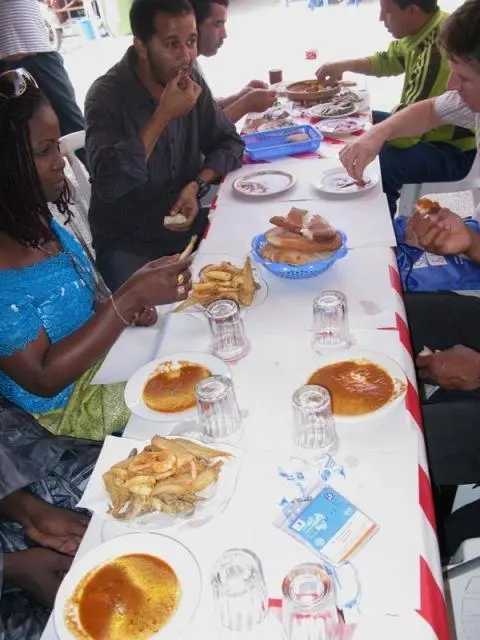
The thought of an unannounced visit by a fish inspector probably sends shivers through a skipper who has been processing onboard, a food factory or supermarket manager or a local market fish stall holder. But in Agadir, Morocco’s largest fish port, the focus was more on helping stakeholders meet standards rather than trying to catch them out. The vision is to expand the role of safe fish for healthy diets in countries around the world, particularly for children so they become the new fish consumers.
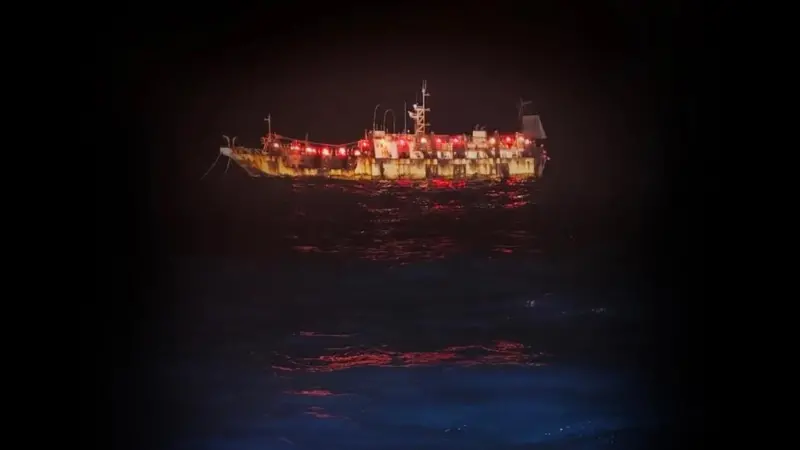
Illegal unreported unregulated fishing was high on the agenda. But not because the inspectors don’t trust most fishermen. They are not coastguard surveillance officers. But because, when product reaches the consumer on the shop shelf, the security of the traceability on the pack is one way that inspectors can help protect the reputation of fish for everyone.
Waste not want not
It will pay World Fishing readers to welcome inspectors (not the tax ones perhaps!). Take time to read the detail of WSC/IAFI (http://www.iafi.net/resources/), for really useful tips to increase catch value, whether for diversified recipes for the table or by-products for science. Some are obvious and were highlighted in the session chaired by Timothy Numilengi, coordinator of Seafood Safety Management Systems for the Papua New Guinea government. Dr Grimur Valdermarsson from FAO showed how much profit there could be in consumer sales from what was considered ‘waste’ at the production end of the system. It is a bit like simply thinking that a sturgeon’s flesh is valuable but ignoring her eggs as ‘waste’ to be thrown away.
At the micro level one can see the big bucks potential. Professor Se-Kwon Kim of South Korea spelt out how ‘active ingredients’ in fish have the potential to generate multi-billion dollar products. He told WF that there was hardly any research going on at this level, despite its enormous potential as a revenue spinner for treatment of conditions such as cancer and arthritis.
Dr Yvette Diei Ouadi said that, while small-scale fisheries in developing countries are often struggling with irregular electricity and not enough ice for the cold chain, common sense can often solve basic problems. Her photos of fish drying out amidst rubbish on a grubby shoreline, exposed to birds eating through one end and fertilising the fish from the other…was a guarantee to put any consumer off. Poor handling of African catches meant that between 15 to 50 per cent and sometimes 75 per cent was wasted. Uganda and Tanzania are just two countries in Africa who are rolling out simple programmes than can save a fortune. Mrs N. K. Gitonga from Kenya’s fisheries department explained the danger of health bans on exports from East Africa such as Nile Perch. The fish supports some three to four million people and represents nearly $250 million in export value.
Fear factors
While Dr. N. Anandavally from Kerala, India showed how regular, simple to adopt Hazard Analysis and Critical Control Point (HACCP) practices should stop screws, bolts, nuts and gutters’ jewellery getting into the product, the more intangible issue is about lowering risk fears amongst consumers about disease, mercury and dioxins.
There is deep concern amongst the health experts (often national inspectors) that there is not enough hard, factual information out there amongst consumers and the media and this leads to unnecessary fear. The intangible and the fear of the unknown for no good reason often produces consumers, particularly the young or pregnant women, who shy away from fish and lose the benefits of perhaps the most important protein source for mankind. It was pointed out that man came from the sea and fish were the route to the land and the human brain.
For example, Marc H.G. Berntssen spelt out research on dioxins in Norwegian farmed Atlantic salmon from his work at the Norwegian National Institute for Nutrition and Seafood Research in Bergen. It is simplest to show the divergence between media reports and reality by repeating the FAO quote he cited – it goes as follows: “To refute the model, researchers calculated that on the basis of the PCB contamination levels cited in the study, after 70 years of regular consumption of 200g of salmon per week the risk of developing cancer for the high-risk group (pregnant women, children, nursing mothers) would be one-hundred-thousandth higher – equal to the rise in risk of 0.0001 per cent. By comparison, the risk of dying of a cardiovascular disease by eliminating fish completely from the diet can be as high as 30 per cent!”
And these issues are becoming even more significant now that the aquaculture sector is so extensive and direct control of feed inputs can be (and must be) monitored. China leads the way on production and there is good data that it leads on research and monitoring quality. The same applies to the smoked sector which is expanding.
Incoming IAFI President, Professor Mike Dillon from the Grimsby Institute, said the number one issue from the meeting was Health. IAFI Board Member Chris Leftwich Chief Inspector of the Fishmongers’ Company, London had stressed the importance of all stakeholders safeguarding the integrity of the food chain as a team. He always says it is better to show someone how to improve, rather than punish them for small mistakes while the big criminals get away. So, if you see a fish inspector on a rock, singing a song and calling you to stop and chat, go for it – he is not trying to wreck you, and may have some good advice to help your business.