




Researchers in Japan have been studying how to find out if frozen fish was fresh at the time of freezing by using autofluorescence spectroscopy - a type of electromagnetic spectroscopy which analyses fluorescence from a sample.
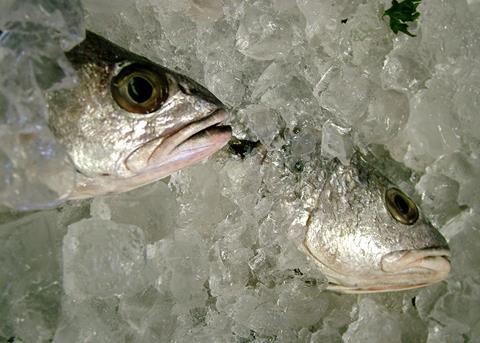
In Japan, the freshness of fish is fundamental because the valuable and prime fresh fish product is typically suitable to be eaten raw such as ‘sashimi’ and ‘sushi’. However, determining the initial freshness of fishery products before they are frozen is a big challenge.
The usual method of determining fish freshness was by calculating K-values based on chemical assays of nucleotides compounds. However, this method is very time-consuming.
“We need at least one or two days from intensive laboratory works to identify whether such a fish sample was fresh before getting frozen or not”, said Professor Emiko Okazaki. “It will be very interesting to find an alternative tool to shorten this very prolonged time of analysis. Therefore, development of a smart, rapid and reliable method is urgently needed in research and industry.”
The first author, Dr Gamal ElMasry, a Japan Society for the Promotion of Science (JSPS) fellow from Egypt said, "As the fluorescence signals from examined frozen fish changed dramatically with their initial freshness conditions, autofluorescence spectroscopy as an interesting sensor technology characterised by high sensitivity and accuracy makes this method a substantial and promising tool in screening of fishery products even in their frozen state. Hence, changes occurred in the fluorescent-emitting molecules during degradation of aged fish before freezing process could be tracked using their fluorescence signals."
The research team is working on the first step of developing such a system by analysing excitation-emission matrices (EEMS) of frozen fish of different freshness conditions and measuring their reference freshness values by high-pressure liquid chromatography (HPLC).
"We have found that there are some specific excitation wavelengths at which the detection of freshness of frozen fish could be easily recognised. The problem is to identify the most efficient emission wavelengths to move the application forward towards the real-time mode for on-line applications", explains Professor Shigeki Nakauchi.