

The US Department of State’s annual Trafficking in Persons report has been released and Thailand remains at tier-3 level for the second year.
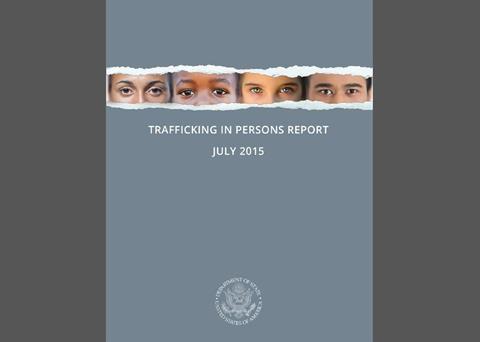
The report looks at the actions taken by countries across the world to tackle the ongoing problem of modern slavery and trafficking.
Despite efforts from the Thai government calling for an upgrade, Thailand remains at tier-3 level, the worst ranking given by State Department.
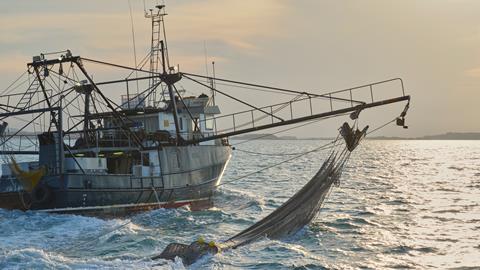
According to the report, there are an estimated three to four million migrant workers in Thailand, most from Thailand’s neighbouring countries—Burma, Laos, and Cambodia. There are reports that some of those labour trafficking victims are exploited in commercial fishing and fishing-related industries, with Thai, Burmese, Cambodian, and Indonesian men subjected to forced labour on Thai fishing boats, while some remain at sea for several years, are paid very little or irregularly, work as much as 18 to 20 hours per day for seven days a week, or are threatened and physically beaten.
The report adds that some victims of trafficking in the fishing sector were unable to return home due to isolated workplaces, unpaid wages, and the lack of legitimate identity documents or safe means to travel back to their home country.
The US Department of State says the Government of Thailand does not fully comply with the minimum standards for the elimination of trafficking, and “is not making significant efforts to do so”.
Thailand has investigated and prosecuted some cases against corrupt officials involved in trafficking, but trafficking-related corruption continued to impede progress in combating trafficking in 2014. In addition, the report reveals the Thai government did not “proactively identify many trafficking victims among fishing workers, or irregular migrants”.
Despite this, the government did pass a new Fisheries Act to replace a 1946 law, which requires better registration and monitoring of vessels and inspection of workers’ documents and working conditions, and decreased the numbers of investigations, prosecutions, convictions, and victims identified in 2014.
Trafficking in the fishing industry also continues to be in a problem in other East Asian countries like Cambodia (Tier-2 Watch List), Laos (Tier-2 Watch List), Indonesia (Tier-2) and Malaysia (Tier-2 Watch List), as well as other countries worldwide.
“The bottom line is that this is no time for complacency,” said John Kerry, the US Secretary of State, on launching the report. “Right now, across the globe, victims of human trafficking are daring to imagine the possibility of escape, the chance for a life without fear, and the opportunity to earn a living wage.”
“I echo the words of President Obama and say to them: ‘We hear you, and we will do all we can to make that dream come true’.”
The report can be downloaded here.