



Europêche, the representative body for fishermen in the EU, has written an open letter to the Pew Charitable Trusts regarding one of its reports, which it says contains untrue statements which run contrary to scientific opinion.
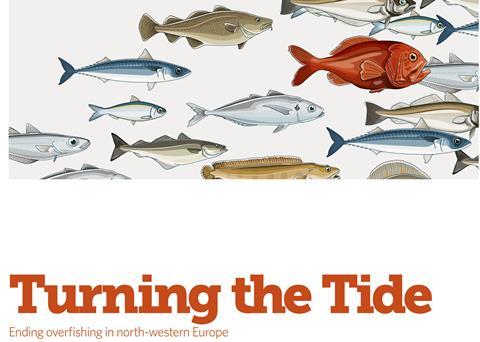
The report called Turning the Tide: Ending Overfishing in North Western Europe, says Europêche, makes the assertion that fishing in pursuit of food and profit off North West Europe in recent decades has dramatically expanded.
Europêche said that on the contrary during the last ten to fifteen years, there has been a general decline in fishing mortality in the Northeast Atlantic and the Baltic Sea to levels consistent with Maximum Sustainable Yield (MSY).
The open letter from Javier Garat, President of Europêche, said: “For the record, we firmly believe that eNGOs have a legitimate and important role to play in fisheries. However, even if you are openly contemptuous of the opinion of the fishing industry, we urge you to examine your own motives, tactics and reputation and ask yourselves what is achieved by these publishing deliberately misleading statements.”
In reply to the letter, The Pew Charitable Trusts said that the report was based on a wealth of evidence, including peer-reviewed research from independent scientists and the International Council for the Exploration of the Sea (ICES). It said that since the report was published new data has once again highlighted how overfishing persists, despite the reductions in fishing mortality over the past decade, reaffirming the conclusions reached in Turning the Tide.
Pew said that in April, the European Commission’s Scientific, Technical and Economic Committee for Fisheries (STECF) reported that overall levels of fishing mortality in the ICES area are still above the levels required by the Common Fisheries Policy (CFP) and have even crept up in recent years.
Uta Bellion, director, European Marine Programme, The Pew Charitable Trusts, said: “The data reinforces how important it is that we learn from past mistakes and act on the promise of the reformed CFP to end overfishing.”
She added that Pew welcomes fishing industry groups’ focus on the science and on the need to set annual catch rates that achieve maximum sustainable yield in line with the reformed CFP.
“Civil society and the fishing sector have a great opportunity to make a lasting difference in the health of Europe’s seas and the viability of the businesses that depend on their riches by collaborating in our call for an end to overfishing in these waters,” she said.
In December, fisheries ministers from all 28 EU member states will meet to set 2016 fishing limits for the waters covered by the report.