



In 2019 shrimp trawler Maros VII went to the Lighthouse Shipyard at Mazatlán in Mexico for a refit and an upgrade so successful that the rest of the company’s 50 vessels are getting the same treatment.
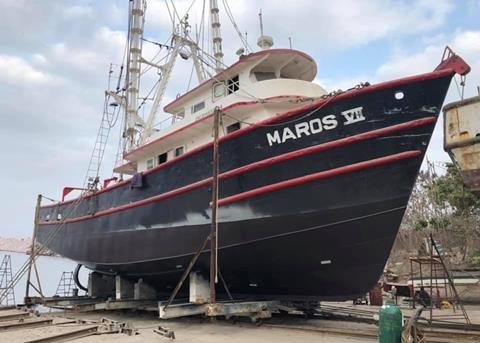
Fishing company Pesca Industrial Maros SA de CV has expressed its intention to start converting all of its vessels’ tailshaft seals to Thordon’s TG100 shaft seal later this year, following the refit on Maros VII in 2019 when it was fitted with Thordon SXL tailshaft bearings and TG100 seals, making this the first time that the company had converted one of its trawlers to run with a seawater lubricated tailshaft conversion.
The decision was made following the performance success of Thordon’s grease-free ThorPlas-Blue bearings, which have been retrofitted to the deck winches aboard almost half of the vessel operator’s 50-strong fleet.
“After many years of operating greased metal bearings, Maros now has grease-free ThorPlas-Blue bearings fitted to the winches of about twenty vessels,” said Arturo Selvas, managing director of Thordon’s Mexico based distributor, TZ Industrias.
he said that conventional winch bearings typically need about 56.6g of lubricating grease per day.
“When you have a fleet of 50 vessels, greasing every winch can be very costly and time-consuming. The performance of ThorPlas-Blue, which is completely grease-free, has saved Maros a considerable amount of time and money. This was the basis for selecting Thordon’s seawater lubricated tailshaft bearings and seals.”
For Maros VII, TZ Industrias supplied, machined, and commissioned a pair of SXL tailshaft bearings and TG100 seals for a 127mm diameter shaft.
“Maros didn’t have any technical issues with the original packing seals but simply wanted to enjoy the benefits that a mechanical seal can bring,” Arturo Selvas said.
“Retrofitting to a Thordon seal is certainly an upgrade,” said Jason Perry, Thordon’s regional manager – North America.
“When you clutch in the shaft you really appreciate the difference. It’s a completely better experience in terms of performance, longevity and reliability.”
“Maros is very happy with the new shafting arrangement and plans to convert more vessels later this year, when government grants are reinstated,” Arturo Selvas added.
Between 2005-2019, approximately 13.6 billion Mexican pesos were invested in different subsidy programmes throughout the country, with an annual average of around 1 billion pesos, and approximately 216,000 beneficiaries.
Subsidies were halted two years ago but the government has proposed a return of grants for the country’s fisheries sector in 2022.