




SCARA robots support quick, reliable and efficient processing
There’s a strong need for efficient handling devices that can streamline seafood production lines and increase efficiency while reducing costs, Nigel Smith, CEO at TM Robotics, tells WF.
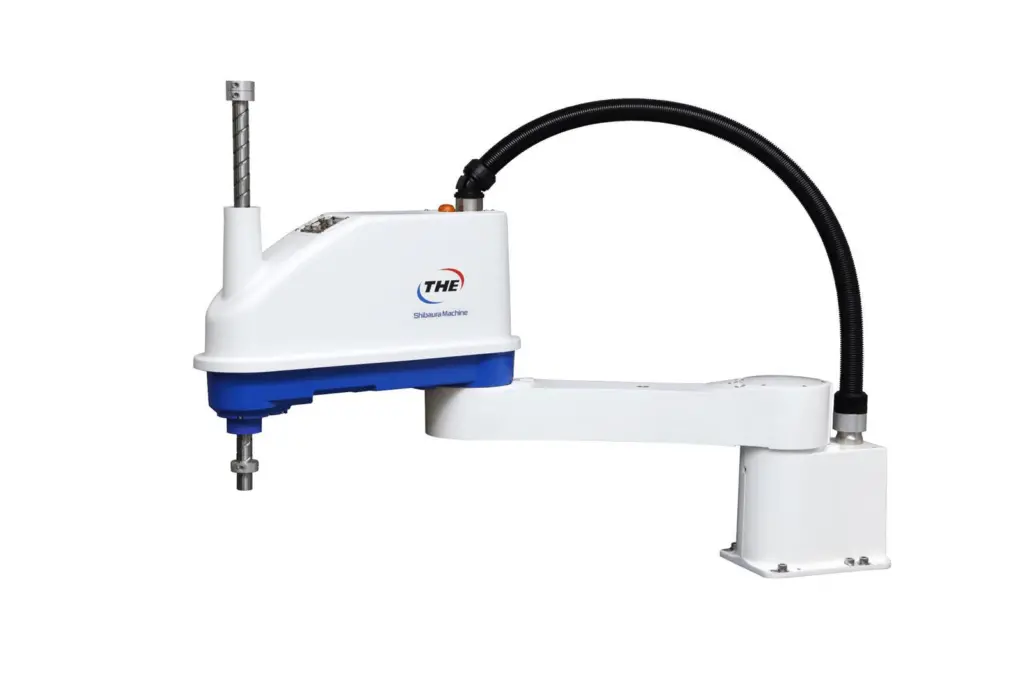
SCARA robots were first launched into the European market in 1982 by Shibaura Machine. Initially developed for electronic assembly and high-speed pick-and-place applications, these robots have since evolved to be applicable across various industries, including food and packaging. Today, the offerings from Shibaura Machine and distribution partner TM Robotics include the “THE range” of SCARA robots, a flexible and cost-effective option for food processors and system integrators. With advancements such as IP65 protection, these robots can now operate in damp or cold environments, opening up opportunities for their use in seafood processing and other sectors.
WF: What benefits do these robots offer seafood companies?
Smith: Shibaura Machine’s SCARA robots offer many benefits to seafood companies and processors. Firstly, they help in removing workers from potentially hazardous environments, such as damp and cold settings, thus protecting the workforce from injuries and repetitive strain. Additionally, these robots ensure high-speed handling, improving productivity and throughput. Moreover, their reliability and uptime contribute to overall operational efficiency, making them invaluable assets in seafood processing facilities.
While Shibaura Machine’s SCARA robots are not solely targeted at seafood value chains, they are versatile and suitable for use in various industries, including seafood processing. The ideal setting for Shibaura Machine’s SCARA robots involves high-throughput production lines, where efficient handling of parts or products is essential. Whether it’s packaging processed fish or placing parts into boxes, these robots excel in environments where speed and precision are paramount. Proper integration into the production line layout by system integrators ensures optimal performance and efficiency.
WF: When did Shibaura first look at optimising seafood processing?
Smith: This began over two decades ago when it started utilising its robots in various food processing applications across Europe. While our initial ventures included projects like prawn packaging lines, the technology’s adaptability allowed us to explore opportunities in seafood processing. The journey began as an extension of Shibaura Machine and TM Robotics’ commitment to providing efficient automation solutions to diverse industries, including food processing.
Our key breakthroughs lie in the utilisation of SCARA robots for high-speed end-of-line packing, conveyor tracking, and integration with vision systems for inspection tasks. The latest vision systems include Shibaura Machine’s TSVision3D system for industrial robots. The system doesn’t require complex CAD data to recognise objects and instead uses two integrated, high-speed stereo cameras to capture continuous and real-time 3D images. The software can recognise any object that’s positioned in its field of vision, even for non-uniform products, like bananas for instance.
WF: To what extent are you seeing smarter, more connected technologies entering the seafood processing space?
Smith: The integration of smarter, more connected technologies, such as HMI systems, warehouse management systems and vision systems, is becoming increasingly prevalent in seafood processing. These technologies enable real-time monitoring, inspection and data analysis, contributing to improved efficiency and product quality. While not exclusive to seafood processing, these advancements are shaping the future of automation across various industries, including food processing.
New opportunities for our machines lie in further enhancing efficiency, reducing costs, and increasing reliability in food processing operations. With the ongoing trend towards automation and the need for increased efficiency, our SCARA robots are well-positioned to address the evolving demands of the industry. There is also demand for quality, innovation and flexibility of industrial robots made in Japan.
While we continue to innovate and improve our technologies, specific developments in the seafood industry are contingent upon project-specific applications. However, we are constantly refining our THE range, SCARA controllers and software for ease of use and integration. Our focus remains on providing quick, reliable and efficient automation solutions across various industries, including food processing.
About TM Robotics
TM Robotics has installed thousands of robots in factories throughout the world, including North and South America, Europe, the Middle East, Africa and Australia. In partnership with Shibaura Machine, TM Robotics offers a comprehensive range of all three categories of robots: 6-axis, SCARA, and Cartesian. These are designed and built in-house.
Related Articles
 PROCESSING & REFRIGERATION
 SEAFOOD
 SEAFOOD