




Getting a grip
Over the past several years, developers have been pursuing applications for various industries, including seafood processing, by striving to close the gap on robotic gripping. Being able to grip and transfer items onto conveyor belts in a secure manner holds vast promise for an industry like seafood processing, where goals include reduced production costs and increased product quality. At the same time, hopes are high within the industry that other new technologies, such as artificial intelligence (AI), could contribute to improved processes and increased efficiency.
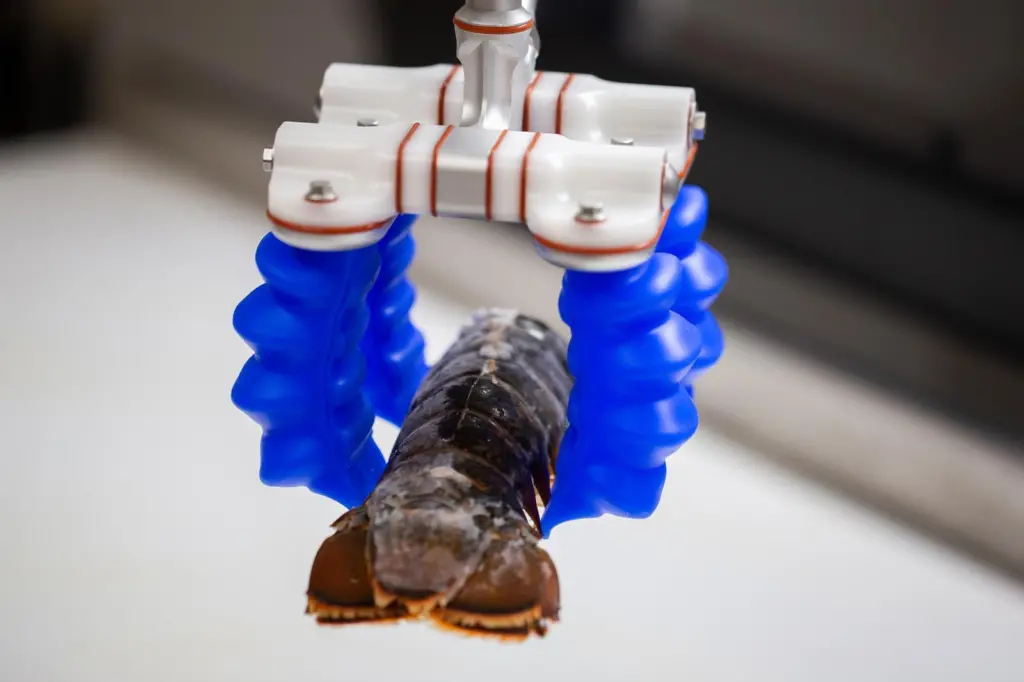
Developed by US firm Soft Robotics Inc, in Bedford, Massachusetts, the mGrip is a suite of configurable grippers and controllers that make it possible to pick, sort and package traditionally hard-to-grasp items in a quick and reliable way. Initially designed for consumer goods industries, the system is drawing attention in the food industry, where labour costs are increasing, turnover is high, and more rigorous food safety standards are required.
“Traditional automation solutions are often too costly, complex to implement and require custom development,” Julie Collura, Director of Marketing Communications at Soft Robotics Inc told WF. “Compared to these, new generations of robot-based automation offer a significant competitive edge, both technologically and economically, especially for the seafood processing industry. We are currently seeing high demand for advanced automation technologies.”
Seafood processing has a relatively small robotic involvement compared to other industry sectors, and needs to address this amidst the challenges regarding the handling of fresh food products and hygienic requirements.
Soft Robotics agrees that unlike other industries that have adopted robotics, the food market has been slow to incorporate robots that can handle variable items in unstructured environments.
Solving challenges
Seafood processing is challenging due to the quick spoilage rates and quality degradation of seafood products, while the lack of qualified labour combined with the harsh work environment compounds the difficulty in processing seafood, Collura said. Floors are wet and slushy from the ice and are often kept cold to keep fish fresh.
Job duties include scraping, cutting, gutting, washing and cleaning to prepare for canning, freezing and packing. These tasks are dangerous and require both skilled and unskilled workers to complete them, making it difficult to fulfil jobs under these challenging conditions.
The sector is also not very digitised, with companies using decades-old software to run processing plants. It is also challenging to predict production outcomes such as yields due to the natural variability of fish, while the chances of human error are high, particularly in tasks such as manually recording data or assessing fish quality with the naked eye.
However, challenges such as handling amorphous and delicate food objects can quickly be solved with a right end-of-arm tool such as mGrip, said Collura, which can make key contributions in increasing productivity and enabling products to reach markets faster as the labour shortage continues to grow. There are also other benefits, such as improved sanitation.
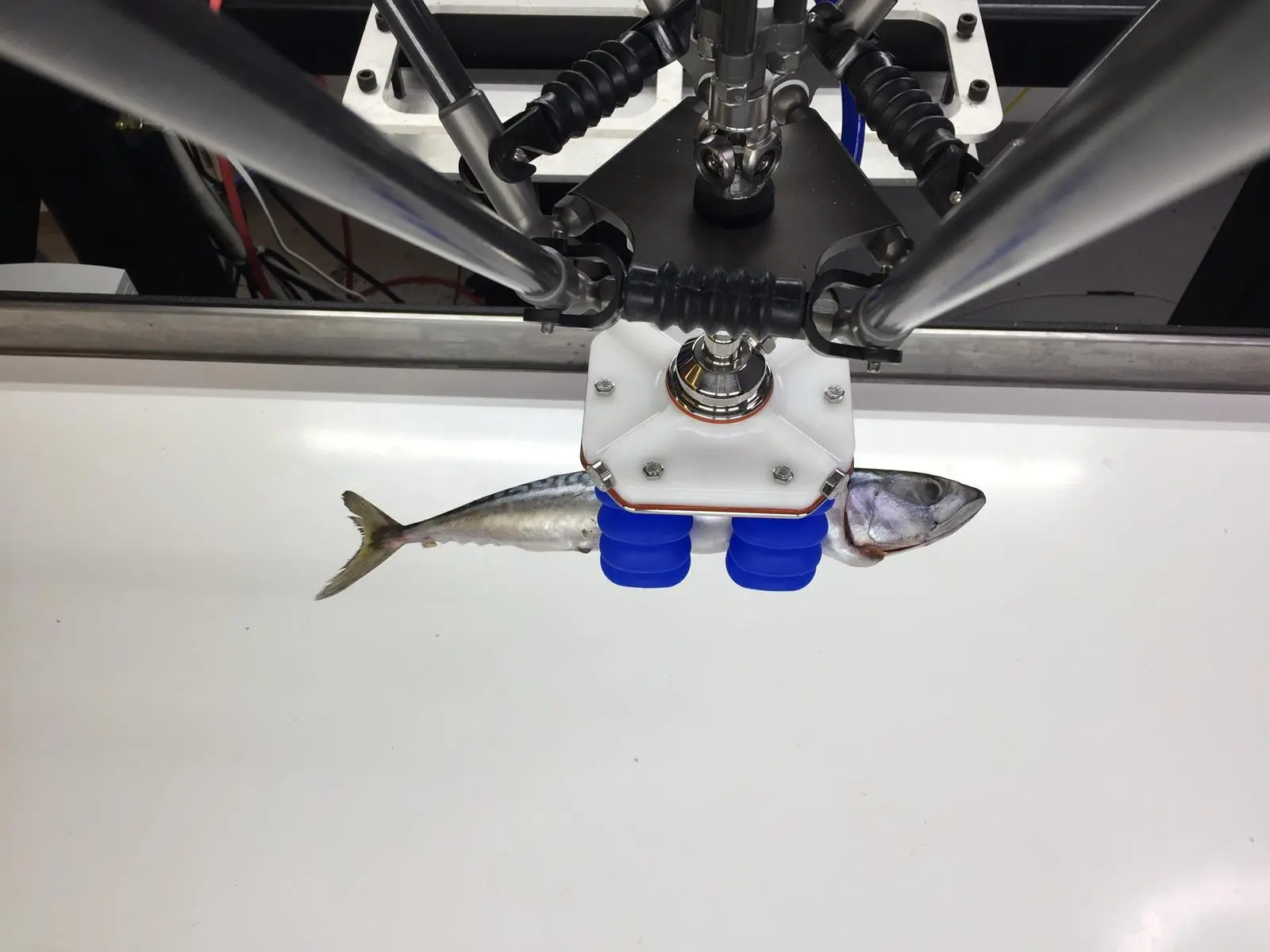
“Sanitation is a top priority for food producers, with machine cleanability being the greatest challenge to preventing contamination,” said Collura. “Soft Robotics’ solution is IP69-K rated. This is the highest rank on the Ingress Protection (IP) rating scale. Safety regulations demand tools that are easy to dissemble in order to minimise cross-contamination and recalls. We’ve solved this with ingress-protected grippers that run on a pneumatic system, which means internal places won’t get clogged. Our food-grade grippers are easy to build, can be modified and adapted quickly and are designed to keep up with the speed of any industrial robot. A pneumatic system also allows less downtime for cleaning and a more reliable way of handling different products.”
Automating bulk picking
The mGrip also makes it possible to automate repetitive tasks. In 2021, Soft Robotics introduced mGrip AI – an easy-to-integrate automation package that combines ultra-fast 3D vision and artificial intelligence technologies with patented and proven, IP69K-rated, soft grasping to give industrial robots the hand-eye coordination of humans.
Soft Robotics Perception Modules capture high-resolution 3D images, acting as the eyes of the system, while the Intelligence Module is where the AI resides to process and analyse the 3D images. The Intelligence Module takes input from the Perception Modules and translates those images into action for the robotic arm and grippers. These work with the Intelligence Module to pick selected products.
Collura said that this unprecedented combination of robotic “hands”, “eyes” and “brains” enables, for the first time, the use of high-speed industrial robots to automate bulk picking processes, not only throughout seafood processing but also across other sectors such as baked goods. With mGrip AI, there is no need to singulate a product – the entire solution singulates, inspects and tray packs for retail.
“The mGrip’s soft gripper allows for safe food handling and is adaptable enough to handle the variability of different shapes, sizes and weights,” said Collura. “It can also ensure the delicate, yet secure handling of products ranging from lobsters, even live ones, to frozen scallops and even breaded fish sticks, eliminating any concerns over handling variability. More and more companies are betting on the adoption of robotic automation for food-safe processing, better safety and increased production in their facilities and our customers have reported these as a result of using the mGrip, which is great feedback. Soft Robotics is also a member of the NVIDIA Inception programme, which provides companies with GPU support and AI platform guidance.”
Information sharing
Owing to advancements in technologies such as machine vision and AI, as well as soft grippers that are specifically designed to handle various items, robots are helping to automate repetitive, labour-intensive tasks that previously could only be completed manually, said Collura.
Improving the uptake and use of robotic automation and in particular AI in seafood processing will require greater collaboration between the sector and those familiar with AI. Seafood processing can take steps to prepare for AI such as evaluating upfront costs, maintenance and energy costs, but at the same time will have to be open-minded and able to share information, collaborate with technology suppliers and spend time and money on new technology to improve efficiency, product quality and overall productivity.
Knowledge transfer, for example from academia to industry, will also be key to incorporating advanced technologies into future food production solutions.
Seafood processors are likely to face demand volatility and labour shortages into the future. Automation provides a valuable tool that can help them manage these challenges, and as technology improves, making robots and automation platforms even more flexible, it could provide even more value.
Related Articles
 PROCESSING & REFRIGERATION
 SEAFOOD
 SEAFOOD