

Carsoe’s species-flexible systems gain wide appeal
Over the course of the past decade, Aalborg, Denmark, -headquartered Carsoe has become a prominent leader in the onboard fish and shellfish processing equipment space, with its innovations taking at-sea fish processing to new levels of quality and cost-efficiency.
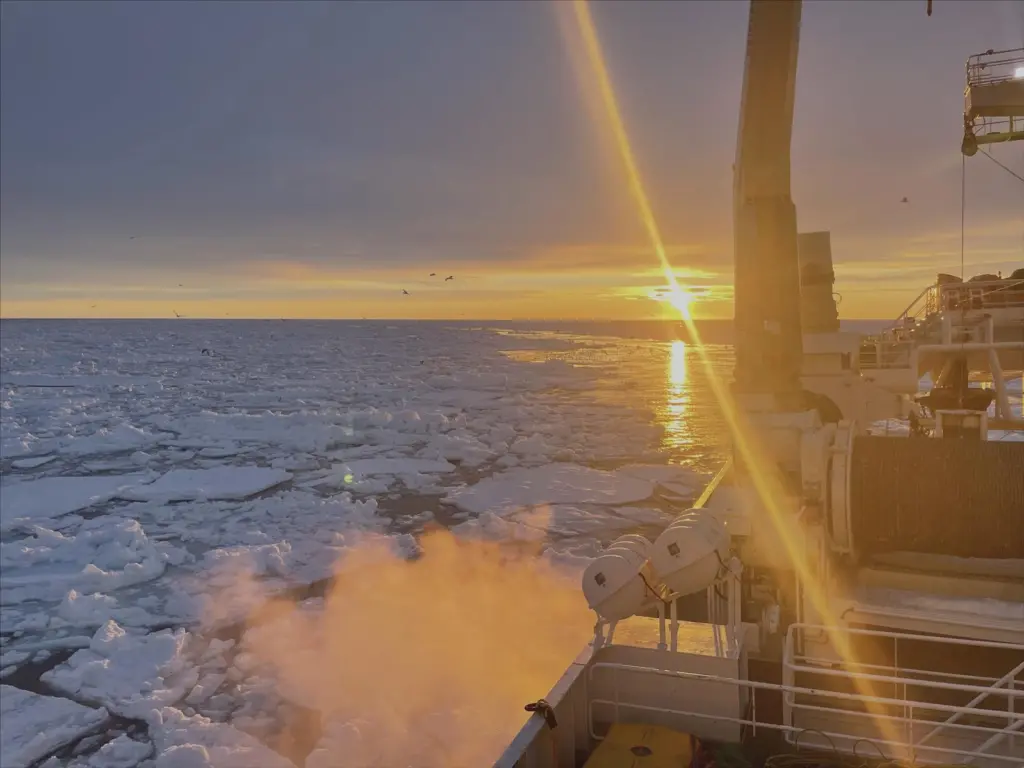
When designing these factories, the importance of utilising every available square inch of the factory deck is universally accepted. In this regard, fully-automated, conveyor-led systems and palletising can be crucial. But of equal importance to this value-adding process and ensuring these vessels’ processing decks are smarter and running to the best of their capabilities – smoother, faster etc. – is the input of the crew, insists Carsoe Sales Manager Trond Bjørnøy.
“It’s these guys that see the need for something new or different first, because they are the ones working on the boats every day, and they can recognise ways to best utilise the catch and increase automisation,” he said.
Adding these on-the-ground interactions to the many exchanges between Carsoe’s experts and the boats’ owners and their factory managers, the company has successfully laid strong foundations for what’s become long-term “trusted seafood partnerships”, Bjørnøy told WF.
He added that in particular, and through its focus on meeting customers’ requirements and delivering the strongest technical solutions with short processing times, Carsoe is being increasingly chosen as the processing partner for the delivery combi-factories for the efficient and automated processing of a widening variety of species.
Båragutt newbuild
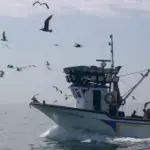
Its most recent contract is to supply a combi-factory for a new vessel being built for Tromsø fishing company Båragutt Havfiske AS. Its new vessel, which will be named Eilifson, is designed for both trawl and fly shooting.
Eilifson will be 45.5 metres long and 12.5 metres wide, with some 18 crew members working onboard.
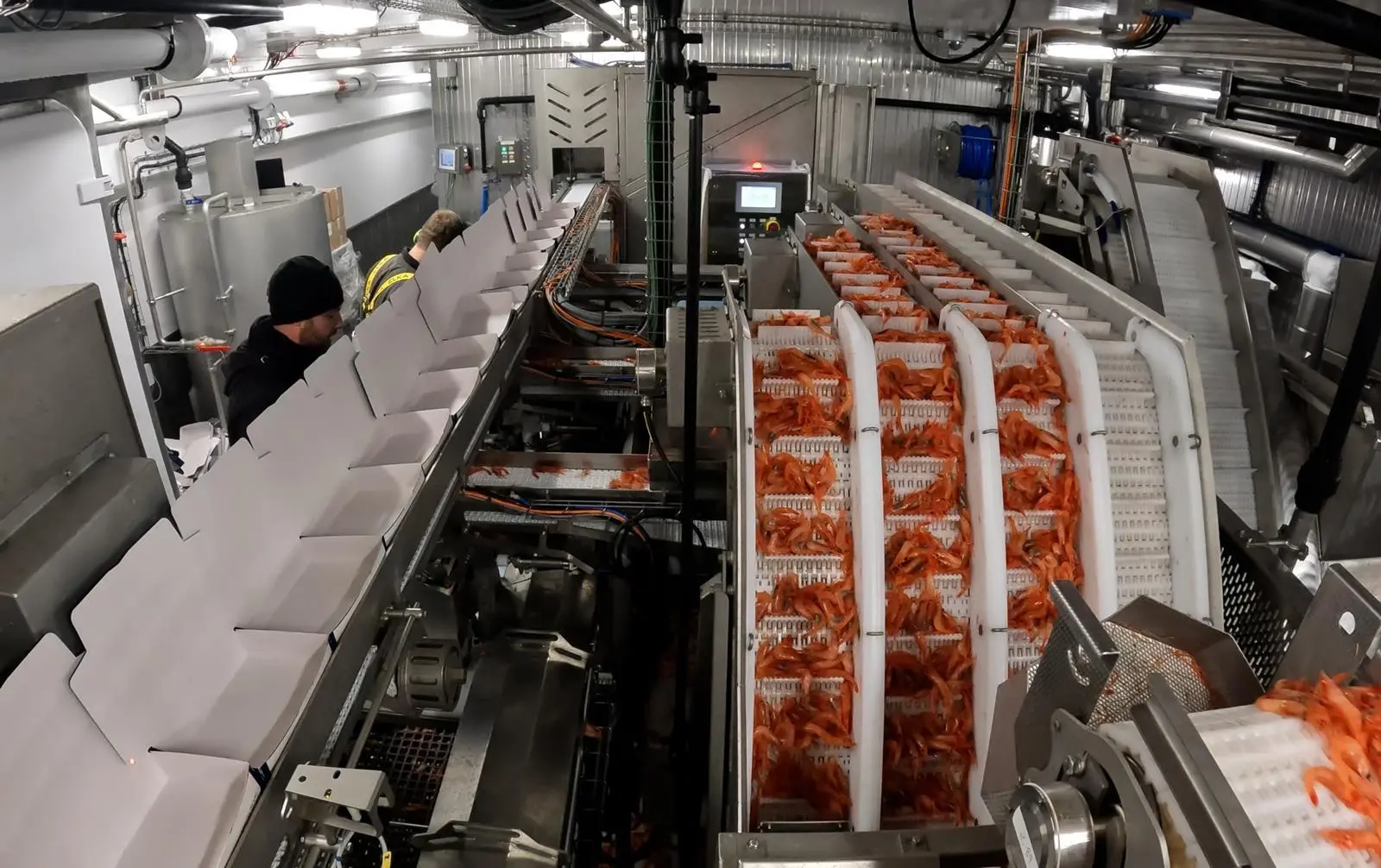
Carsoe’s onboard solution will have several processing options for the crew – all centred around automation, Bjørnøy said. With the capacity of 40 tonnes per day, an efficient headed and gutted (H&G) whitefish processing line will include four automated V16 plate freezers, custom processing lines to lead fresh fish directly to the cargo hold as well as a complete shrimp processing line with automatic grading, cooking, and individual quick freezing (IQF) freezing.
Eilifson’s shrimp processing line will be a continuous cooking line with a capacity of 15 tonnes a day. Frozen products will be packed in 5kg cartons before going to the cargo hold.
Arvid Hansen, Manager of Båragutt Havfiske said the family business is very happy to be able to cook three different sizes of shrimp at the same time, in the limited space available in its factory.
“Shrimp, both for consumption and industry, is important for the vessel. In addition to a good whitefish/redfish factory, we will have a Norwegian top-class shrimp factory.”
The onboard factory is designed to ensure maximum processing capacity for both fish and shrimp in the limited space onboard, and the intricate layout is designed in close collaboration between Carsoe and Båragutt to ensure, that the onboard workflow and processing requirements are included in the final factory.
To ensure the factory delivers from day-one, with little downtime and problem-free operations, extensive testing of equipment and solutions will be carried out before installation.
New Zealand first
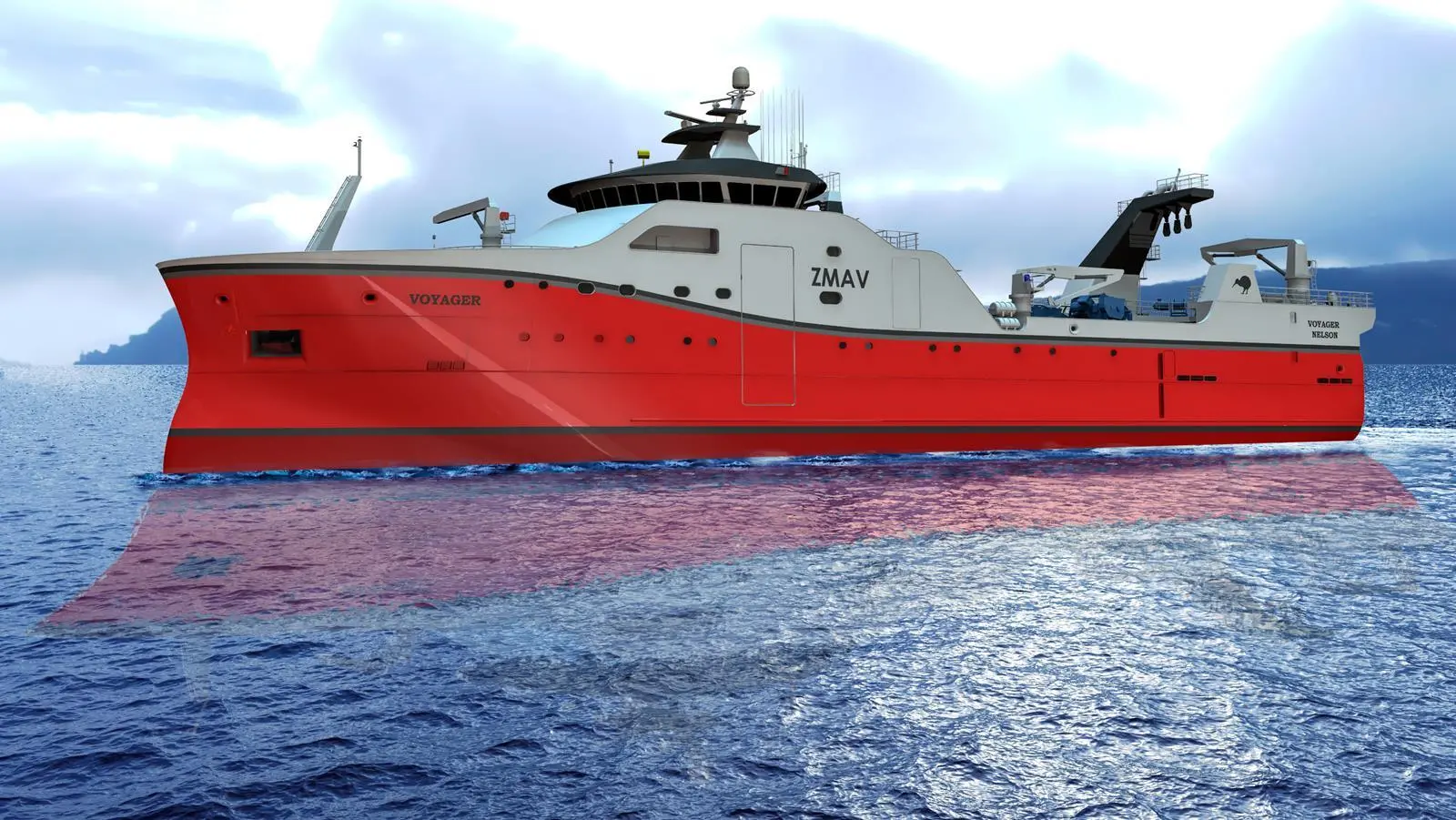
Historically, Carsoe has been a trusted processing partner for fishing vessels sailing the colder waters of the northern hemisphere. However, the company’s extensive and growing experience has led to its entry into an important new territory – New Zealand, to be precise – winning a contract for a multispecies onboard factory for Talley’s new vessel.
With a length of 79 metres and a beam of 15.5 metres, the newbuild, called Voyager, will become the largest in Talley’s fleet. It’s being built at the Nodosa shipyard in Spain and delivery is scheduled for late 2026.
Bjørnøy has welcomed the collaboration: “We are very excited to embark on a new partnership with Talley’s and to contribute to renewing their fleet of fishing vessels with a modern factory utilising the catch efficiently.”
The two companies confirmed the onboard factory has been designed with a high degree of automation, minimising the need for manual labour, and ensuring better working conditions for the crew with less heavy lifting.
Its catch will be quickly processed and frozen onboard, ready for distribution as fillets and H&G.
“Automation makes the processing job easier for the crew,” said Warren Harris, Project Manager for Talley’s newbuild. “When we compared the Carsoe design with others, we saw that Carsoe’s design flowed a lot better. Also, their communication regarding the specifications and our requirements has been second to none.”
The factory is designed to ensure streamlined processing across different species. As a wide variety of species are caught, the factory is optimised to handle and process each product and species efficiently, focusing on the shortest possible processing time from deck to freezer, to maintain the freshness of the fish.
Voyager’s processed fresh catch will be frozen in a high-capacity automatic plate freezer with a short freezing time and a continuous flow of products. Frozen products will then be sent for automatic palletising with an integrated stretch wrapper.
Carsoe explained that this palletising system is ideal for factory trawlers because the stretch film is added during palletising, allowing for quick and efficient storage preparation. The layered wrapping provides additional stability and protection for the catch, ensuring safe storage during bad weather and heavy seas.
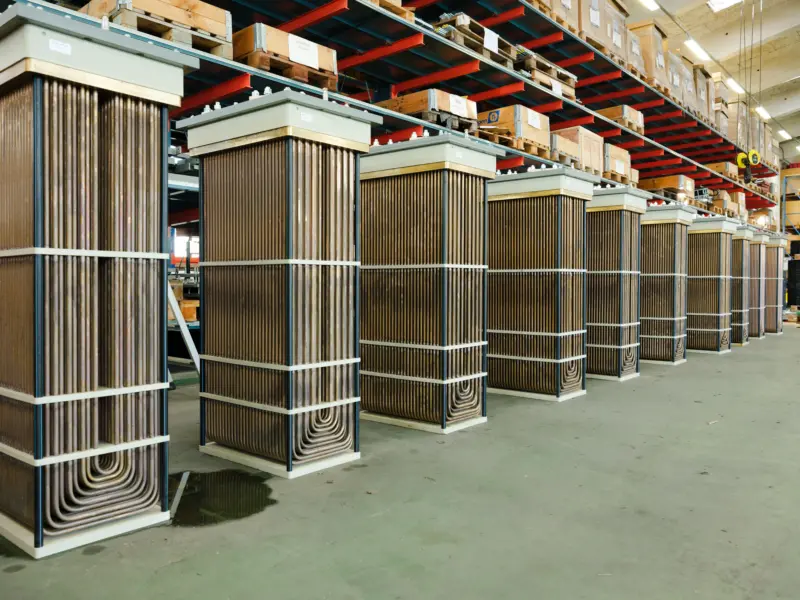
With various species and a high-quality catch, efficient freezing is essential in the onboard factory. The automatic horizontal plate freezer, with a capacity of up to 80 tonnes a day, ensures frozen-at-sea products of the highest quality.
Automation in plate freezing provides countless benefits for the production process. “This is a big help in achieving steady good production and reduces heavy lifting work for the crew,” Warren said.
With an automatic, continuous freezing process, manual handling is eliminated, resulting in increased production rates. The infeed and outfeed of the freezer are automated, maximising capacity and simplifying maintenance procedures.
Japan line
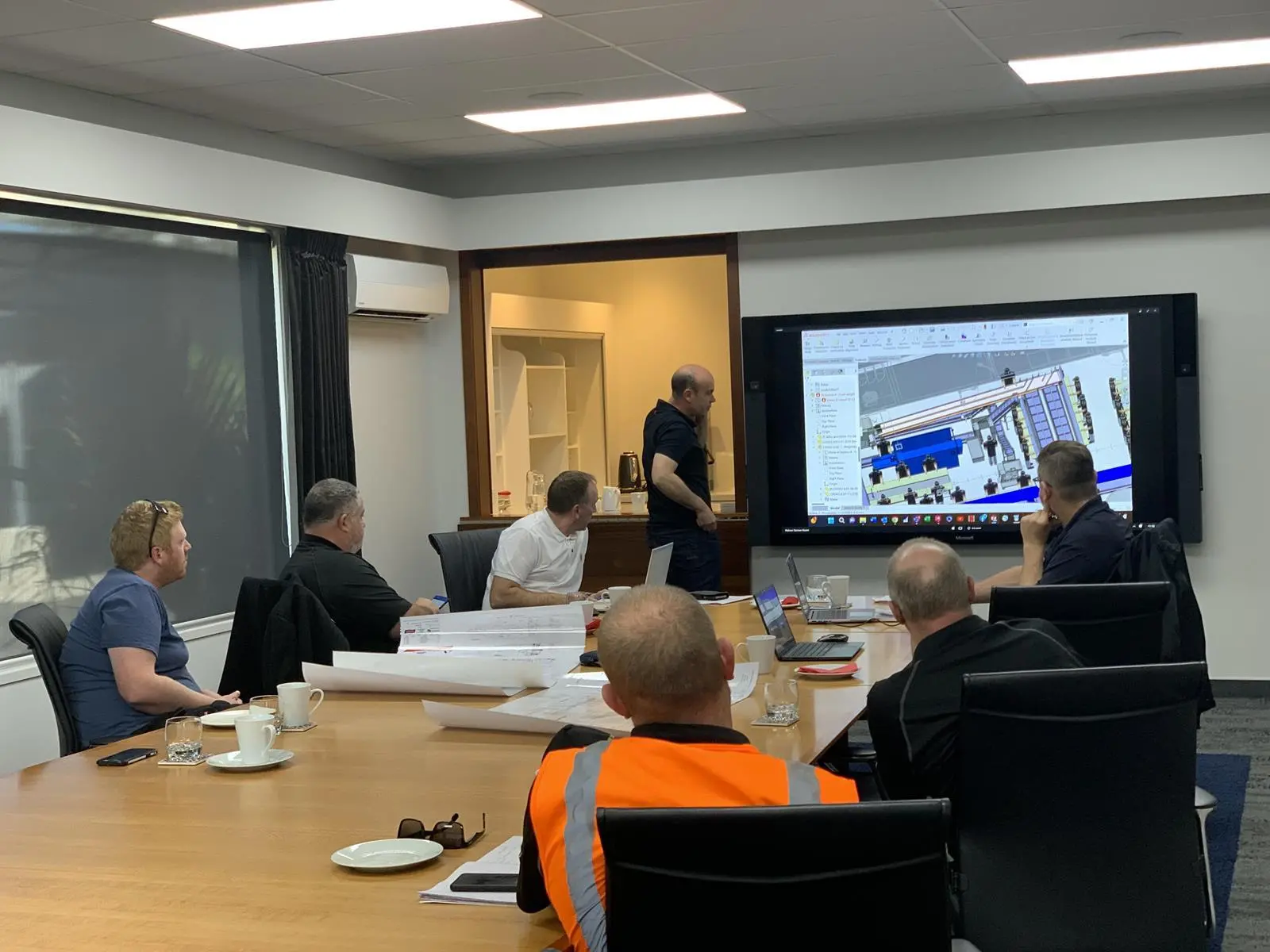
Alongside its newbuild contracts, Bjørnøy highlighted the development of an onboard production line for Japanese shrimp, with the prime objective of gaining more value from the catch.
Carsoe’s solution has been designed for the easy weighing, packing and automated freezing of 1kg quantities of Japan shrimp. Through this line, an end product of 1kg Japan shrimp packed into a box, sealed, and ready for retail is achieved.
Adding a separate line for Japan shrimp means substantially improving both the product quality and the production flow, Bjørnøy explained, adding that the solution has been designed to ensure minimum operator handling.
The Japan line is centred around a custom-built automatic plate freezer section, where the ready-packed fresh shrimp is quickly and gently frozen to preserve the highest possible product quality. The infeed and outfeed of the automatic plate freezer is fully automated and is designed with the highest possible capacity and easy maintenance in mind.
Once the products are frozen, they proceed to automatic block ejection and packaging in sealed cardboard boxes, ready for retail. The automated flow means less manual handling and eliminates heavy lifting in the factory deck.
Related Articles
 PROCESSING & REFRIGERATION
 SEAFOOD
 SEAFOOD