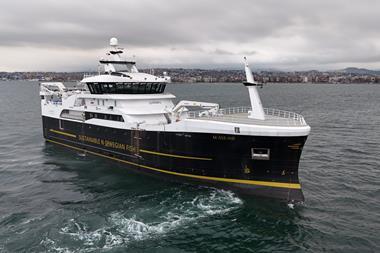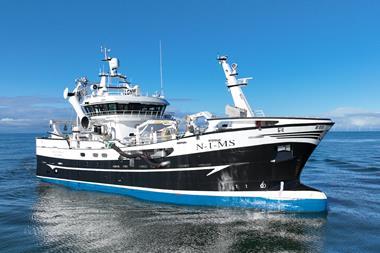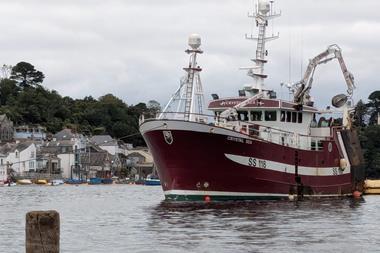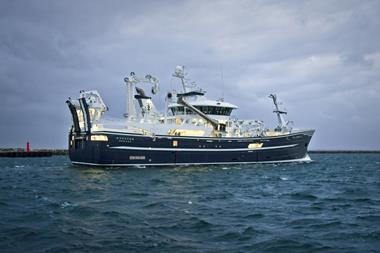



Norway’s Minister of Trade and Industry Iselin Nybø and the Minister of Education and Research Guri Melby were in Trondheim to present the NoK120 million to the ZeroKyst project.
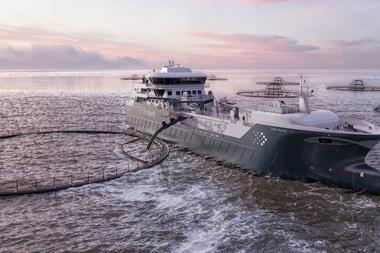
ZeroKyst will enable a Norwegian consortium to demonstrate solutions for hydrogen-electric vessels and mobile energy supply for fisheries and aquaculture.
The grant is from the Green Platform Initiative, which gives companies and research institutes support for research- and innovation-driven green growth. Their intention is to create green jobs and a more sustainable future.
“This is the green shift in practice – extensive co-operation between research institutions, energy suppliers, industry actors and shipping companies to find the best solutions. We will accrue revenue from the green shift, and this project has significant potential for value creation and export,” said Iselin Nybø.
The consortium consists of 12 industry and research partners from across the entire value chain. The project is headed by Selfa Arctic AS in Trondheim, and is organised through the Renewable Energy Cluster RENERGY.
“With ZeroKyst, we will strengthen Norwegian value creation and export through green growth. We will demonstrate that both new and existing vessels in the seafood industry can be emission free and contribute to decreasing emissions from fishery and aquaculture vessels by 50% before 2030,” said Erik Ianssen, owner of Selfa Arctic AS and CEO of Hymatech AS.
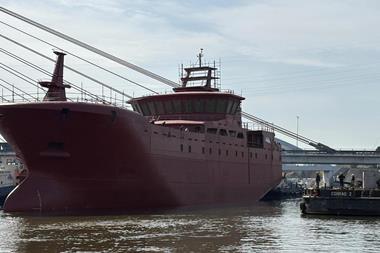
The project addresses the construction of zero-emission vessels and zero-emission powertrains, as well as the development of the necessary services for the fishery and aquaculture industry. The project also deals with the building of regional infrastructure in Lofoten with shore power and hydrogen, as well as hydrogen production on Vannøya in Karlsøy. The goal of the project is to reduce fossil fuel consumption and halve the emissions from fisheries and aquaculture before 2030.
“With this, Lofoten becomes an international spearhead in the development of the future’s zero-emission vessels for the fishery and aquaculture industry,” Erik Ianssen continued.
Stiff competition
Competition was tough for the NoK1 billion pot in the Green Platform Initiative, which is managed by the Research Council of Norway, the Industrial Development Corporation of Norway (SIVA), Enova SF and Innovation Norway. In total, 44 projects from all over Norway applied for grants.
“Our solution is to think comprehensively, and by starting with smaller vessel segments, we will be able to realise hydrogen as a fuel even quicker. Therefore, the grant from the Green Platform Initiative contributes to further accelerating the green shift in blue sectors,” said Olav Rygvold, chairman of the RENERGY board.
Internationally recognised technological and research environments, such as Siemens Energy, Plug, SINTEF and NTNU are also part of the ZeroKyst consortium. Lofotkraft Muligheter AS, Ballstad Slip AS and Flakstad municipality are among the collaboration partners working on the development of vessels and infrastructure for a pilot facility in Lofoten.
“We all have a common wish to build expertise and develop industry in coastal environments, and contribute to the acceptance and implementation of zero- and low-emission solutions within the aquaculture and fishery industries in the years to come. This market potential is enormous, and this is just the start,” Olav Rygvold said.
Greater expertise provides an advantage
The ZeroKyst project consists of industry and expertise parts. The industry part includes developing powertrains, vessels and infrastructure, while the expertise part includes research on environment and safety in order to develop long-term, safe and energy-efficient hydrogen-electric solutions. While Selfa Arctic AS heads the industry part, SINTEF Energy Research is responsible for the expertise part.
“New knowledge and tests of technologies and solutions are crucial for accelerating the green shift,” said Eirill Bachmann Mehammer, Research Scientists at SINTEF Energy AS.
The ZeroKyst project features multiple innovations within energy and other special fields, including the first facility in the world for this type of mobile energy. Together with NTNU, SINTEF will also develop a cohesive plan for hydrogen supply and charging infrastructure along the Norwegian coast.
“The research will lead to increased expertise and knowledge that is made publicly available. For Norwegian participants, this is an important competitive advantage in the development of the zero-emission solutions of tomorrow,” Eirill Bachmann Mehammer said.