


Monitoring shrimp – computer vision takes the lead
Over the last decade, the shrimp farming industry has grown significantly. According to Rabobank, more positive signs could be on the way, with an expected year-on-year production growth of 4.8% in 2024. However, the industry is also facing challenges as the need for optimisation increases.
Many experts are now pointing to the potential of artificial intelligence, or AI, as a possible solution. Recent progress in aquaculture so far has demonstrated that AI can be successfully integrated across various areas of fish farming, raising hope that the same could be applied to shrimp.
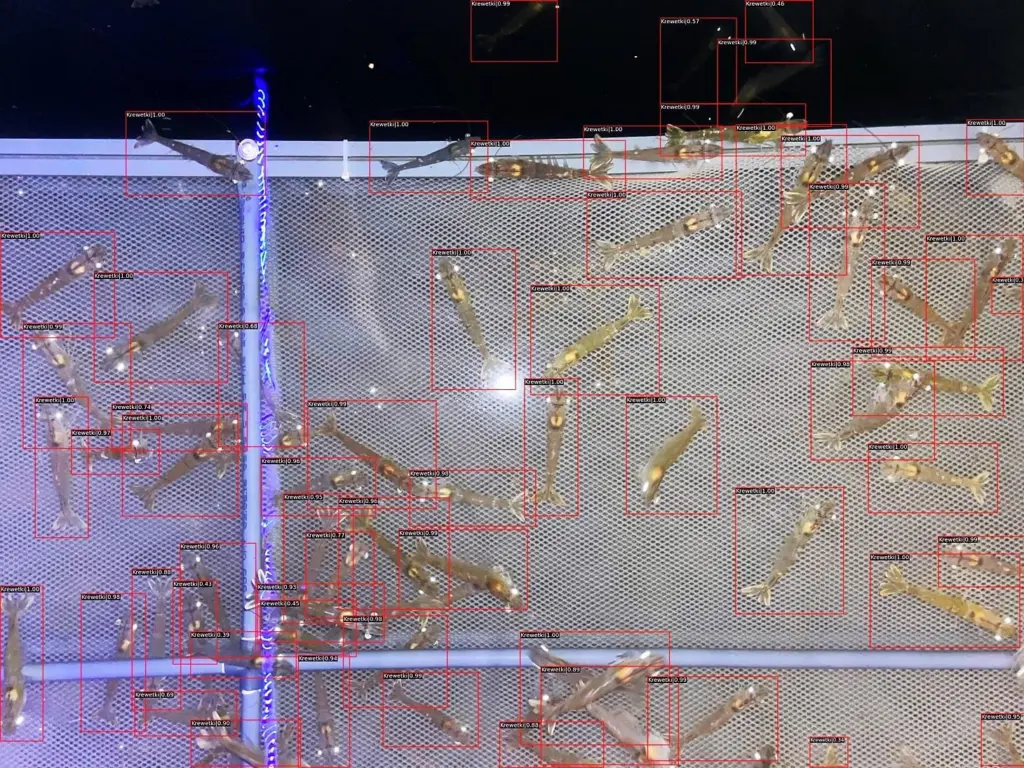
To further explore the prospects of AI on shrimp farms, a research team from the Helmholtz Center for Polar and Marine Research at the Alfred Wegener Institute (AWI) in Germany has successfully developed an AI-based computer vision system that sheds light on how shrimp are doing on farms.
“Shrimp are becoming extremely important within aquaculture in Germany and in Europe, because they can be farmed relatively quickly,” Dr Stephan Ende, scientist at AWI, told WF. “There is also huge market demand that German production cannot meet. Demand for local farmed shrimps from customers in Germany is estimated to be around 500 tonnes, but local production is currently less than 100 tonnes. Shrimp are also high value, and consumers are willing to pay more for a product that is produced locally in a safe environment.”
Real-time calculations
One significant challenge that shrimp farming has faced over the years is the need to maintain water quality and address issues such as feed spill in more uncontrolled systems like turbid ponds. Because it’s difficult to tell whether feed ends up in the shrimp as required or deteriorates at the bottom of a pond, farmers can overestimate or underestimate their stock. Being able to see shrimp in clear water was the key to Ende’s and his team’s idea of monitoring shrimp and supporting aquaculture management systems by providing farms with accurate data on shrimp biomass.
“We had a good vision of how to approach and solve the challenges that shrimp farms are facing,” said Ende. “We have good partners within this project who have supported us with AI and neural networks, and we have a partner in the shrimp farming industry who is very keen to use AI and has significant plans to expand.”
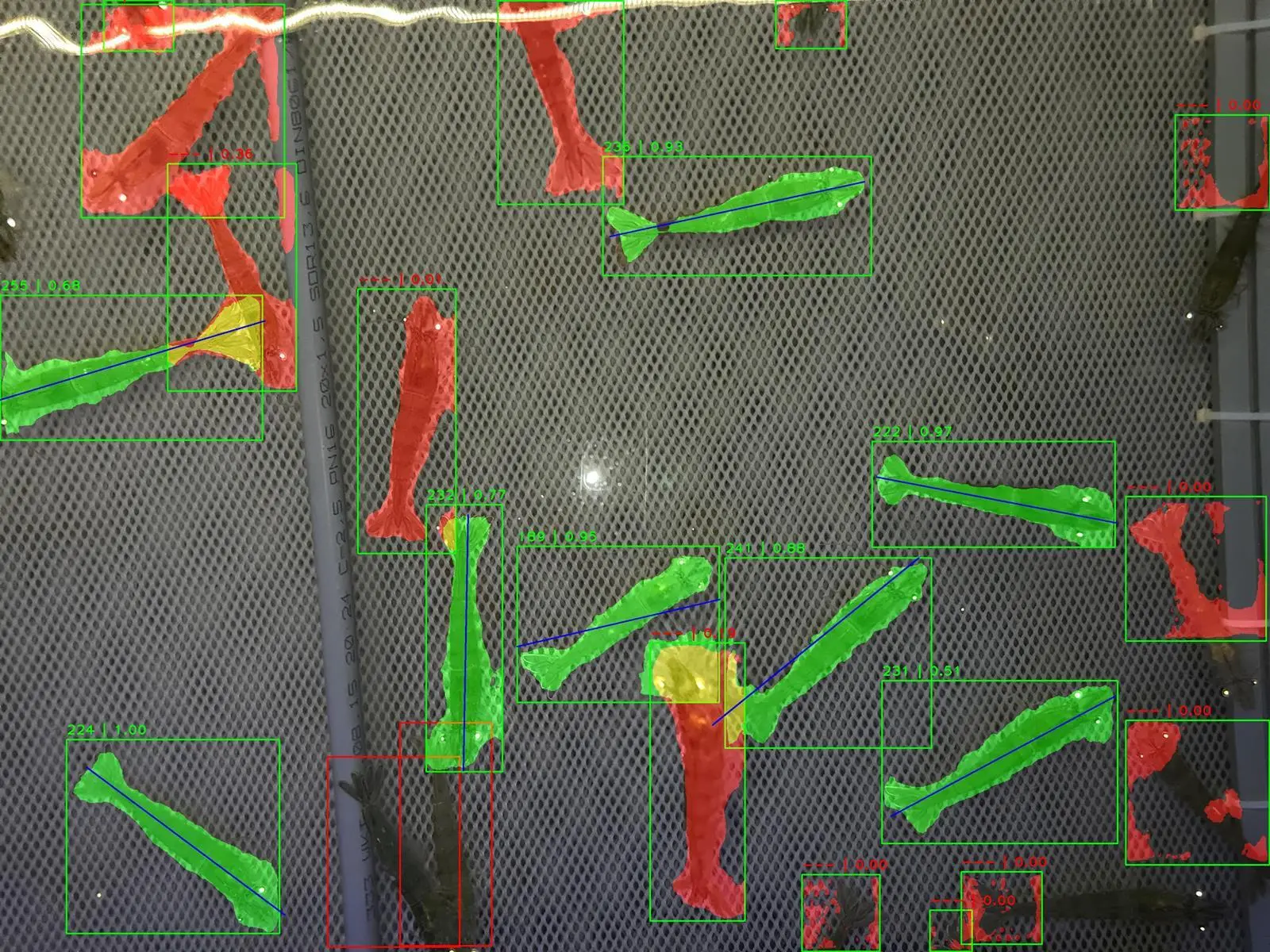
Ende and his team worked closely with Oceanloop, a shrimp farming pioneer, and Sander Holding, a water treatment systems manufacturer. During a two-year collaboration, they monitored and detected the growth, population size, mortality and stress in shrimp with up to 90% accuracy by setting up smartphones in two different positions, one of which was installed to provide a bird’s eye view of the surface of the water.
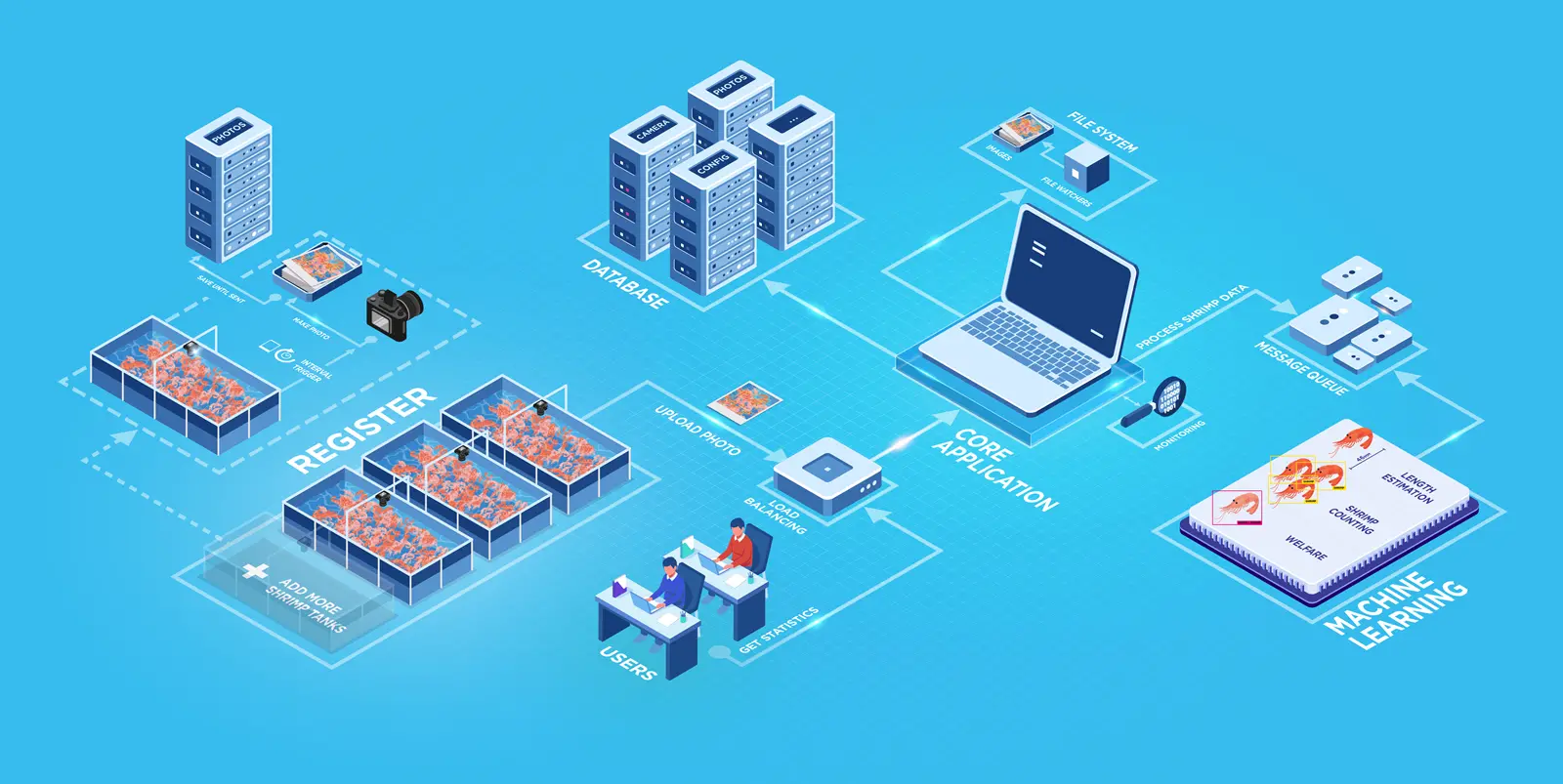
The devices automatically photographed the shrimp before transferring data to a local server. Computer vision-based algorithms then counted the number and length of the shrimp in each image. They also detected whether the shrimp were overlapping with one another and determined signs of stress by detecting slight colour changes on the shrimp’s tails. Results were sent to a software package to analyse the data and optimise growth and feeding models.
The work was carried out in real-time under authentic farming conditions, including high stocking densities that were deliberately set to initiate a stress response.
Optimising feed protocols
Ende and his team are now working on the next stage of the project and aiming to incorporate hardware cameras rather than smartphones. Hopes are high that in future, shrimp farms will be able to integrate the team’s software into their general management software and purchase hardware cameras for installation above rearing tanks.
The system is likely to play a key role in helping farms make effective management decisions, said Ende.
“Most aquaculture management or software systems collect data without really integrating them or making suggestions to farmers to adjust areas such as feed regimes, and this is something that we want to incorporate,” he said.
“We can deliver information on stocking density and provide very precise estimates of biomass, and because it’s highly likely that farmers overfeed or underfeed, we would like to offer recommendations so that farmers adjust their feed in line with the actual number of shrimp on their farms. This will help them optimise profit, avoid overfeeding, which reduces water quality and requires water treatment, and avoid underfeeding, allowing shrimp to grow to their full potential. We also want farmers to get an alert from our software if their shrimp show signs of stress.”
“The 24/7 biomass and stress monitoring is an important milestone for us in improving the farming efficiency of our technology, as it allows us to update our predictive models with real data and therefore continuously benchmark our process,” said Dr. Bert Wecker, CTO of Oceanloop.
Performance transparency
With strong commercial interest from the Asian market, Ende and his team believe that their system will lead to opportunities, especially because systems like theirs are not yet on the market. Ende emphasises that when integrating AI on shrimp farms, clear water and good water treatments are key to allowing accurate visual observations. Farms will also have to consider budget and the overall costs of installing AI.
With this in mind, Oceanloop and AWI are trialling a range of relatively affordable cameras that can meet the system’s goals. Farms will also need to determine for how long images and other data can be stored on their servers, while the system will need to ensure accurate observations and measurements at deeper depths where shrimp can disappear from view, or when shrimp are overlapping. This could be overcome by using cameras with side views.
With increasing transitions from ponds to RAS systems in shrimp farming, AI technology such as this will enhance farmers’ knowledge of shrimp performance and help them farm more sustainably. It will also help overcome welfare issues, not just on shrimp farms but also on fish farms, and go the extra mile by helping consumers understand that aquaculture can be sustainable.
“Our system offers shrimp farms a better understanding of how their shrimp are performing as well as how to farm ethically, and through this, we hope to improve people’s general perception of aquaculture,” said Ende. “AI can make aquaculture more transparent. Change won’t happen overnight but if we can prove that farmed species aren’t necessarily always stressed, or that mortality in aquaculture is no higher than in any other animal production system, that’s a huge step.”
Going forward, Ende and his team will be tailoring their system so that it works from the juvenile to harvest stages, implementing standardised hardware cameras, and integrating it into a commercially available software that will then be patented.
Related Articles
 PROCESSING & REFRIGERATION
 PROCESSING & REFRIGERATION
 PROCESSING & REFRIGERATION