

Inside Finland’s new PaRAS concept
In October 2022, the Natural Resources Institute Finland (Luke) announced it had developed a modular and versatile Partial air-driven Recirculation Aquaculture System (PaRAS) to improve energy efficiency and production capacity for fish farming. A spin-off on an earlier model that used a shipping container-based fish farming concept, hopes are high that this latest innovation could help to address challenges associated with RAS.
“RAS technology has many challenges, but in short, the main problem is that their capital expenditure and operation costs are too high,” Tapio Kiuru, principal specialist at Luke, told WF. “RAS technology has become much better over the last decade or two, but cost and efficiency haven’t improved much, with challenges in production capacity, water quality and even product quality. The production cost in these systems hasn’t really decreased even though the scale of RAS has increased. We are yet to see the benefits of economies of scale.”
There is also the issue of high energy consumption on RAS farms, he said. “Over the last few years, energy prices have been so high that this has become a major issue in terms of production costs. It’s one more headache for developers – how to reduce energy consumption in order to make production profitable.”
Greater flexibility
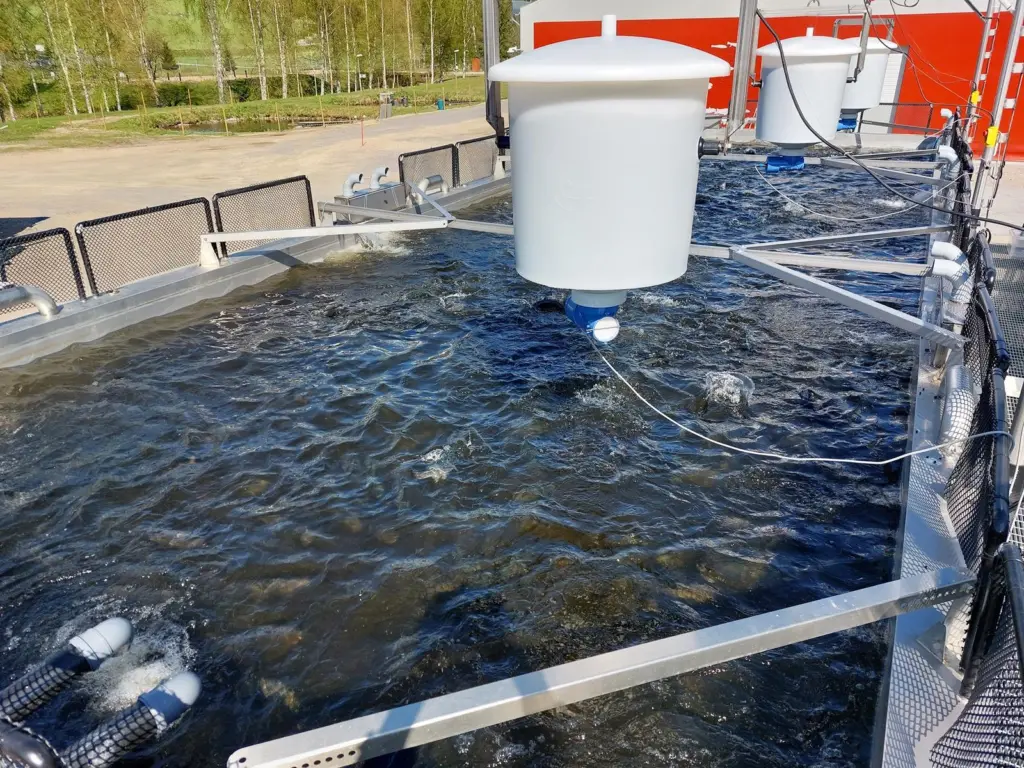
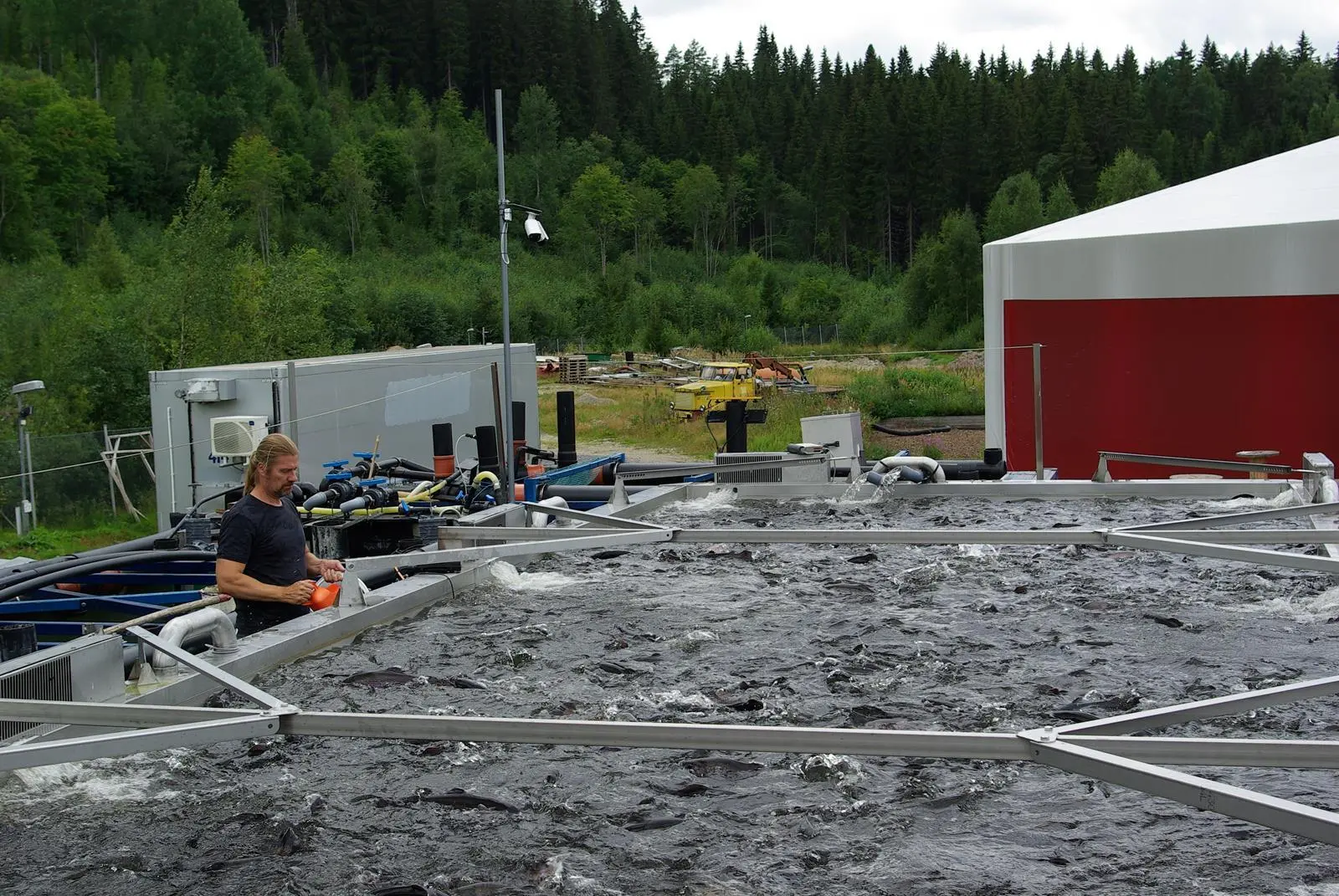
Luke’s PaRAS concept operates a mixed-cell tank principle, in which the size of a single water treatment cell is around 32 cubic metres. In a rectangular tank, several cells are rotating and working, and any number of these cells can be joined together according to the needs of a farm. However, unlike conventional mixed cell tanks, the PaRAS system uses low pressure air to move water, add oxygen and remove carbon dioxide. Carbon dioxide removal also adjusts the pH of the water.
This type of production strategy is known as a low pH high ammonia fish production strategy, said Kiuru. Low levels of carbon dioxide can be accumulated into the water but not at harmful levels, and this concentration is enough to lower pH in the water to below seven, in which case, ammonia extracted by the fish will remain in ionised form rather than an un-ionised toxic form.
Aeration and flow systems and solids removal systems are also tank-specific in the PaRAS concept, while it also uses continuous peroxide dosing to improve water quality and prevent off-flavour. When hydrogen peroxide breaks down in the water, the end products are pure water and oxygen – improving the overall oxygen balance in the system.
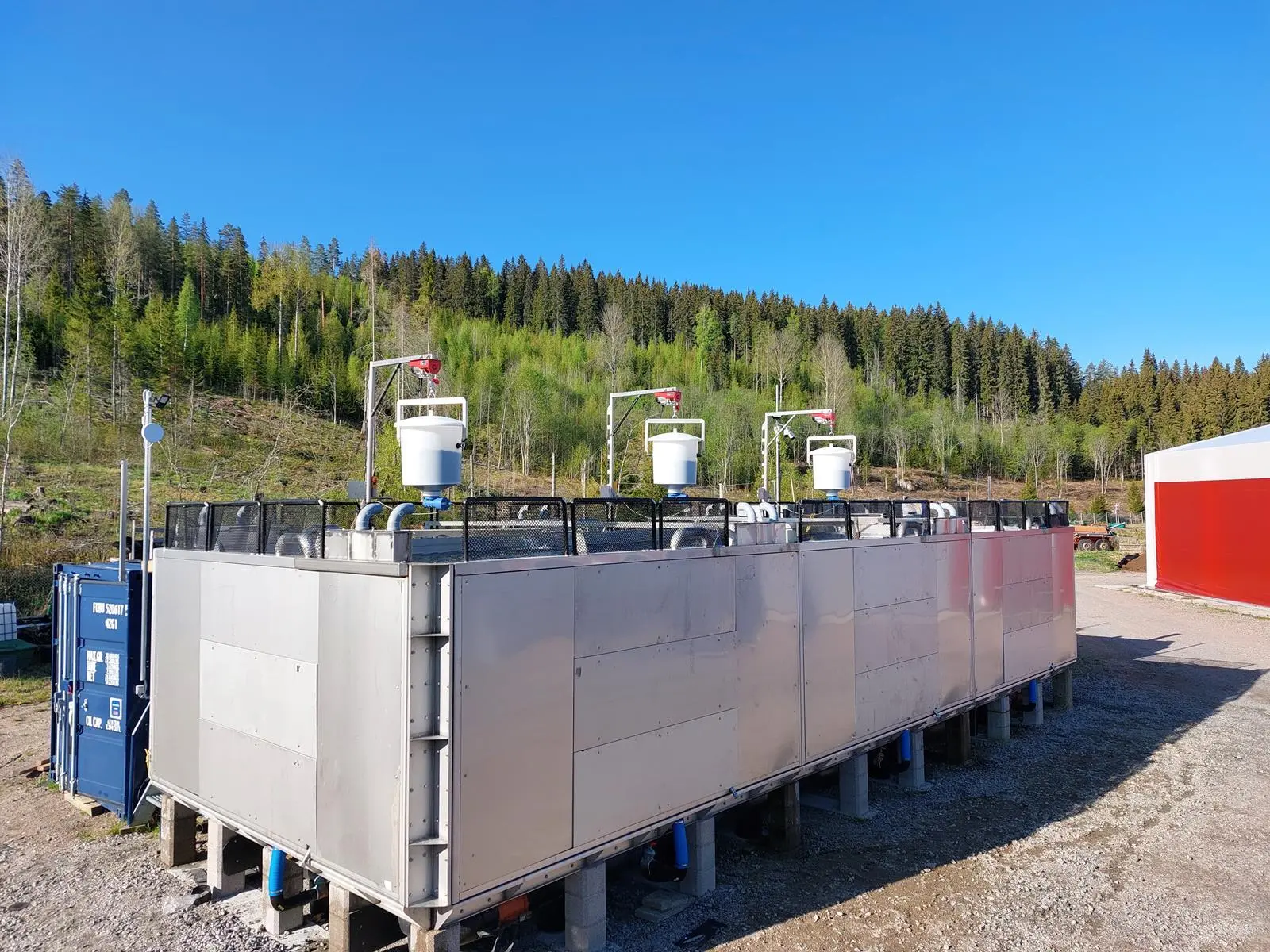
Furthermore, because aeration, flow systems and solids removal systems are tank-specific, the PaRAS tanks have no water connection. This increases biosecurity and enables the use of a so-called all-in all-out production strategy. The tanks can also cover more than 80% of a farm area, as the water treatment technology is integrated into the tanks and no separate fasting tanks are required. The tank shape also makes the use of space more effective. In other words, farms may double their production capacity compared to farms using full recirculation technology.
“This tank-specific concept makes our system stand out from conventional RAS,” said Kiuru. “We also usually don’t have biological water treatment. However, a full RAS concept based on PaRAS tanks is possible. The only requirement is that a biofilter must be added. A RAS farm that is based on PaRAS tanks is actually more flexible than a conventional RAS farm in which all water treatment is centralised.
“PaRAS tank units can be isolated from centralised biofiltration at any time without any impact on feeding or production. We use RAS feed because our solids separation system is based on gravity, and we need stable feed to maintain and improve water quality. The PaRAS is also truly modular. It can be built from elements that can be easily shipped across the world in standard shipping containers, while putting everything together on site is much faster than traditional RAS farm construction where a lot of concrete is used, and many construction phases take place,” he said.
PaRAS’ purging concept can also streamline and improve profitability, as fish do not need to be transferred to separate purging tanks and can be fed during the purging phase. This means that they do not lose weight before sale and fewer work stages are required.
Flavour control
Off-flavour is another main issue for RAS, said Kiuru. “If you have high production costs and your product quality isn’t good, it’s a very bad combination. There are ways to prevent off-flavour, but many people do not realise how expensive a process it is. It increases investment costs, labour costs, makes the production cycle long, and fish lose weight during depuration, so you have less end-products to sell.
“However, there are tools available that can improve quality and remove off-flavour, and this is one area where the PaRAS concept really stands out. Farmers can improve the purging process as their fish can be fed all the way to the end, and thanks to the solid separation system and aeration in PaRAS, there is no need for fasting during the purging period. We have data that shows that off-flavour can be controlled and this is something that current RAS farms could use to make their production more profitable.”
To date, the concept has been tested on rainbow trout, a species that represents around 90% of all the edible fish that is farmed in Finland. Tests have also started with European white fish, the second most important species in Finland, with promising results, and salmon tests are due to begin in 2024.
Although Kiuru and his team are confident that rainbow trout is suitable for the PaRAS concept, they believe that it can also be applied to all aquaculture species, including tilapia which is being produced in California using a more conventional partial reuse system.
Meanwhile, Kiuru has also received enquiries from shrimp farmers and plans to test and develop systems for species other than coldwater fish and salmon.
Farmer interest
So far, Kiuru and his team have carried out two small-scale laboratory experiments and eight full-scale or pilot experiments, with 24 tonnes of fish produced so far. Results show no technical issues, high fish growth, excellent feed conversion ratio and very low mortality. Fish also have a better appetite and feed intake compared to conventional RAS.
The next step is to make the PaRAS concept commercially available and establish a company that will start offering the technology for commercial purposes.
“Here in Finland, we did a market survey with fish farms that cover more than 50% of Finland’s total aquaculture production,” said Kiuru. “Every farmer we spoke to described the PaRAS concept as very promising and they were keen to learn how they could use it in their own farms. Interest in Finland is very high, and we hope that we will soon see the first commercial farms here based on PaRAS and that these could act as examples for other countries.”
With RAS farms the promise of the future for so long now, Kiuru said that many farmers would like to try alternative technologies, and that a much smaller farm with a lower cost than a conventional RAS farm could be built from the PaRAS concept. He also pointed out that in future, customers may prefer seafood that is more local and from smaller production, rather than seafood that has been produced in huge farms further away.
Although the PaRAS concept has not yet reached the commercial stage, it seems that the project will continue, and cooperation will expand.
Related Articles
 INTERVIEWS
 INTERVIEWS
 PROCESSING & REFRIGERATION