


Japan seeks to boost seafood consumption
The Japanese government and fishing industry are stepping up efforts to halt the long term decline in seafood consumption during the past two decades and reverse the recent trend for meat consumption to outpace fisheries products in the national diet, reports David Hayes.
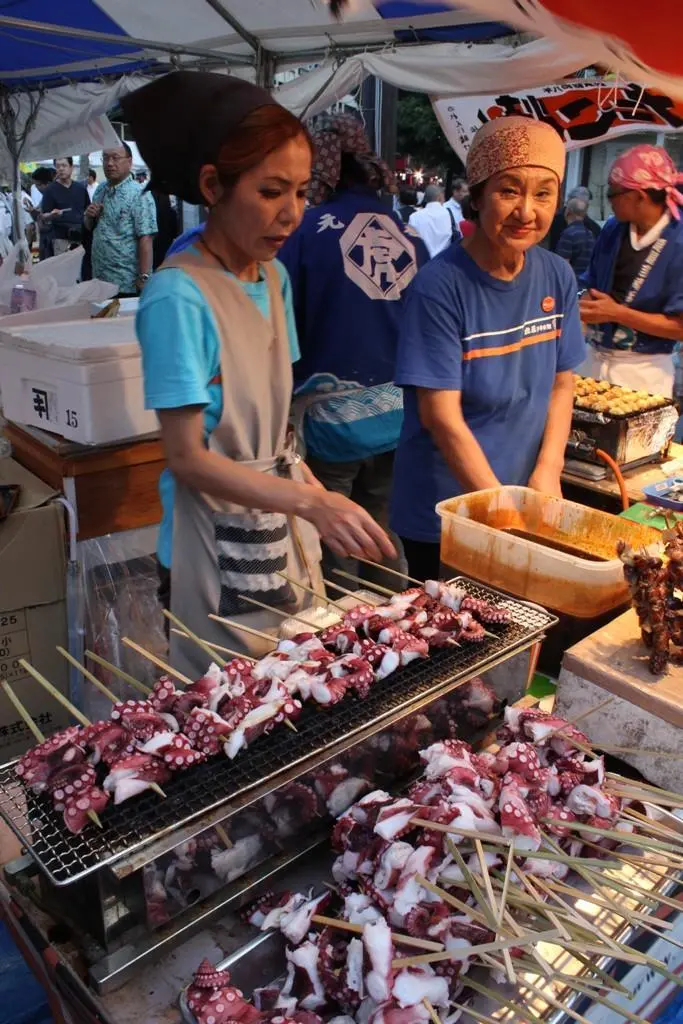
Since 2008 when meat consumption overtook fishery products in Japan the gap has been widening, raising concern at the national and local level about the impact a continuing decline in fishery consumption will have on coastal communities around the country where fisheries form a key part of the local economy.
Reversing the decline in fisheries consumption among the younger generation and increased efforts to expand Japan’s seafood exports to European Union countries are two of the three priority tasks that the Japan Fisheries Association has set for 2013, along with rebuilding the fishing industry in the East Japan earthquake and tsunami disaster area.
Addressing the nation’s fisheries industry recently in his 2013 New Year message, Japan Fisheries Association (JFA) President, Toshiro Shirasu, noted that fish consumption continues to fall among younger people and children, most of whom have a wider range of food choices, including western food, than previous generations.
“I consider the promotion and expansion of seafood consumption in Japan to be the cornerstone of development for the fisheries industry,” Mr Shirasu said. “It is regrettable to see that fish consumption has been on the decline in Japan, despite the fact that many people in other parts of the world are willing to eat more fish in pursuit of a healthier life.”
Decline
In 1995, according to the Ministry of Health, Labour and Welfare, per capita consumption of fish products stood at 96.9 grams per day, 18% higher than 82.3 grams per capita intake of meat products.
Per capita fish consumption has declined by about one quarter since then. Meat consumption exceeded fish product intake for the first time in 2006, though by less than 1 gram daily.
The gap between meat and fish consumption widened in 2009, however, with per capita meat consumption now estimated at least 83 grams per day while fish product consumption has slipped to about 74 grams daily.
Increased meat consumption is not the only reason for the decline in fishery intake among the younger generation. Dairy products also have become an important part of the diet of young Japanese people during the past two decades. Cheese consumption is growing due to the popularity of pizzas and pasta, while milk and dairy desert consumption also is larger than previously.
Noting that a recent survey of 1,000 mothers in Japan showed that most of them believe fish is healthier than meat and want their children to eat more fish, Mr Shirasu remarked: “The survey clarified that fish consumption has been decreasing in Japan not because people dislike it. We in the fisheries industry should try to fill in the gap between such consumer perception and people’s actual consumption behaviour.”
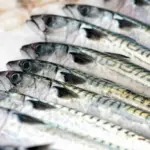
Lifestyle changes are among the factors considered responsible for the reduction in fish products consumed in Japanese homes. Fish dishes that require a lot of preparation before cooking, such as horse mackerel and mackerel, have declined in popularity while consumption of easy-to-cook salmon and yellowtail tuna fillets has grown.
Fast Fish
In an effort to increase the popularity of fish products among young people and families, the government Fisheries Agency recently launched a ‘Fast Fish’ campaign which JFA is supporting through activities organised by its Fish Consumption Promotion Center coordinated with Japan’s fishing industry.
“Fast Fish seafood is a new idea. The Fisheries Agency is working with retailers in Japan,” explained Masashi Nishimura, Japan Fisheries Association Operations Division Publicity Manager. “It’s a bit controversial over if it’s right to give up the culture of preparing an entire fish for this campaign. Older people say we should not give up the whole fish cooking culture.
“Fish processors are making efforts to make fish products more convenient. They already supply pre-pared boneless dishes for microwaving. It’s still a trial programme.”
One issue the Fast Fish campaign is attempting to tackle is the loss of fish cooking skills in the home over recent decades. JFA’s Fish Consumption Promotion Center is aiming to overcome this by targeting young housewives with its information programmes.
“The center advertises the benefits of seafood but younger housewives are unable to prepare fish,” Mr Nishimura noted. “We try to counter that trend by holding cooking schools. One other different approach is for retailers to supply seafood not requiring preparation.”
Meanwhile, JFA is looking to encourage further modernisation of Japan’s fishing sector and increase production of certified sustainable seafood to ensure the fishing industry’s long term survival.
According to JFA President Shirasu, strengthening Japan’s domestic fishery supply structure is urgently required, replacing the industry’s long traditional supply chain with a simpler, streamlined structure. In addition, a new workforce needs to be recruited and trained, the association believes, as many fishermen and others working in the industry today are over 50 and eventually will retire.
Eco-label
Efforts to increase the share of sustainable fishery products being supplied are being assisted by the Marine Eco-label Japan (MEL) scheme, which is encouraging the development of sustainable fisheries in Japan in a similar manner to the Marine Stewardship Council’s international programme.
Four more fisheries were certified in 2012 bringing the total number of MEL Japan certified fisheries to 17. Newly certified fisheries were the Large-scale Pacific Saury Fishery in Iwate; the Small-type Set-net Fishery and the Salmon Set-net Fishery in Hokkaido; and the Japanese Whitebait Seine Fishery in Aichi.
“MEL Japan has been successful. We want as many fisheries as possible to join,” Mr Nishimura said. “Some retailers are interested in this scheme including Mitsukoshi Ginza Department Store which had a Marine Eco-label fishery products sales campaign featuring high end goods such as sashimi. It was a successful campaign and we hope they continue. Daiei Supermarket also has started.
“Retailers start for many reasons including a social responsibility to supply sustainable fishery products. Society is changing and retailers feel they have to meet social expectations, so future generations can continue to eat fish.”
Disaster
Meanwhile, two years after the giant East Japan earthquake and tsunami disaster struck on 11 March 2011, the devastated Tohoku region’s fisheries industry already has seen considerable recovery, though much still remains to be done.
Prior to the Tohoku earthquake the region’s fishing industry accounted for over 10% of Japan’s total fisheries production and almost one third of its fisheries processing capacity. This share of the nation’s fisheries output has fallen since due to the destruction of fishing ports, fishing boats, processing plants and other fisheries infrastructure.
In addition to supplying the domestic market, Tohoku traditionally is an important seafood exporting region due to the large number of fishery processing plants located in fishing ports along the coastline, known as the Sanriku coast in Japan.
Due to tsunami damage at Fukushima nuclear power station, the impact of the Tohoku earthquake disaster on Japan’s fishing industry has been greater than simply a reduction in fisheries production along the Sanriku coast.
The meltdown at Fukushima Dai-Ichi nuclear plant caused by tsunami damage and the subsequent accidental release of radioactive materials from the plant into the atmosphere and nearby sea has affected both Tohoku’s fisheries and agricultural industries.
Fears of radioactive contamination of fishery products from Tohoku immediately affected consumption of fishery products in Japan and exports to overseas markets due to consumer concerns about the possibility of purchasing contaminated products.
Fisheries consumption has since recovered in Japan due to local and central government efforts to inform the public about food testing results and restore consumer confidence in fishery and agricultural products from Tohoku.
At a government press briefing last year Masanori Miyahara, Deputy Director General of the government Fisheries Agency, explained to journalists the results of monitoring surveys and the way to handle fish when the allowable radioactive level is exceeded.
Mr Miyahara stressed that no fishing operations are taking place off the Fukushima coast where the crippled Fukushima Dai-Ichi nuclear plant is located; also, that fish found in monitoring surveys with radioactivity above the standard value are not permitted to be distributed in the Japanese market.
Commitment
Japan Fisheries Association President Shirasu recently reiterated the industry’s commitment to rebuild the fisheries sector in the Tohoku disaster area.
“Nearly two years since the great East Japan earthquake and tsunami, considerable recovery has been observed regarding fishing ports, fishing vessels and fish landings; however, much remains to be done,” Mr Shirasu said.
“Japan’s fisheries industry is committed to do its utmost for the reconstruction of fisheries in the disaster area as it believes the region is essential from the viewpoint of a stable supply of seafood to the Japanese people.”
Earthquake damage occurred in an area stretching about 500km north to south from Iwate Prefecture (capital Sendai) to Tokyo along the northern Japan Pacific coastline and up 100km inland in some areas just north of Tokyo.
According to the National Police Agency 15,782 people died and 4,086 people are missing following the Tohoku earthquake and tsunami that destroyed 129,489 houses and homes, damaged another 255,652 homes and caused flooding up to 10km inland in places.
The disaster also affected a large number of industrial, commercial and other enterprises in the Tohoku region and adjacent areas. The government’s Cabinet Office estimates that the total value of damage caused by the disaster reached Yen 16.9 trillion of which fisheries, agriculture and forestry accounted for Yen 1.9 trillion.
Some 319 fishing ports in seven prefectures stretching from Hokkaido in the north to Chiba near Tokyo at the southern end of the Sanriku coast suffered damage from the tsunami which affected more than 10% of Japan’s 2,914 fishing ports.
Damage to Tohoku’s fisheries industry alone reached over Yen 1.2 trillion, according to government estimates. Worst hit were fishing towns in Aomori, Iwate, Miyagi and Fukushima prefectures where nearly all fishing ports were destroyed along with storage facilities, processing plants, fishing boats and aquaculture facilities.
In addition, many fishermen, family members and others working in the fishing industry lost their lives or were injured during the disaster.
According to the government Fisheries Agency some 25,000 fishing boats and vessels were destroyed by the tsunami. In Miyagi, more than 12,000 of the prefecture’s 14,000 fishing vessels were lost, according to local fishery officials, as the tsunami struck when most boats were in port.
Iwate’s fishing industry also was badly affected with the tsunami destroying 108 of the prefecture’s 111 fishing ports, according to Iwate Prefectural government, and some 9,672 of the prefecture’s fishing boats were destroyed by the tsunami.
Japan’s total annual fisheries output is around 5.6 million tons. Tohoku traditionally is one of Japan’s major seafood producing regions with a number of fishing ports being home to deepwater and tuna fishing fleets.
Prior to the Tohoku disaster, Miyagi, Iwate and Fukushima, three of the seven Tohoku prefectures that were affected, recorded a combined marine fishery catch of about 440,000 tons a year equivalent to 11% of the national marine fishery catch, according to Japan Fisheries Association.
In addition the three prefectures recorded combined aquaculture output of about 176,000 tons a year equivalent to 16% of the national total.
Extra funding
As part of a wider programme to rebuild devastated communities in Tohoku and support reconstruction of the region’s economic base, the Japanese government initially approved two emergency supplementary budgets to rebuild Tohoku’s fisheries industry. Both comprise a combination of loans and grants.
The first emergency budget was approved in April 2011, soon after the Tohoku earthquake occurred. The budget involves four separate packages including Yen 25 billion to rebuild and repair fishing ports, and to cover the cost of investigating damage to the fisheries sector including processing plants, fishing vessels and related equipment.
Another package worth Yen 27 billion was approved to purchase new fishing vessels and fishing gear, and Yen 26 billion to assist rebuilding the marine aquaculture sector.
In addition, the government approved a provision of Yen 86 billion to be allocated to re-insurance companies to help pay out fishing industry insurance claims.
Additional financial help for the fishing industry was included in the government’s second emergency budget to rebuild Tohoku which was approved by Parliament in late 2011. Loans and grants approved were intended to fund reconstruction costs not covered in the first emergency budget.
For Tohoku’s fishing industry the second emergency budget included an important package worth Yen 19 billion to cover the cost of replacing equipment and other facilities used by the seafood processing sector.
“Progress has been slow in many affected areas. Processing plants still have problems; it takes time,” Mr Nishimura remarked. “Many fishing communities have been destroyed. The government helps towns and prefectures and gives them subsidies. If people want to live in a fishing community then it is the government’s job to help.”
Related Articles
 AQUACULTURE
 SEAFOOD
 SEAFOOD