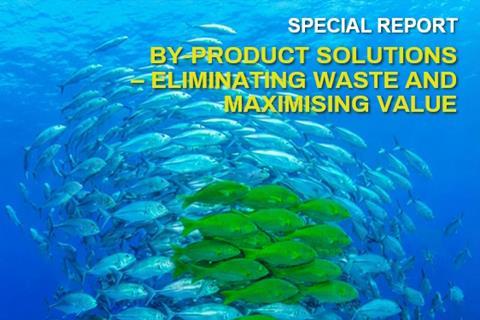



Around 24 million tonnes of edible products generated by fisheries and aquaculture are being lost across supply chains every year, according to estimates made by the World Economic Forum (WEF), with the organisation further determining that most of this waste is occurring at the on-land processing stage of the value chain, before these products reach the retail and foodservice sectors. In its report “Investigating Global Aquatic Food Loss and Waste”, WEF also finds that edible-quality waste represents 14.8% of global seafood production and explains that processing losses are largely due to market demands, with higher income nations tending to prefer fillets and other easy-to-cook and consume preparations made from popular species such as salmon, tuna, cod, haddock, and shrimp. By comparison, lower-income countries tend to eat more fresh whole fish.
Recognising this failing, more and more seafood value chains are adjusting their strategies and becoming more innovative in the utilisation of by-products. Underlining this shift at the most recent Responsible Seafood Summit, held in St Andrews, Scotland, towards the end of last year, Iceland Ocean Cluster CEO Alexandra Leeper told delegates it’s the processing stage of the value chain that holds the most as yet untapped potential in terms of obtaining additional nutritional and fiscal value. She also said that from environmental and economic standpoints, the seafood industry can no longer afford to be wasting this value.
Leeper explained that the cluster’s 100% Fish programme, which is built around the principle of not wasting any parts of a fish or shellfish that’s caught or farmed for food, and instead seeks to find the most ideal, value-creating ways to use all secondary-yield materials, including bones, shells, heads, skins and guts.
Not only has this changed the narrative around seafood in Iceland, it has also changed the value and conversations around the value of these products, she said.
The cluster has also ascertained that its success stories underline the fact there’s no “one size fits all” when it comes to full fish utilisation. This, it explains, is largely due to the great difference between species and geographies.
Groundbreaking wound care
At the 5th Fish Waste for Profit conference, held in Reykjavik in September last year, Fertram Sigurjonsson, Founder and CEO of Kerecis, explained how the company has developed skin-substitution technology using the skins of wild North Atlantic cod.
While previously, these skins would have been thrown away as waste, Iceland-based Kerecis, has created revolutionary skin grafts with them – using them to transform human wound care.
The fatty-acid-rich products from the company’s patented technologies enable the body to regenerate tissues, rather than just repair them.
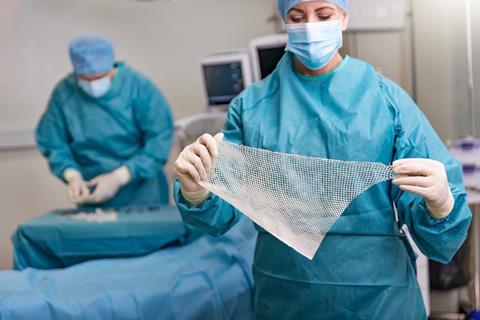
Its flagship product, Kerecis Omega3 Wound, is intact fish skin which, when grafted onto damaged human tissue, recruits the body’s own cells and is ultimately converted into living tissue. This product, which has been approved by various regulators, including the US Food and Drug Administration (FDA), became the first skin-replacement material from fish for healing diabetic and burn wounds. It has already helped tens of thousands of patients, mostly in North America,
In the process, Kerecis became Iceland’s first unicorn company. It was bought by Danish company Coloplast in 2023 for a sum reported to be up to US$ 1.3 billion.
Problem-solving focus
Outlining the company’s meteoric rise, Sigurjonsson said he’s often asked how he came up with the idea of using fish skin as a wound treatment product. However, it isn’t really about the idea, it’s about the problem, he added.
“It’s about knowing the biology, the ethology, the medical problems; it’s about knowing how the healthcare industry works, how doctors make money, how hospitals work, how distribution works, how governments work, and then be really involved in the ecosystem. I think when you have a deep understanding of the ecosystem, then the ideas emerge,” he said.
Sigurjonsson, who hails from northeast Iceland, understood how the fishing industry works from summer jobs he had as a young man. Back then, he saw the skinning machines at work and the products that were thrown away. Fast-forward to his early career in medicine technology, in which he experimented on various forms of wound treatment, he hit upon the idea to try fish skins as a wound treatment.
Today, Kerecis is the fastest-growing company in the wound treatment sector.
“We are contributing significant growth to our new owner, a famous multinational, and we are showing them, the [healthcare] community and the industry, that ventures can be very successful using products from the food industry,” Sigurjonsson said. “These products are often called waste, but I prefer to call them by-products or something else. The average value of the skin fish we sell is more than $2,000 per fish, so it’s not waste – it’s much more valuable than the fish itself.”
Sigurjonsson also highlighted that Kerecis’s achievements have sparked considerable interest in private investment and entrepreneurial circles, while the Icelandic government has created a positive environment that supports emerging technologies and startup companies.
“There’s probably no other place in the world that’s better to be than Iceland if you have an invention that relates to the use of natural resources and high tech such as medicine. This is because a lot of people have seen the success of Kerecis and there are a lot of people out there that want to replicate it,” he said.
Salmon blood solutions
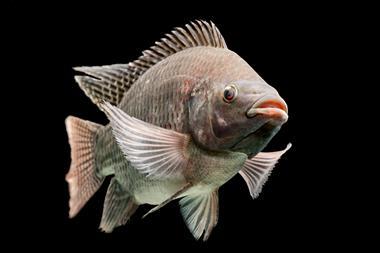
While a lot of the conversations around full fish utilisation focus on capture fisheries, aquaculture offers at least as much opportunity, with the feeling that it’s easier to actually capture the secondary yields from farmed production. Again, the wound-healing properties of tilapia skin are benefiting some key locations in the world where the species is being farmed, including a number of African countries, with communities that can greatly benefit from having such a medical resource to hand.
Another by-product that’s coming to the fore is fish blood, which has been found to be very useful in the treatment of anaemia in humans. As such, a number of enterprises are collecting blood from slaughter processes, most notably in the farmed salmon sector.
Nofima Senior Scientist Marine Biotechnology Runar Solstad told the Fish Waste for Profit conference that Norway’s salmon industry generates 540,000 tonnes of by-products, including around 30,000 tonnes of blood.
“If you take out all of the water in [Iceland’s famous] Blue Lagoon and you replace it with salmon blood, and you do that five times – that’s the amount of blood we have available each year from salmon aquaculture in Norway. That’s quite a lot, and it represents a tremendous opportunity,” Solstad said.
One of the early movers in Norway’s salmon blood development space is Bergen-headquartered Lerøy Seafood Group ASA’s (LSG), which has developed a new health supplement.
Called “SalmoFer”, the solution makes use of the protein haemoglobin in the salmon blood, which is naturally rich in heme iron – itself a natural source of iron that’s easily absorbed by the human body and doesn’t some with common unwanted side effects that people can experience when taking iron supplements, such as stomach upset, constipation and stomach pain.
SalmoFer follows years of collaboration with the R&D community. Announcing the product last year, Lerøy CEO, Henning Beltestad said one of LSG’s strategic priorities is to make better use of its own raw materials by increasing the value of its by-products.
Closing the loop
Lerøy also recently invested in Maine, US-based Salmonics, which is using blood harvested from farmed salmon to produce biomedical reagents.
Speaking at Fish Waste for Profit 2024, Salmonics President and CEO Cem Giray, who began the company in 2020, explained that as well as developing high-value products, the aim is to return value back to aquaculture and fisheries in the form of increased revenue, as well as to reduce costs in terms of handling blood waste and disinfecting it.
The technology that forms the basis for Salmonics’ products was acquired from Sea Run Holdings In. (SRH), a pioneering biotech company founded in 1981. Today, Salmonics’ products are used for research in various fields, including stem cells, cancer and tumour growth, while regenerative medicines have also been created for use in cell culture, including hydrogels for three-dimensional culture to study various aspects of pharmaceutical development, including for vaccine research and applications in diagnostics and genealogical assays.
“We’ve created a closed loop whereby waste (or fish blood before it becomes waste) is utilised to make valuable products for health solutions, and at the same time, provide value to support sustainable and environmentally responsible practices,” Giray said. “Currently, there’s a about a $40 billion global industry that’s dependent on utilisation of products that are made from porcine or bovine resources. But these products come with a variety of disadvantages which the utilisation of fish blood would actually resolve. Bovine and porcine blood products come with concerns with regards to animal welfare, ethics, religious practices as well as the potential to introduce pathogens, mammalian pathogens…but applications utilising fish blood-based products actually makes these problems go away.
“In the trials that we’ve already completed, we have seen that fish blood-based products can actually provide better solutions for surgeries, for stopping bleeding, for battlefield wounds, as well as pain therapy for bone breaks, spinal injuries and others. Fish blood is also a more sustainable resource – it’s 12 times less carbon intensive to raise a fish than to raise cattle. And at the same time, we’re looking at the utilisation of a product that would otherwise be wasted and turning it into a valuable product,” he said.