


Sustainable seafood – a chef perspective
With no clear, go-to definition, “sustainability” is a word that often rankles – particularly irking people connected to the seafood space. Yet it continues to be one of the widest-used terms the industry has; it’s applied in wide variety of different contexts and circumstances to imply any number of things. It’s been most commonly given as an indication that products are sourced from well-managed, healthy stocks or are species that were caught or farmed using methods that have a minimal impact on the marine environment. More recently, alongside the growth of certification schemes and third-party accreditation, the sustainability agenda has extended further still to examine and evidence the social and ethical impacts of seafood production and fish welfare.
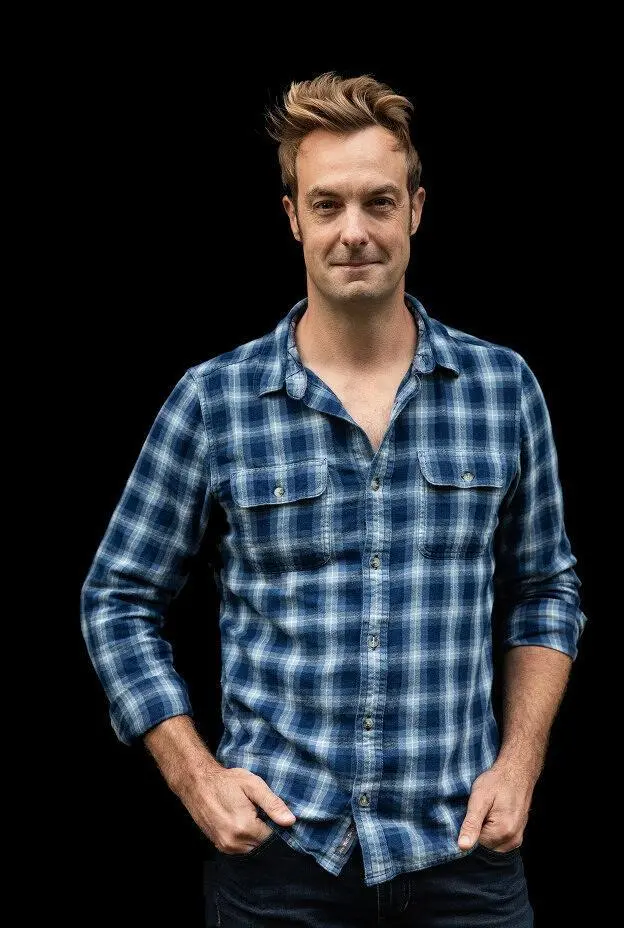
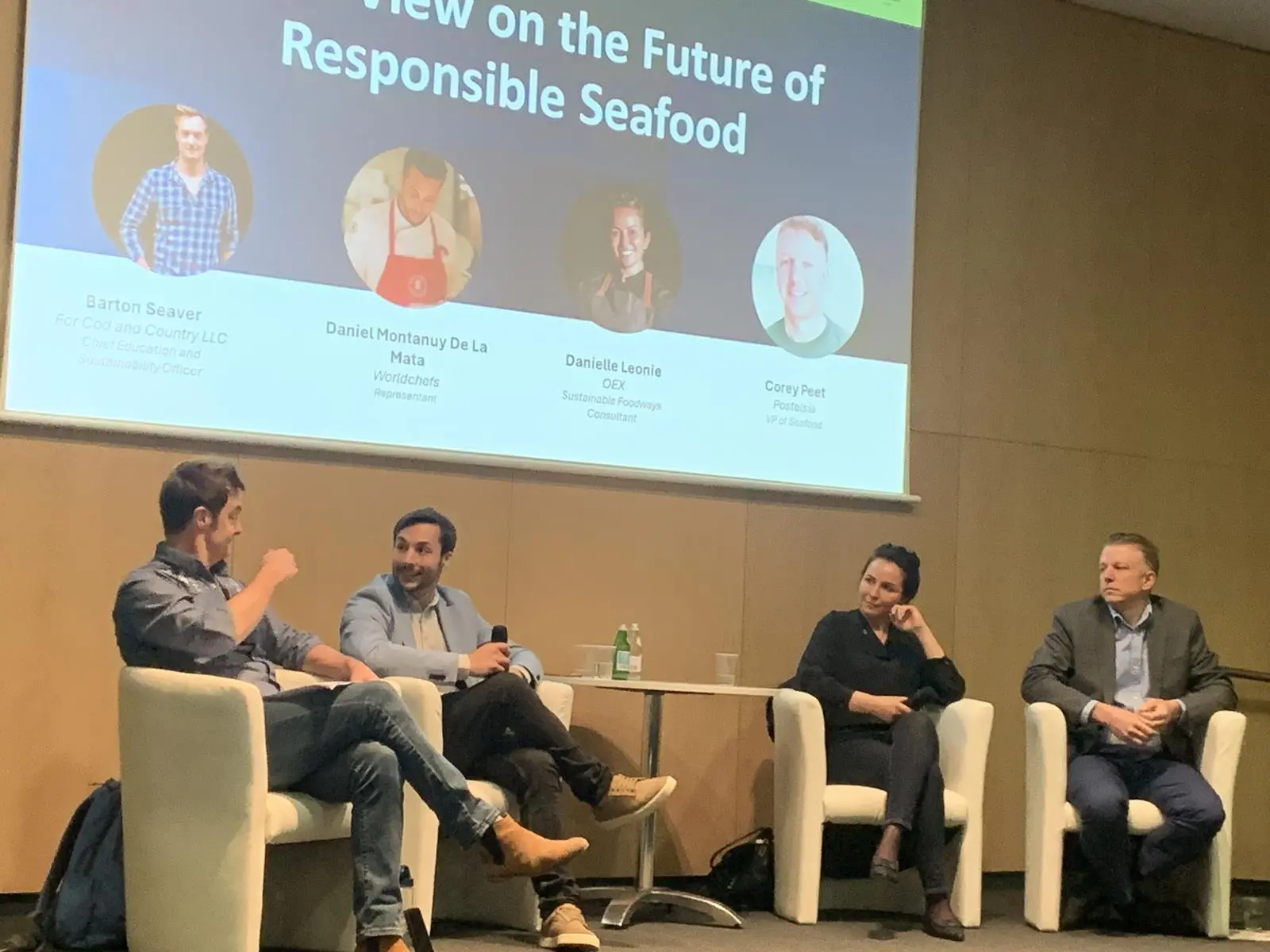
But that’s far from the end of sustainability’s evolution. In a conference session at the recent Seafood Expo Global (SEG) 2024 in Barcelona, acclaimed US chef and author Barton Seaver offered another standpoint: that in the context of serving up blue foods, sustainability should be about intention, and what a chef, kitchen or restaurant is looking to accomplish.
Seaver explained that when he stepped out of the kitchen to take up a fellowship with National Geographic, he quickly realised that as well as offering the opportunity to reduce the impact on ecosystems, there’s also a “responsibility in sustainability” whereby the impact that ecosystems have on us are also maximised for positive outcomes in terms of economics, environment and public health.
“I got very interested in public health as a measure of thriving humans, because to me, and the end result of sustainability is the endurance of thriving humans,” he said.
Singling out seafood
From a chef’s perspective, there is an “arcing trajectory” with regards to where sustainability has come from and where it’s going to, Seaver said. “When I first started off with sustainability, and sustainable seafood, it was really about cover your ass. It was about do no harm. It was about no “red lists”. It was about not doing bad. But to me, that’s not how we should define sustainability. I mean, health is not defined as the absence of disease, right? That’s not what we would think of as thriving…Sustainability has kind of been sold as the same thing. It’s like, we’re not screwing everything up today.”
Sustainability was also something that was demanded of chefs. Now though, there’s an opportunity for them to “personalise the narrative” and demonstrate their intent and what they’re trying to accomplish, he said.
“One thing that we failed to do as chefs for a very long time is look at seafood in the context of the centre of the plate. And when we do [that, and] look at it in reference to beef, pork, chicken, lamb, veal, turkey and goats – the things that we actually eat – seafood looks really good.
“But unfortunately, we’ve spent a lot of our sustainability airtime demonising seafood – to the point where we’ve had an industry that has cannibalised itself with wild versus farmed and that whole narrative. What’s ended up happening is that seafood has become the only food that’s considered guilty before proven innocent.”
Historically, Seaver said, a lot of exonerating questions were asked of seafood before the decision was taken to make it centre of the plate, but that similar questions weren’t asked of the other aforementioned proteins. He added that chefs rarely looked at seafood in consideration of how to use it, but when they do , it becomes apparent that seafood is an answer to many top-level challenges.
“When we started off, it was a lot of, ‘hey, chef, you gotta help me fix seafood’. That’s what we’re that’s what our job was like – that there was a lot broken with seafood. But now I’m getting to see that seafood is maybe our opportunity to start fixing people, to begin to address climate change, to begin to address women’s empowerment issues, an economic opportunity, to begin to address the public health crisis, etc. So, when we begin to see seafood not just as this problem to solve, but rather as a solution and tool to achieve other good things, we begin to really see it for what it is, which is an incredible opportunity.”
There is still a lot to fix with seafood, but it’s important to see that there’s a lot that’s right about it as a product and an industry, he said.
“Really what it comes down to is that chefs now have an opportunity: It’s no longer just demanded of us to talk about sustainability; it’s now our opportunity, it’s really expected of us to be the drivers of it.
“There’s still no really good definition of sustainable seafood, but to me – as a working term – it means seafood that’s sourced and served with intention.”
Consumer-food relationships
Chef Danielle Leoni told the conference session that understanding where seafood comes from is a crucial part of the intention process.
“I began to understand that, like my local farmers in Phoenix, my fishers also had stories. And they had families, they had trials and tribulations, and real struggles and real concerns. And then I met [fish] farmers, and then the whole world opened up to me, and with an appreciation of what was being grown came an appreciation of people. I found a new appreciation for the food.
“I want to be able to help people understand that it is very much a solution to our health and our planet’s health. But that has to be done first and foremost, by helping them – consumers, guests, diners, eaters – to have a more positive relationship. And that starts with knowing the stories, and having a purpose behind that fancy food that’s on the plate.”
According to Corey Peet, Co-founder of Postelsia, a sustainable seafood project that connects small-scale producers to buyers, the “small is beautiful” involvement of communities in building sustainable solutions has so far been underestimated in the narrative.
“To me, the sustainable seafood space has been characterised by the focus on big and big solutions and big single solutions. It kind of fails to recognise there’s this paradox in sustainable seafood, which is that the market wants simple solutions,” Peet said. “But there is this really beautiful story that’s waiting to be told on so many different elements of the seafood industry.
“Chefs need to know that their impact can be all the way in Indonesia, it’s not just about like, what goes on your home country, it’s about what goes on everywhere. Because there are sustainable ways to transport seafood, there are sustainable ways to do everything, we just have to be open to doing it.”
Changing mindsets
Frozen seafood is another integral part of a sustainable future, Seaver said. He pointed out that in the United States about 50% of all seafood is thrown away.
“Fifty percent! I don’t care if it was sustainably produced, there’s no way to sustainably throw away a fillet of fish,” he said. “You know, we we’ve paid the entire environmental cost in order to have that [fillet] and yet we throw it away.
“Embracing frozen seafood helps out everybody in the supply chain – frozen seafood really is the future of the seafood industry. In my opinion, fresh will always have a place, yes. But frozen, as we know, is radically improved in quality and transparency and traceability and it evens out markets and it makes everything easier as a chef. And the quality is there.”
Seaver is similarly perplexed by the statistic that an estimated 40% of all fresh seafood that enters restaurants in America is frozen on site. “Meaning it’s got a couple of more days of age on it. It’s already got some truck timeline, and it goes into the into a holding freezer (not a freezing freezer), and those are different technologies. And it gets frozen poorly. So there’s a lot of work to break that legacy bias in chef’s and that’s something that we as a community have to work towards. And chefs really do have to be open minded to it.”
Another pro-sustainable endeavour is for chefs to diversify the products they are sourcing “rather than chaing sustainable cod over the world”. Instead, he suggests, asking for haddock, hake, plaice, dabs, flounders, ling etc.
“Those are all flaky, white-flesh fish. And all of those should have a place on our menu. They all have a season, availability and a great price. Its like we chefs have actually created a lot of boundaries, a lot of hard barriers to sustainability actually being achieved on the water in [dependent] economies.
“Telling the ocean only what we’re willing to eat rather than ask of it what it’s able to supply is an inherently unsustainable relationship. So there’s a lot that chefs can do, should do, must do to participate more in sustainable seafood.”