



Forget the shaft oil can for ever?
Sweden’s Hägglunds Drives AB sees a future where shaft drives are eliminated between engine and propeller on small to medium size vessels and replaced with hydraulic systems.
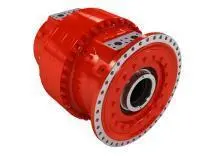
According to a company statement a wide range of high power motors could be available in the future and “these could provide some interesting benefits on propulsion systems on small to medium sized vessels. For example the propeller would no longer have to be mechanically connected to the engine with a long rotating shaft. It would be replaced with hydraulic pumps and just 3 hydraulic lines to the motor.
“Therefore you eliminate all the engineering involved in designing and installing the long prop shaft and the cost of the shaft and bearings needed. You also free up the possibilities of positioning the engine and propellers anywhere in the vessel to suit the application.
“Hydraulically a number of propellers can be powered from the engine so opening up more possibilities. You can also use two or more engines and share the power between the drives. This provides the opportunity to look at the basic vessel design and make improvements with this new versatility and flexibility of major components, for example to improve the weight distribution. It also means that all or some of the power can be diverted from the propulsion to other vessel requirements such as deck equipment when the full power of propulsion is not needed. More than one engine then gives some possibilities for redundancy and therefore extra security if needed.”
Hägglunds say their new CBP motors could help fit this bill. The company says it has been manufacturing hydraulic motors since the 60’s, originally for cranes but since the 80’s on heavy duty continuous industrial drives and now the latest development is a high power drive unit available in several sizes that will give power up to 1MW from a single motor.
“Of course, with hydraulic motors, it is very easy to connect in parallel to share the load and with through shaft design you can also stack the motors on a shaft to multiply the power available. The speed range available from the new CBP140 motor is up to 320 rpm, dependent on the specific displacement and within the CBP140 there are four sizes to choose from and we plan four more and bigger motors in the range CBP280 to CBP 840.
“The designation i.e. CBP140 means 140 Nm/bar torque is produced so with a constant pressure of say 175 bar a torque of around 24kNm is produced.
“If the pumps used are variable displacement this means speed can be controlled independently of the engine which would run efficiently at a fixed speed and, with two propellers, could be used in a steering mode for example one in reverse and one in forward.
Hägglunds say the hydraulic motors can even be used submerged and are maintenance free, providing a long and reliable life. “They are also quiet compared to mechanical drives because there are no high speed elements involved as gearboxes are eliminated. The motors provide high torque without the need of speed reduction units. The mechanical efficiency of these motors is approaching 98 per cent, similar to that of a roller bearing.
They say the motors offer other advantages such a response to the drive impossible for geared drives — e.g. fast stopping in emergencies or for starting and stopping frequently with controlled ramp up and down times. The high torque from the motors is available irrespective of the speed, so high starting torque is a characteristic and it may be possible to improve propeller design to take advantage of this feature to operate at lower speeds and therefore lower noise levels.
“The drive arrangement is very simple and installation easy. With flexible hoses connecting the motor it is also possible for the drive to move during operations so opening the possibility for the propeller to slew or move up and down with the close coupled drive. This technique is already used for example on Dredging cutterhead drives.
Hägglunds adds their motors are also used on all kinds of deck equipment, winches, carousels, mud pumps, drilling equipment, cutterheads and tidal and wind energy projects where they are used as a huge pump.