



Norwegian Institute of Food, Fisheries and Aquaculture Research (Nofima) scientists have uncovered surprising synergies in salmon feed – particularly between zinc and omega-3 fatty acids, and between cholesterol and saturated fats – that have major implications for fish health, growth and fillet quality. With the aquaculture industry under pressure to balance sustainability, fish welfare and product quality, these findings raise important questions about feed formulation and farming strategies.
While it may sound counterintuitive, saturated fats and cholesterol – nutrients often associated with negative health outcomes in humans – play a vital role in salmon. Over recent decades, as fish oil has been increasingly replaced with vegetable oils in salmon feeds, the industry has not fully considered the implications for fillet quality.
Nutrients like saturated fat have a far greater impact on this than previously thought, explained Nofima scientist Nini Sissener, who led part of the study while at the Institute of Marine Research.
Because fishmeal and fish oil possess a unique composition of omega-3, saturated fats and cholesterol, it’s therefore important to assess what these changes mean for the quality of salmon raised on today’s plant-dominated feed, she said.
Nofima’s research found that frozen fillets from fish fed insufficient saturated fat lost more liquid during thawing. Similarly, low dietary cholesterol reduced both fillet firmness and the red coloration prized by consumers.
Juvenile advantages
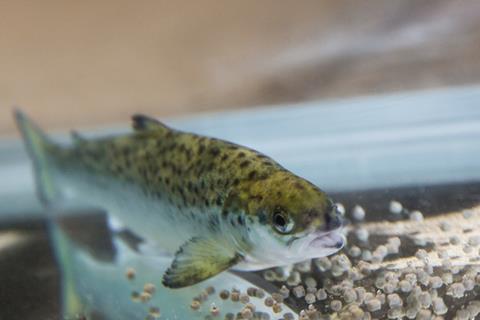
The study also explored the importance of zinc, particularly for juvenile salmon in freshwater stages. High levels of zinc combined with omega-3 improved scale development, skin healing, bone density and overall growth.
Together, zinc and omega-3 act synergistically, explained Nofima Senior Scientist Bente Ruyter. “Zinc enhances skin health, and omega-3 improves the utilisation of zinc. They are truly a powerful duo in salmon feed.”
Research suggests that juvenile salmon in land-based tanks require around 6% omega-3 of total fatty acids for robust growth under optimal conditions. However, fish in sea cages require higher levels to maintain growth and health, particularly under challenging environmental conditions.
Trials with larger salmon in sea cages revealed that low-zinc diets led to mineral losses and reduced harvest weights. Increasing omega-3 levels while lowering total fat improved mineralisation and overall performance. Ruyter noted that salmon fed 11% omega-3 resumed feeding faster after delousing than those fed only 6.5%, a critical factor since feed intake typically drops post-treatment.
These findings show that nutrient interactions are key for skin health, red coloration, energy metabolism, membrane fluidity, and the ability to adapt to new production environments, Ruyter said, insisting that modern Norwegian salmon need feed that supports resilience across diverse conditions, from warmer seas to high sea lice pressure.
Norwegian salmon farmers have actively adopted new knowledge from research projects by increasing the omega-3 content in feeds, especially in regions with high environmental stressors, she told WF.
“Most farms have raised omega-3 levels from around 6.5% to 7% of total fatty acids in the feed, with some reaching up to 11%, depending on location and specific challenges. However, the omega-3 fatty acids EPA and DHA are derived from limited resources, making a widespread increase across all farms unsustainable. Therefore, it is essential to assess where and when elevated omega-3 levels are most needed to optimize fish health and environmental outcomes.”
Ruyter continued: “Importantly, new sources such as Aquaterra oil and microalgae oil, which are rich in EPA and/or DHA, offer promising sustainable alternatives to traditional marine oils. These advances help meet the increased demand for omega-3s while reducing reliance on finite marine resources and supporting more resilient and sustainable aquaculture production.”

Formulation considerations
While there are strong synergies between zinc and omega-3, as well as cholesterol and saturated fats, there are a number of factors that producers must consider when it comes to formulations that balance fish welfare, fillet quality and sustainability goals.
Ruyter highlighted that EU regulations impose strict maximum levels for zinc in fish feed, primarily to reduce the environmental burden of zinc from aquaculture effluents.
For salmonids like Atlantic salmon and trout, the total allowable zinc content is 180mg per kg of feed, while for other fish species, it is generally 150mg per kg. These thresholds, enforced since 2016, are based on European Food Safety Authority (EFSA) evaluations balancing zinc’s essentiality for its environmental impact, especially in terms of aquatic pollution caused by excess zinc released from fish farms.
In practice, Atlantic salmon absorb less than 30% of dietary zinc, depending on factors such as zinc source, feed formulation, life stage and background diet composition, she said. “Increasing dietary zinc is not always a solution, as much of the extra zinc ends up in waste and can accumulate in the sludge beneath aquaculture pens, creating an environmental issue. Therefore, boosting zinc utilisation within the fish is crucial.”
Phytase inclusion in feed is one effective strategy, she said. Phytase enhances zinc absorption and bioavailability in plant-rich salmon diets by breaking down phytate, a component that binds zinc and inhibits its uptake. Additionally, maintaining sufficient dietary omega-3 levels is important, as too low levels negatively affect Zn utilisation and fish health.
“When it comes to saturated fatty acids and cholesterol, fish oil is rich in both, and when plant oils are used to replace fish oil, care must be taken to ensure the feed still provides about 15% of total fatty acids to support optimal fish nutrition. Cholesterol can also be produced from saturated fat, but the specific requirements for cholesterol in salmon are not fully understood. As a result, feed formulation targets are set to prevent deficiencies, though knowledge gaps remain.”
Future exploration
The study of nutrient interactions in Atlantic salmon nutrition is only a recent undertaking, revealing the complexity of maintaining optimal health and growth in a constantly changing environment, Ruyter said, highlighting that factors such as accelerated growth rates and environmental stressors compound this complexity, making it difficult to predict which nutrients will be most critical in the near future.
However, current evidence emphasises the importance of maintaining balanced redox processes within the fish, particularly as increasing water temperatures impose additional oxidative stress.
She said in this context, the role of natural antioxidants and vitamins and their balance when combined with novel feed ingredients is likely to become increasingly important. Understanding how these nutrients interact to support cellular redox homeostasis will be essential for developing effective nutritional strategies that safeguard fish health and welfare under evolving aquaculture conditions.
“Continued research is needed to clarify specific nutrient requirements and their synergistic roles in promoting resilience to environmental challenges. Our experience in Norway clearly shows that research findings are rapidly adopted by the aquaculture industry.
“This industry is highly dynamic and innovation-driven, supported by strong collaboration among researchers, feed producers, and farmers. As a result, when new nutritional insights or technologies emerge, they often translate into practical feed formulations and farming practices within a short timeframe – often within months to a couple of years,” she said.
The research was led by Nofima and funded by the Norwegian Seafood Research Fund (FHF), with contributions from the Institute of Marine Research, NMBU, UiT, INRAE, University of Gothenburg, Skretting Aquaculture Innovation, and BioMar.