





EU seafood sector report
The report shows that the total seafood supply of the EU-27 countries in 2005 was 7.1 million tonnes, of which 5.8 million tonnes were derived from capture.
The largest fishing nation is Denmark, representing 16% of total capture of the EU-27, followed by Spain (15%), the UK (12%) and France (11%).
Seafood production in the EU-27
In 2005, the EU-27 catch was 5.8 million tonnes, which amounts to 6% of the world total. Over 70% of the catches came from the Northeast Atlantic fishing region.
As a result of unsafe biological stock levels, catch limits are in place for several species such as anchovy, sandeel, herring, blue whiting, cod and sole.
The poor state of a number of commercially important fish stocks has led to a declining trend in catches in the EU, as it has in the rest of the world.
Top fishing nations
In 2004, 185,000 fishermen within the EU produced some USD 9.3 billion worth of fish. Compared to the year 2003, the value of production has decreased by USD 0.8 billion and employment by 3%.
Pelagic species such as herring, mackerel, blue whiting and sprat are the mainstay of EU catches.
The combined catches of Denmark and Spain account for about one third of the EU total catches.
The main Danish species are sandeel, sprat and herring and the main Spanish species are tuna, crustacean and hake.
Productivity in fisheries in 2004
The value of production per fisherman was highest in The Netherlands in 2004 at USD 231,000. This is partly due to the fact that many large pelagic vessels are operated by Dutch fisheries.
The average value of production per fishermen in the EU-27 was USD 50,000 and Spain had the highest value per kilowatt (kW) at USD 1,781.
Aquaculture: France & Spain top
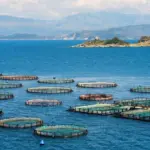
Aquaculture plays an important socio-economic role in several European regions and the industry continues to have a bright future. 80% of aquaculture species are produced in marine waters, most of it from the Atlantic. Inland waters accounted for about 20% of the production.
Spain, France, the UK and Italy are the major contributors of farmed seafood and the report states that aquaculture will continue to play an important role in alleviating the pressure on fishery resources.
The species most widely produced in the EU are blue mussel, rainbow trout and salmon.
The importance of aquaculture varies. In some countries the value of farmed fisheries products is greater than of landed products, while in others aquaculture represents an insignificant part of their total production.
Aquaculture accounts for approximately 18% of the total volume of EU seafood production and 30% of total value.
Self-sufficiency declining
Seafood self-sufficiency of the European Union is estimated to have declined from 53% in 1997 to 40% in 2006, as consumption per capita has increased.
The main reason for this decline is the drop in EU catches which is due to: diminished stocks, stricter fishing policy and environmental laws, and the reduced fishing fleet.
Spain processing leader
EU seafood processing is a USD 20 billion industry and Spain is the main seafood processor (USD 4.4 billion production value). Spain and the UK lead the consolidation trend, while Germany is lagging behind.
Evidence from the UK suggests that considerable economy of scale can be achieved in the processing industry.
The processing industry in Europe is still fragmented, with about 4,200 firms. The majority employ 20 staff or less. The main categories of processed seafood products include preparations and canned fish, crustaceans and molluscs.
Negative seafood trade balance
The EU-27 countries import more seafood products than they export. In 2003 the seafood trade balance was negative USD 12.7 billion.
The EU is the world’s biggest importer of seafood products and continues to increase its dependency on imports for its seafood supply.
The EU plays a major role as an exporter of high-value seafood products, with Denmark being the single biggest exporting country in both value and volume terms.
Spain remains a key exporter and importer of seafood products to third countries.
Norway is the main supplier of seafood products to the EU, accounting for 17% of total EU imports in terms of value.
Portugal consumption leader
In 2005, seafood consumption in Portugal was by far the highest in the EU at 56.9kg/year/per capita (measured in whole weight equivalent).
Spain ranks number two with consumption of 45kg/year/per capita (measured in whole weight equivalent).
Germany, France, the UK, Italy and Spain with populations of 83, 63, 61, 58 and 40 million respectively are by far the largest market for seafood in the EU.
The average seafood consumption in the EU-27 in 2005 was 22kg/year/per capita (measured in whole weight equivalent).
France is the single largest market for seafood within the EU-27, followed by Spain, Italy, the UK and Germany.
Related Articles
 SEAFOOD
 SEAFOOD
 FISHERIES