

Closing the gap between fresh and frozen seafood
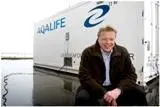
“The shellfish industry worldwide is growing dramatically. The whole aquaculture industry is now the fastest growing industry in the world and shellfish in particular is undergoing great developments,” says Mr Nannerup.
“For enzymatic reasons, shellfish will deteriorate quite quickly after it is dead. Our objective is to increase total sales of fresh shellfish in the world by implementing this system,” he continues.
The ‘system’ is the Aqualife Logistics ocean freight container system – a new method of transporting live shellfish.
Due to the large quality difference between fresh and frozen seafood, along with the logistical challenges, fresh shellfish is commanding up to five times higher market prices than frozen. Until now only the most expensive shellfish have been freighted, generally by air as iced goods.
Time is no object with the Aqualife container system as the shellfish can remain in their tanks for up to 20 days, retaining their natural freshness. The shellfish are kept in this environment until just an hour before consumption – the system is designed so that the distributors use the containers for storage and take the required quantity directly from the container.
Aqualife claims that transporting live shellfish by sea is 30 times cleaner, with regards to environmental impact, than air freight. Measuring CO2 emissions shows that the CO2 impact per ton of living shellfish is 120kg of ocean freight, compared to 3,600kg per ton of air freight cargo. Shipping the shellfish by ocean rather than by air could also save the shipper from 30-80% in transport costs.
Hibernation
The system makes sea transportation possible by decreasing the animal’s metabolistic rate during travel and by assuring a sterile aquatic environment before, during and after transportation.
The heart of the system is a 40ft container with 20 tanks, all interconnected through a piping system in the container. Each tank can contain 1,500 litres of water and up to 600kg of live shellfish. Each container can carry up to 12t of live shellfish.
The harvesters/fishermen bring their product to the central facility. At the facility the product is thoroughly washed. After this, the water temperature is lowered and the parameters are controlled to create the right balance between, ph, salinity, oxygen and temperature so that the product can be brought from ‘summer’ to ‘winter’ temperatures within 6 hours. Once the product is hibernating, the containers are released to ocean freight.
During transportation, the containers are equipped with a double compressor that supplies air to the tanks through the container’s piping system. The piping system can operate individual tanks or interconnect with the whole system – the container connects with the docking stations from the outside.
When the product arrives at its destination, it is transported to a docking station again, where the water is cleaned and the temperature is brought back up.
Sea transportation of the containers takes place between docking points and in closely managed corridors. The supply chain is integrated all the way from the point of fishery, until the shellfish can be off-loaded in the export country, for direct human consumption.
Closing the gap
“The system has been tested thoroughly and is already in operation on routes between Canada, The Netherlands and Spain,” says Mr Nannerup. In Canada, an agreement has been reached with the provincial governments of Nova Scotia, Prince Edward Island, New Brunswick and Newfoundland to integrate the Aqualife system into the shellfish industry’s existing infrastructure.
Mr Nannerup says that the next obstacle to overcome in the expansion is increasing capacity. The company has 15 containers in operation, and a further 17 containers under construction, to more than double the company’s freight capacity.
“We wish to raise further venture capital in the near future and invite more investors. Our long term goal is to continue expanding capacity, and also to develop the technology, so that we can handle other farmed seafood, such as live fish.
“With the Aqualife transport system we expect to revolutionise large parts of the aquaculture infrastructure, and secure otherwise un-serviced markets in the world’s 266 countries, bringing them fresh food from the oceans, lakes and rivers. Today the price gap between fresh and frozen seafood is up to 500 per cent. We can almost close that gap,” he concludes.