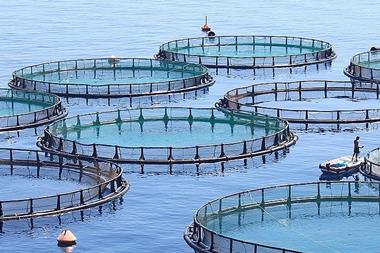




Backed by the General Fisheries Commission for the Mediterranean (GFCM) of the Food and Agriculture Organization of the United Nations (FAO), this emerging alternative to conventional aquaculture is shifting the emphasis towards enhancing ecosystem health and biodiversity – promising a more resilient blue economy.
The GFCM has placed restorative aquaculture at the heart of its 2030 Strategy, promoting practices that enhance biodiversity, improve water quality, and strengthen coastal livelihoods. Crucially, with the recent opening of the Mediterranean Restorative Aquaculture Demonstration Centre in La Ràpita, Spain, the initiative has moved decisively from concept to implementation.
GFCM believes the approach can help reshape the region’s blue economy, bridge science and practice, and offer a global model for sustainable marine resource management.
From production to regeneration
For decades, aquaculture development has been guided primarily by production goals – maximising yield, efficiency and profitability. Restorative aquaculture turns that equation on its head.
“Restorative aquaculture is about closing the loop between food production and ecosystem balance,” explained Houssam Hamza, Aquaculture Officer at the GFCM. “It is where aquaculture becomes a nature-based solution, not just a food system.”
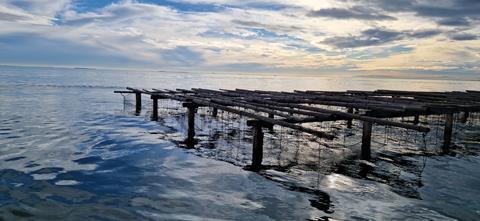
At the core of the model are low-trophic species such as mussels, oysters, macroalgae, sea cucumbers, and sponges. Filter-feeding shellfish remove suspended particles from the water, macroalgae absorb excess nutrients and carbon dioxide, and sea cucumbers recycle organic matter on the seabed, improving sediment health.
Together, these species deliver measurable ecosystem services – reducing eutrophication, capturing carbon, enhancing biodiversity and improving habitat quality. The result is aquaculture that does not merely sustain itself, but actively contributes to ecosystem recovery.
Ancient practices, modern science
While often presented as novel, Hamza stressed that restorative aquaculture is rooted in long-established practices. “Seaweed has been cultivated for centuries in Asia, not only for food, but also to clean ponds and improve water quality. The same applies in Italy with oysters and mussels. These are not new activities.”
He also pointed to North Africa, where carp have long been used in reservoirs and pumping systems to control macro and microalgae, reducing the risk of harmful algal blooms.
“What’s changing today is not the practice itself, but our scientific understanding and our objectives,” Hamza told WF. “Aquaculture is no longer only about food production. We now recognise and value the ecosystem services these species provide. This is the essence of restorative aquaculture: combining ancient practices with modern science and policy tools.”
A response to regional pressures
The Mediterranean and the Black Sea are among the world’s most climate-sensitive marine regions. Rising temperatures, salinity shifts, and nutrient loading are placing growing strain on ecosystems and the coastal communities that depend on them.
According to the GFCM, restorative aquaculture could offer a pathway to resilience. By cultivating species that stabilise and enrich marine environments, it helps mitigate the very pressures intensified by climate change. The approach aligns closely with the GFCM’s 2030 Strategy and FAO’s Blue Transformation vision, both of which call for more sustainable, inclusive and restorative aquaculture systems.
Restorative aquaculture has strong ecological value, and this is recognised by all GFCM member countries, confirmed Hamza. Shellfish aquaculture, in particular, is already well established in the region, with hundreds of thousands of tonnes produced annually. Seaweed production, by contrast, remains limited but is gradually gaining momentum.
Barriers to scale
Despite its promise, several obstacles still hinder large-scale adoption. One major challenge is the lack of technical protocols, particularly for seed supply. Many countries lack hatchery capacity for emerging candidate species such as sea urchins, seaweed and sponges. Nevertheless, producing pathogen-free seed at scale is essential to avoid unintended ecological impacts.
Another barrier is regulatory fragmentation. Most licensing systems are designed for food-focused commercial aquaculture, offering few incentives or fast-track procedures for projects delivering ecosystem services.
Monitoring and verification are also critical, with the GFCM recognising that to avoid “blue-washing”, claims around carbon sequestration or environmental benefits must be supported by clear, science-based indicators and robust measurement frameworks.
Addressing these challenges is a central part of the GFCM’s mandate, and the new La Ràpita centre – seventh in the GFCM’s network but the first dedicated specifically to restorative aquaculture – is to play a key role.
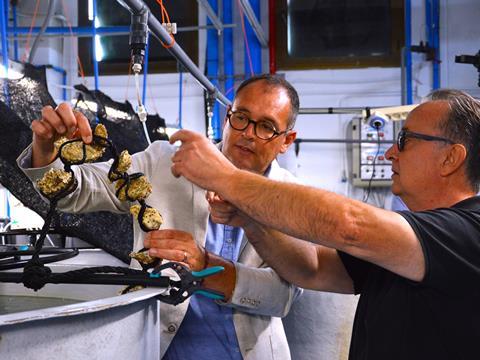
The centre develops practical protocols, tests hatchery capacity, and shares technical solutions through training and pilot projects. One early initiative is assessing which seaweed species are best suited to local conditions.
At the policy level, the GFCM recently adopted a resolution on restorative aquaculture at its 2025 annual session in Málaga, calling for clear definitions and harmonised regional guidelines. It is also providing technical assistance to member states, including support for seaweed development in Morocco and Tunisia and shellfish aquaculture in Romania.
“Our role is to identify synergies, share best practices, and provide platforms for cooperation and capacity building,” Hamza said.
From knowledge to practice
The La Ràpita centre represents a tangible shift from theory to action. Focused on macroalgae, bivalves, and flathead grey mullet (Mugil cephalus), it also promotes integrated multitrophic aquaculture (IMTA) systems that mimic natural food webs.
“We are not trying to replace conventional aquaculture. Rather, we aim to enhance existing systems by integrating practices that deliver positive ecological outcomes,” said Enric Gisbert, Head of the La Ràpita centre. “To do that effectively, we need to understand what different stakeholders need in order to implement, accept, and better understand restorative aquaculture. That is why our first step has been to create an open, collaborative space for dialogue, feedback, and shared learning.”
Supported by the Catalan authorities, the centre recently hosted its first regional training workshop, bringing together participants from seven Mediterranean and Black Sea countries, on low-trophic species, particularly bivalves. When combined with more intensive aquaculture systems, they can significantly enhance water conditions and deliver valuable ecosystem services.
“Through discussions with colleagues from Tunisia and other Mediterranean regions, we realised that many of the challenges we face are shared: rising water temperatures, sudden mortality events, and invasive species. By pooling expertise and working together, we can find solutions more quickly and avoid repeating the same mistakes,” Gisbert said.
Seaweed: a priority area
Seaweed farming is a particular focus. While well established in northern Europe, it remains an emerging sector in the Mediterranean.
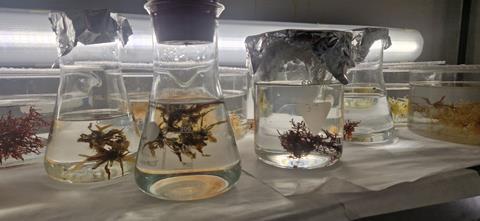
“Not all algae perform equally in all environments,” Gisbert explained. “We need to identify which species – red, green or brown – are best suited to local conditions, and how nutrients and water quality affect growth.”
Another challenge is reproduction and seed supply. Algae have complex lifecycles, including both sexual and asexual reproduction, and the technology for reliable seed production is still developing. Furthermore, without a consistent supply of high-quality seed, it is difficult to scale seaweed farming as a business.
“At the end of the day, aquaculture is a business. Behind every project are investors who expect a return. For restorative aquaculture to succeed, we must demonstrate that it is economically viable.”
In the case of seaweed, this means understanding how to valorise biomass: which compounds can be extracted, how algae can be dried efficiently given their high-water content, and how they can be used in food, feed, cosmetics, biomedicine, or other sectors, he said. “Without clear pathways to market and value creation, restorative aquaculture risks remaining an attractive idea rather than a scalable reality.”
Gisbert continued: “We are responding not only to market demand, but also to a social demand. Globally, algae are the most produced aquatic organisms, with Asia leading production for generations. Bivalves, similarly, are already widely farmed and well accepted by consumers.
“What is changing is the way these systems are integrated. By combining fish farming with bivalves and algae, we can reduce nutrient loads – particularly nitrogen compounds – improve water qualityand deliver measurable environmental benefits. Consumers are becoming more informed and increasingly expect aquaculture to have a positive environmental impact, not just minimise harm.”
At the same time, public authorities are concerned about environmental pressures and are looking for practical, science-based frameworks to support more sustainable models. Restorative aquaculture provides such a framework, enabling food production while improving ecosystem performance, he said.
Making restoration pay
For coastal communities, environmental restoration is important – but financial viability is essential. Producers must be able to earn a living and support their families. That is why restorative aquaculture must be both environmentally beneficial and economically sustainable, stressed Hamza.
“In the different guidelines we are developing, we clearly distinguish between different models. Some restorative aquaculture produces food while also restoring ecosystems, such as shellfish or seaweed farming. Other activities, such as sponge cultivation, may focus solely on ecosystem regeneration. Both approaches are valid and important.”
He maintains that profitability can come through diversification: high-value species, education and tourism, local branding, and stronger consumer trust.
“If consumers understand that a farm is improving water quality and restoring ecosystems, that can increase trust, demand and willingness to pay.”
However, a major challenge remains the recognition of ecosystem services. Aquaculture is often criticised, and its positive contributions are poorly understood. As such, water filtration, habitat enhancement, and oxygen production are real services that need to be measured, communicated and recognised. Some countries are exploring incentive mechanisms such as green labelling, preferential access to farming sites, or payments for ecosystem services, but this is still at an early stage.
The GFCM’s role, Hamza said, is to support countries in developing indicators, improving social acceptance, and demonstrating that restorative aquaculture is both possible and beneficial.
In its recent publication ‘Sustainable aquaculture in the Mediterranean: restoring ecosystems for food security’, the GFCM highlights six species that stand out for their restorative potential: the noble pen shell (Pinna nobilis), stony sea urchin (Paracentrotus lividus), Mediterranean tubular sea cucumber (Holothuria tubulosa), European flat oyster (Ostrea edulis), Mediterranean mussel (Mytilus galloprovincialis), and the Greek bathing sponge (Spongia officinalis).
Each species plays a distinct ecological role — from filtering and carbon absorption to nutrient cycling and habitat formation. They also offer diverse commercial opportunities in seafood, nutraceuticals, cosmetics, and pharmaceuticals.
The report argues that restorative aquaculture can drive both ecological recovery and economic diversification, ensuring that environmental restoration and sustainable livelihoods dovetail.
A model for the future
As global demand for aquatic food grows, the question of how to produce it sustainably becomes more urgent. The Mediterranean’s experiment in restorative aquaculture may offer a template for regions worldwide. Indeed, by reframing aquaculture as a driver of ecosystem recovery rather than degradation, the GFCM is pointing towards a new chapter for the blue economy – one that integrates food security with environmental health.
The challenge now is scale: building markets, policies, and investment frameworks that can take restorative aquaculture from demonstration sites to commercial reality.
“I am very encouraged by current developments,” Hamza said. “The momentum is coming not only from administrations, but from farmers themselves.”
He’s also looking forward to a forthcoming meeting in Athens with European and Mediterranean producer organisations, which will place restorative aquaculture firmly on the agenda.
“Producers recognise that this is not just about restoring the environment – it is also about changing public perception,” Hamza said. “A clear narrative, supported by science and credible labelling, can help everyone understand that aquaculture can be part of the solution. This collective voice is essential to counter negative perceptions and demonstrate that healthy ecosystems and a healthy aquaculture industry go hand-in-hand.”