



Through versatility and optimisation comes rewards
Supplying the food and fish processing sectors with robust, long-life equipment that’s proven in the field has served 50-year-old Cretel well, but it’s also its ethos of truly listening to its customers that’s paying dividends, the company’s Johan Timmerman and Frank Boels told WF.
Flexibility is at the heart of Cretel’s business, Timmerman and Boels explained. So, while most of its machines are manufactured in Belgium – at the new state-of-the-art, CO2-neutral facility in Langerbrugge in the Port of Ghent – the company’s engineers are in constant dialogue with the customer/end-user no matter where they are in the world to ensure the solution they get is ideally-suited to their specific needs.
They say the customer’s decision to invest in a new machine is just the start of the process and that through the exchanges with Cretel’s engineers many details are often altered or adapted during both the design and development stages.
“It’s these little practical improvements that can make all the difference in the delivery of a solution,” Boels said.
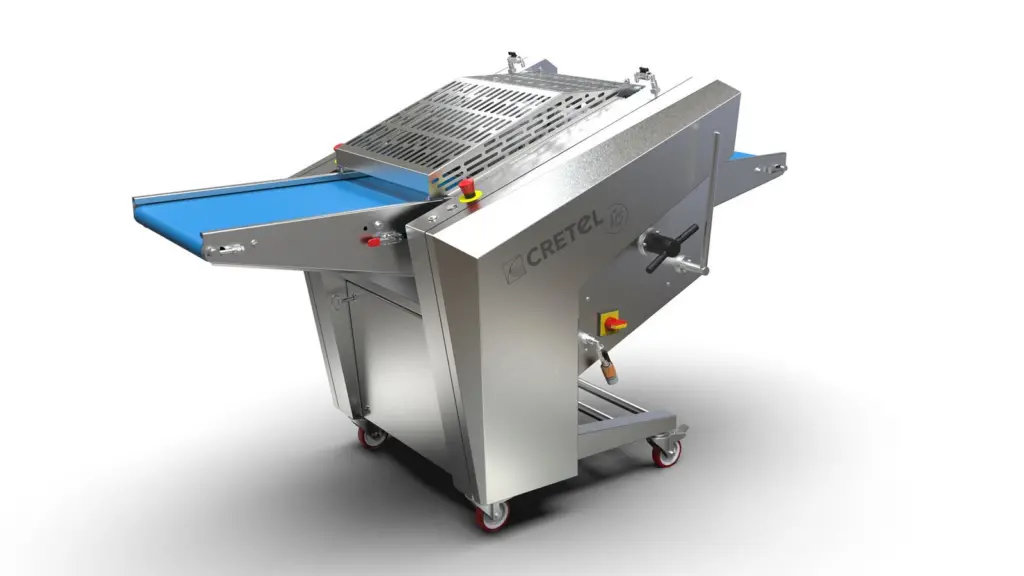
Cretel has developed and is supplying high-quality food processing equipment for all types of meat and fish. Including both automatic and manual machines, its product portfolio includes skinners, vacuum packers, fish scalers, pin-bone removers and more, plus essential accessories.
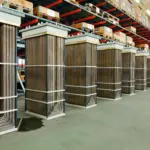
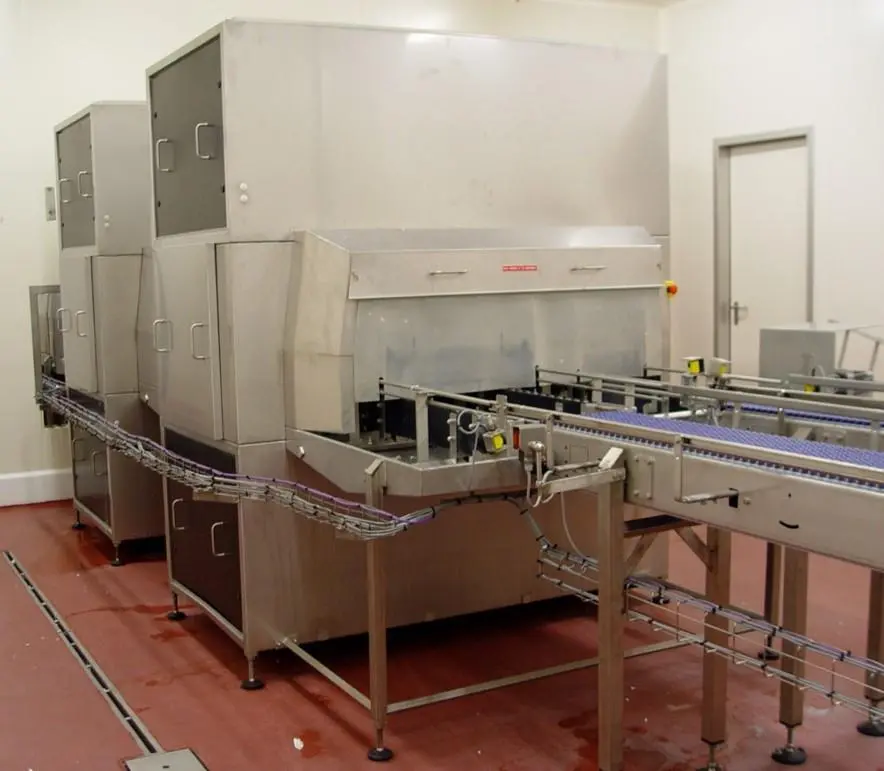
At the same time, it is seeing rising demand from the food and fish processing sectors for its washing and drying systems, which are cleaning and sanitising crates, trays, pallets, trollies, containers etc all over the world.
Cretel’s focus on flexibility is helped by its parent company. In 2011, it became part of ATS Groep, a multi-disciplinary technology group. ATS has four business units: Electrical/automation, HVAC, Distribution and Mechatronics.
Belonging to the Mechatronics unit, Cretel comprises the two divisions of food processing equipment and washing and drying installations. Timmerman is responsible for the food processing side, while Boels heads the washing and drying solutions.
Large group advantages
Belonging to the wider ATS Groep is important to Cretel. Firstly, it facilitates good crossover collaboration, whereby, for example, the engineers within the automation business unit are able to integrate Cretel’s machines within a fully-adapted, fully-automated factory set-up. At the same time, it provides strong buying power and the ability to promptly get spare parts, components etc to customers.
Being part of ATS also allows Cretel to innovate. On the processing equipment side, it’s looking to do this by increasing machine versatility, said Timmerman. As such, it is always looking to further optimise its equipment with regards to user-friendliness, ergonomics and hygiene, with equal attention paid to the manual machines used in production lines by smaller-scale fish processors as well as the equipment installed at large, more automated facilities.
“It all depends on the capacity and needs of the customer,” he said. “One of our great advantages is that we can provide custom-made machines for small and large processors, and also for onboard processing activities.”
They are also built to last, Timmerman said.
“When you buy one of our skinners, you are not just buying it for yourself, you’re buying it for your grandchildren,” he said.
With regards to supplying larger players, one development is the delivery of automatic skinners with easy-to-use thickness controls that can be used with a wide variety of filleted fish.
Meanwhile, a new type of drier offering excellent drying results has been developed alongside new energy-saving washing and drying installations, said Boels.
“Sustainability and energy consumption are key focus areas for us, alongside continuous improvement,” he said. “With more people turning to fish in their diets, more questions are being asked of seafood companies worldwide – we have requests coming in from all over, so we are well-placed, with more opportunities ahead.”
Related Articles
 AQUACULTURE
 PROCESSING & REFRIGERATION
 PROCESSING & REFRIGERATION